Why the cardigan remains a capsule wardrobe essential this spring
One cardigan can do the work of three layers this spring, smoothing out temperature swings, travel days, and repeat outfits with almost no effort.
Why the cardigan keeps earning space
Spring is where the cardigan proves its worth. It is soft enough to feel relaxed, structured enough to look deliberate, and light enough to live in a tote without turning into a burden. Marie Claire put the point plainly: the cardigan is “the only layering piece you need this spring,” and that is exactly the kind of practical thinking capsule dressing rewards.
The beauty of the cardigan is that it solves the problems real wardrobes run into every day. Offices are cold, sidewalks are warm, trains are unpredictable, and a flight can swing from stifling to icy in the space of one gate change. A cardigan handles all of it without the fuss of a blazer or the bulk of a coat, which is why it keeps showing up in the closets of people who want fewer decisions and better outfits.
The capsule logic behind the cardigan
The cardigan fits the original spirit of the capsule wardrobe almost too well. London boutique owner Susie Faux coined the term in the 1970s to describe a closet built from roughly 30 to 40 high-quality, versatile pieces, and the cardigan is a textbook example of that idea in action. It earns repeat wear because it does not belong to one category only. It layers, it softens, it finishes, and it can make the same outfit feel more considered without changing the core pieces underneath.
That kind of efficiency matters even more now, when editing has become the point. Depop’s 2026 trends report says consumers are choosing clarity over clutter and refining their core staples, which is exactly where the cardigan lands. It is not a novelty buy. It is a piece that does real work, especially when the goal is to make a smaller wardrobe behave like a bigger one.
How one cardigan multiplies outfits
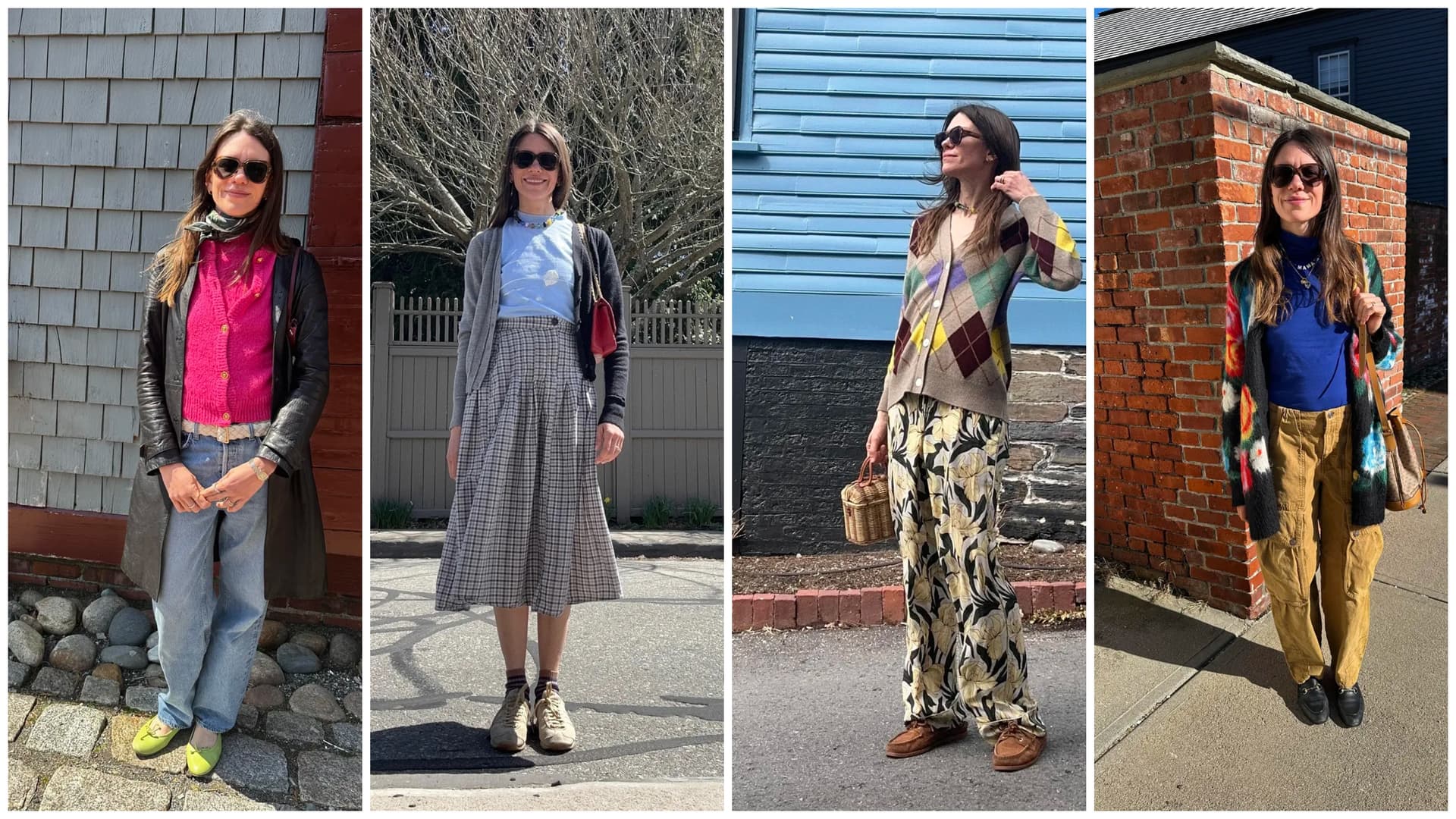
The cardigan’s real power is repetition. One good one can sit over a slip dress on a cool morning, then move to a tank and tailored trousers by lunch, then get thrown over a T-shirt when the air conditioning turns aggressive. That is why it feels so useful in spring: it lets you keep the outfit you already like and simply adjust the temperature, the mood, or the level of polish.
Over dresses
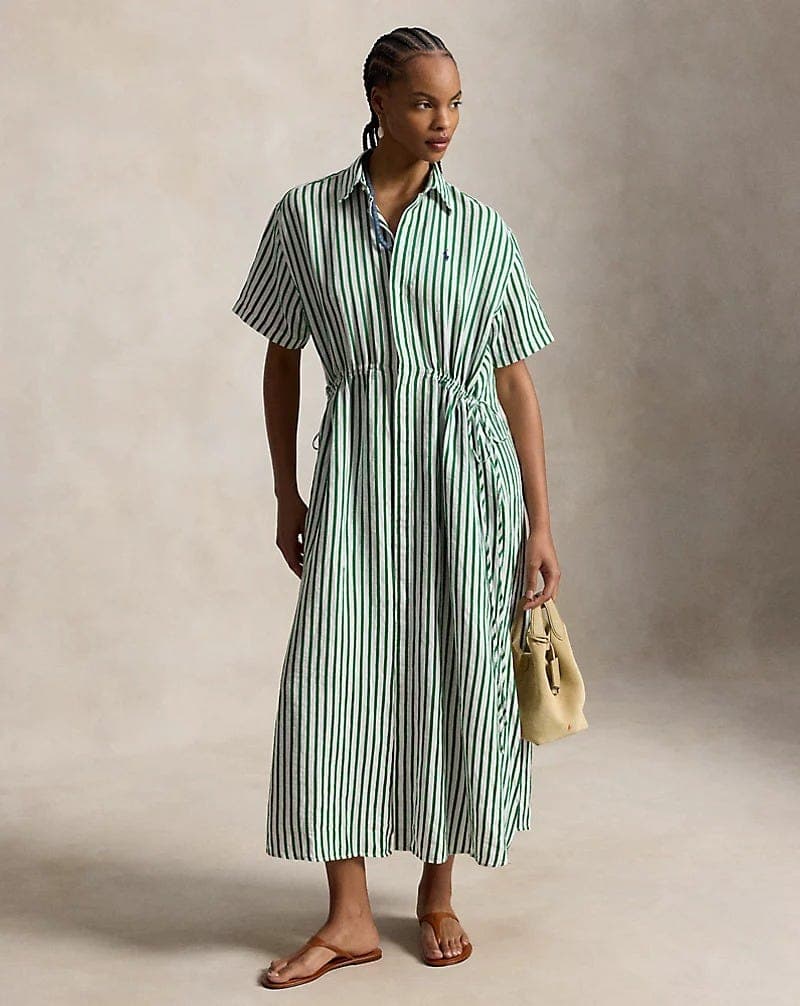
A cardigan over a dress is the easiest way to make spring feel finished without looking overstyled. Over a floaty midi or a simple slip dress, it brings the outfit back down to earth and adds a layer of warmth that does not fight the silhouette underneath. Button it at the waist for definition, or wear it open if the dress already does enough visual work.
Over tanks and tees
This is where the cardigan earns its capsule status. A ribbed tank or a crisp T-shirt can read basic on its own, but add a cardigan and the outfit suddenly looks intentional, especially if the knit has a little texture or a neat neckline. It is an ideal commuter formula because it keeps you covered on the way out the door and easy once the day warms up.
With trousers
With trousers, the cardigan starts to blur the line between knitwear and tailoring. Paired with straight-leg pants, cropped ankle trousers, or softly pleated slacks, it feels sharper than a sweatshirt and less rigid than a blazer. That middle ground is exactly why it travels so well. It works for the office, the airport, and the dinner you did not plan when you packed that morning.
Why the cardigan has staying power
The cardigan is not having a moment so much as continuing a very long run. It takes its name from James Thomas Brudenell, the 7th Earl of Cardigan, who was born on October 16, 1797, and died in March 1868. He is the British general associated with the Charge of the Light Brigade, the disastrous cavalry attack at the Battle of Balaklava on October 25, 1854, during the Crimean War. The garment’s name is rooted in military history, but its life in modern wardrobes is far more graceful.
Museum records make that longevity visible. The Metropolitan Museum of Art has American cardigan sweaters dated 1900 to 1903 and another from around 1918, which means the silhouette was already established before the modern language of “capsule dressing” even existed. That continuity matters. It shows the cardigan is not a trend invented to satisfy a season. It is a shape that has kept finding new uses for more than a century.
The one cardigan worth buying
If you are only adding one layer this season, make it a cardigan that sits close to the body without clinging. The best cut is usually hip-length, with a button front and a clean shoulder line, because that shape gives you the most range: open over a tank, half-buttoned over a dress, or fully closed with trousers when you want it to behave almost like a top. Too cropped and it becomes fussy. Too oversized and it starts to swallow the outfit instead of finishing it.
Fabric matters just as much. A fine-gauge knit in wool or a wool blend gives you the warmth of a sweater and the flexibility of a lighter layer, which is exactly the balance spring calls for. You want something with enough substance to look polished on its own, but not so heavy that it turns into winter baggage the minute the weather improves. That is the sweet spot for repeat wear, and repeat wear is the whole point.
A smarter spring staple
The cardigan endures because it is useful in the ways that matter most to a capsule wardrobe. It bridges cold mornings and warm afternoons, it travels without complaint, and it turns a small lineup of clothes into many more possible outfits. In a season that rewards flexibility, clarity, and fewer wasted purchases, the cardigan remains the piece that quietly does the most.
This article was produced by Prism’s automated news system from verified source data, official records, and press releases, then run through automated quality and moderation checks before publishing. The system is built and supervised by the people who set the standards it runs under. Read our full AI policy.
Did this article answer your question?