Why the White T-Shirt Is the Ultimate Capsule Wardrobe Staple
The best white T-shirt passes four tests, fit, fabric weight, neckline and opacity, then earns its keep with blazers, denim, and slip skirts.
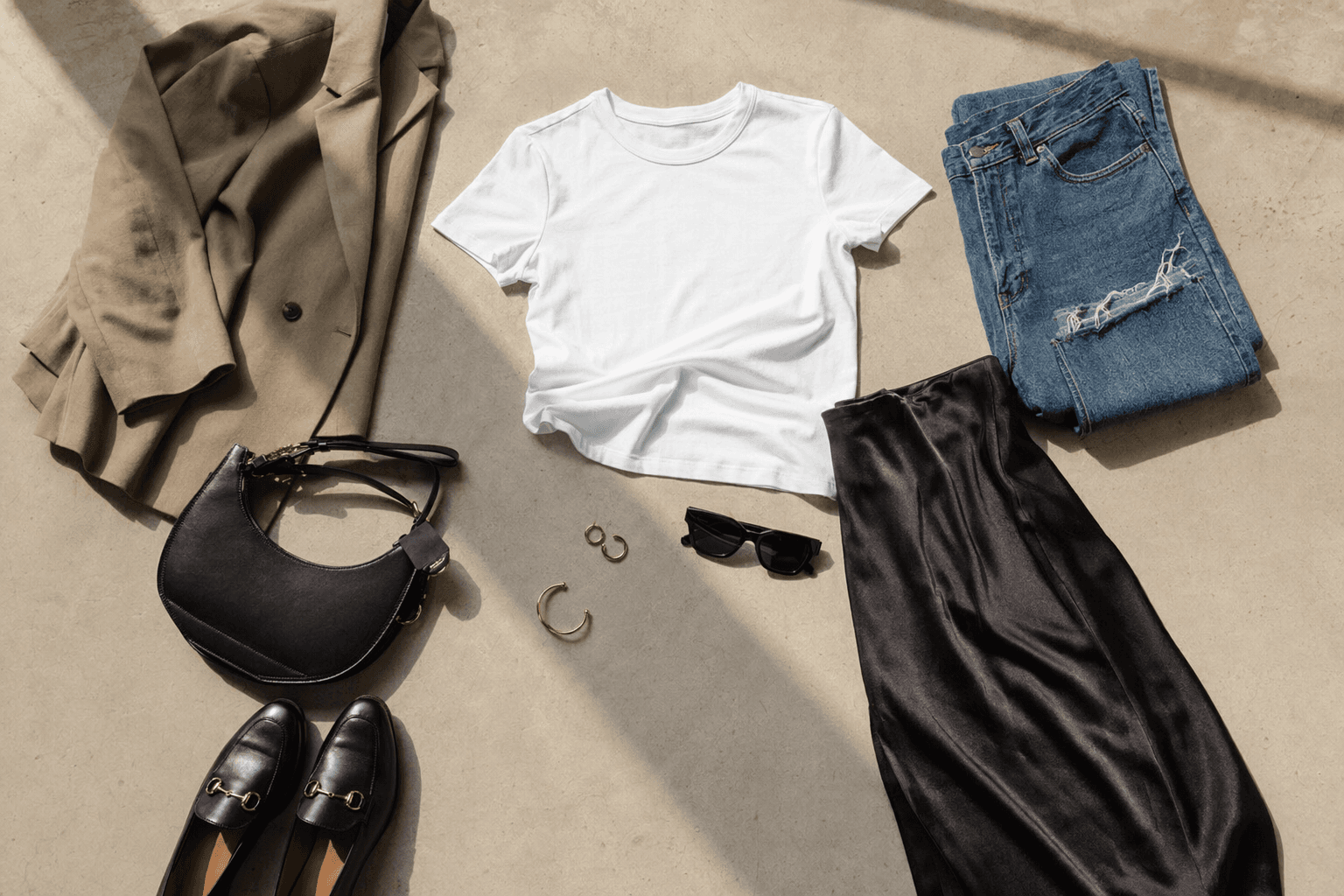
A good white T-shirt does more than sit under a blazer. It is the rare capsule piece that can move from office tailoring to off-duty denim to an evening slip skirt without looking like an afterthought.
The white tee’s real power
The reason it works so hard is the same reason it has outlived trend cycles: the white T-shirt is built to disappear and to define an outfit at the same time. Google Arts & Culture describes it as the “ultimate sartorial and psychological blank canvas,” and that is exactly why it belongs at the center of a capsule wardrobe. It gives trousers polish, makes denim look intentional, and softens satin or silk when you need contrast.
Its status is not accidental. Fashion-history sources trace the T-shirt’s rise from underwear and workwear into outerwear in the 20th century, when it stopped being hidden and started becoming style. Patti Smith’s 1975 portrait by Robert Mapplethorpe remains one of the cleanest examples of that shift: one white shirt, one sharp frame, and a new kind of nonchalance that still reads modern.
How to choose the right one
The perfect white tee is never just “plain.” It has to solve a wardrobe problem, and the most useful way to shop is to think like a fittings director. Recent editor-tested guides keep circling the same criteria because they are the ones that matter in real life: fit, fabric, durability and post-wash performance.
Fit
Fit is the first decision because it changes the whole mood. A tee that skims the body reads crisp under a blazer; one that hangs too boxy can make even good trousers look bulky. If you want the shirt to earn regular rotation, look for a shape that follows your shoulders without clinging at the stomach, and check that the sleeves land somewhere flattering on the upper arm.
Fabric weight
Fabric weight is where the best tees separate themselves from the disposable ones. Premium picks are often made from pima or organic cotton, both of which tend to feel denser and more substantial than flimsy standard cotton. That extra body matters because it helps the shirt drape cleanly, resist collapse, and avoid that papery look that can make white basics feel cheap.
Neckline
The neckline is small detail with outsized consequences. A crew neck gives you the most classic line under tailoring, but the ribbing needs to sit flat and recover after wear, or the shirt will start to look tired quickly. If you prefer layering, a slightly wider crew or a careful V can change how much collarbone shows beneath a blazer, which in turn affects whether the tee feels polished or merely casual.
Opacity
Opacity is the make-or-break factor most shoppers underestimate. Sheerness is one of the biggest complaints editors flag, because a tee that looks ideal on the hanger can become unwearably see-through in daylight. Hold the shirt up before buying, check it under strong light, and think about what you plan to wear underneath, because a truly versatile white tee should not require a color strategy every time you leave the house.
The easiest way to shop it
A white tee should be chosen by use case, not by fantasy. If you wear blazers most often, prioritize a denser cotton with enough structure to sit smoothly under lapels. If your wardrobe is built around denim, a slightly relaxed cut with a clean neckline gives you that studied, undone balance that never looks forced.
- For office dressing, choose a tee that sits close to the body without clinging, then pair it with trousers and a blazer.
- For casual days, look for a tee with enough heft to hold its shape alongside jeans and sneakers.
- For evening, a crisp white shirt can sharpen a slip skirt and heels by adding quiet contrast.
- For layering, the shirt should be opaque enough to work under knits, jackets and open overshirts without turning fragile after one wash.
What goes wrong in real life
The common failures are almost always the same. A shirt is too sheer, too boxy, or it stretches out after a single wash, and suddenly the “goes with everything” promise turns into a drawer of disappointments. The neckline can sag, the hem can twist, and the cotton can shrink or lose shape, which is why post-wash performance matters as much as the first fitting.
MoMA’s Hanes, Inc. White T-Shirt materials are a useful reminder that the simplest garment is often the least simple to make. Cotton becomes yarn, yarn becomes textile, then comes cutting, sewing, finishing and packing. When a shirt is sold cheaply, that production chain is part of the story, and it explains why some basics feel featherlight in the wrong way while better-made versions hold the line after repeated wear.
Why it still matters
The white T-shirt has cultural weight because it moved from hidden layer to visible statement without losing its utility. The Metropolitan Museum of Art and the Museum of Modern Art both keep T-shirt-related objects and materials in their collections and archives, which is a subtle but telling form of canonization. A garment that began in the realm of utility now sits in the same visual conversation as fashion history itself.
That is the real appeal of the white tee in a capsule wardrobe. It is practical enough to wear constantly, rigorous enough to judge by construction, and flexible enough to bridge the sharpest blazer and the most relaxed denim. The best version is not the one that tries to do everything by looking precious; it is the one that stays opaque, holds its shape, and makes every other piece in the closet look more deliberate.
This article was produced by Prism’s automated news system from verified source data, official records, and press releases, then run through automated quality and moderation checks before publishing. The system is built and supervised by the people who set the standards it runs under. Read our full AI policy.
Did this article answer your question?