Care for Linen to Preserve Coastal Grandmother Style's Soft Look
Keep linen soft and slouchy: wash in cool or lukewarm water, air-dry, store folded, and mend early to preserve the Coastal Grandmother lived-in look.
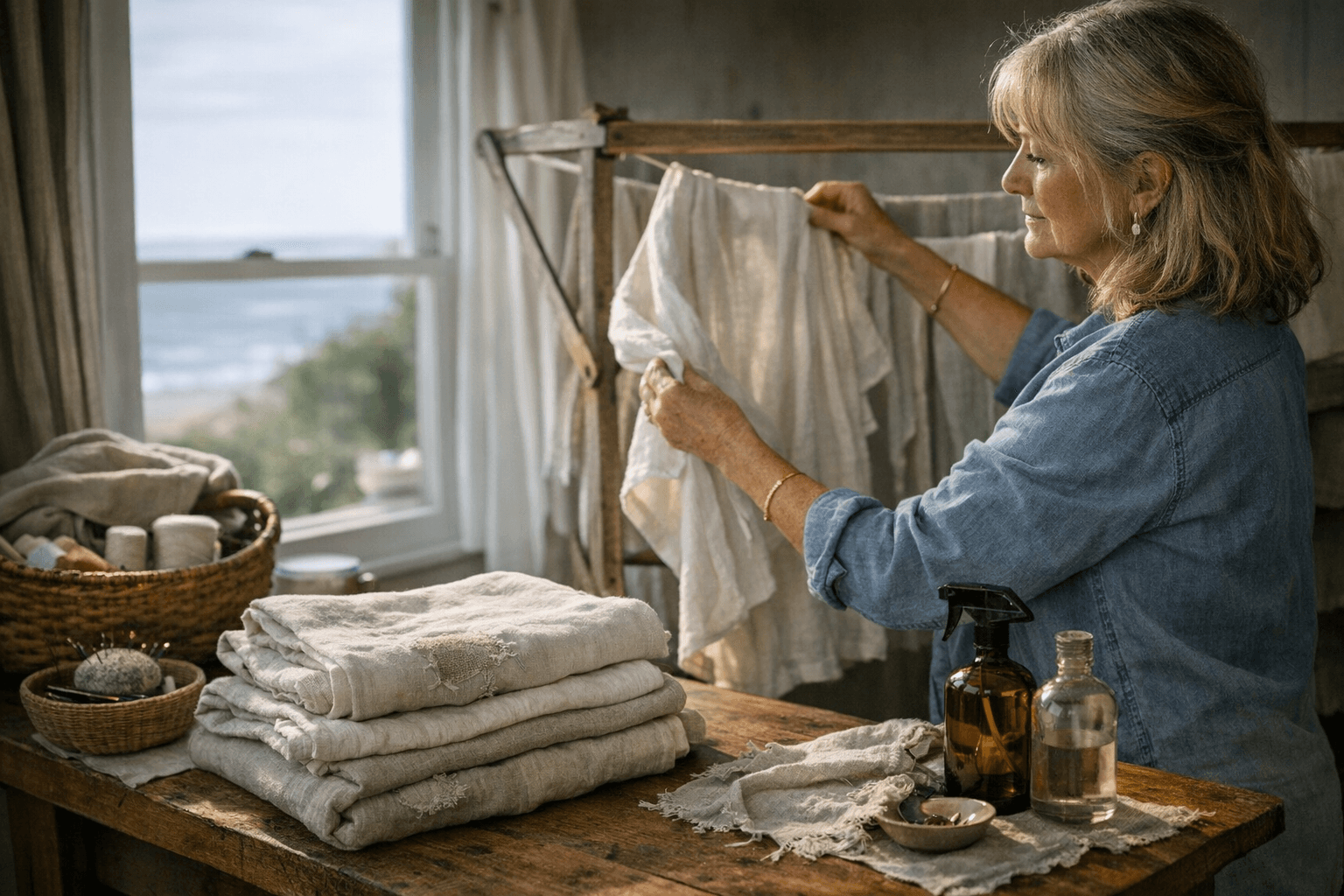
There’s a reason the Coastal Grandmother wardrobe reads like a comfortable seaside bungalow: linen. That soft, lived-in look this aesthetic prizes isn’t an accident, it’s care. This is a practical, brand-agnostic guide that walks you through washing, drying, storing, and mending linen so that your oversized shirts, slouchy trousers, and boxy blazers stay tactile, breathable, and full of that sun-softened character.
1. Washing: cool or lukewarm water and gentle treatment
Washing linen in cool or lukewarm water is the single most important rule for keeping fibers soft and preventing harsh shrinkage; aim for water that feels slightly warm to the touch rather than hot. Use a gentle or delicate cycle and a mild, pH-neutral detergent, these keep the linen’s natural slub texture intact and stop fibers from breaking down. Skip bleach and heavy enzymes: they flatten the fabric and rob it of the lived-in drape that defines Coastal Grandmother style. If you hand-wash, soak for only a few minutes, gently agitate by hand, and avoid wringing; treat each piece like a fragile vintage tablecloth you want to pass down.
2. Drying: air, shade, and intentional slouch
Air-drying is your best friend for the soft look; hang linen on a padded hanger or lay flat to dry in the shade to prevent stiffness and sun-bleaching. If you must use a dryer, choose the lowest heat and shortest cycle, a quick tumble for a few minutes can soften the weave, but high heat will set wrinkles and risk shrinkage. Remove pieces while still slightly damp to encourage natural drape and that casual, lived-in collapse of the fibers. For button-downs and dresses, unbutton and reshape collars and hems while damp so the silhouette dries in a relaxed, imperfect way rather than a pressed museum pose.
3. Softening, ironing, and the worn-in finish
Part of the Coastal Grandmother aesthetic is texture, you want noticeable slub and a soft hand, not a crisp, starched finish. If you like a smoother look, steam rather than iron: a handheld steamer on a low setting relaxes fibers without removing character. If you iron, do it on the reverse at low to medium heat while the garment is slightly damp; pressing too hard removes the natural creases that give linen its personality. For extra softness, a short tumble with a couple of dryer balls after air-drying can break up stiffness, but keep it brief so you preserve the lived-in silhouette.
4. Storing: soft folds, breathable spaces, and protection
Store linen folded, not hanging long-term, to avoid shoulder distortion on heavier pieces; folded stacks in breathable cotton drawers or linen bins maintain relaxed drape. Use acid-free tissue between very fine or vintage pieces to prevent transfer creases, and keep cedar blocks or lavender sachets nearby for freshness, but don’t let oils from cedar touch delicate linen finishes directly. For seasonal rotation, air garments first to evaporate any residual moisture from wear; a fully dry piece stored in a breathable bag preserves texture far better than a garment trapped in plastic.
5. Mending and small repairs: early fixes preserve softness
Mend early. A tiny snag, loose seam, or thinning elbow left unattended will migrate and make the whole piece look tired instead of lived-in. Learn a few visible-mend techniques: small running stitches in tonal thread or a neatly placed patch can read like character, not damage, which suits Coastal Grandmother’s relaxed, handcrafted vibe. Reinforce high-wear areas (cuffs, elbows, inner thigh) before they become holes; a discreet stitch or a thin interlining keeps weight distribution even and prevents the fabric from distorting as it ages.
6. Stain care, travel, and long-term maintenance
Treat spills promptly with cool or lukewarm water, blot rather than rub to keep slub structure intact, and avoid hot-water stain lifts, which can set oils into the fiber. Pack linen loose when traveling: fold with tissue, avoid heavy compression, and hang garments on arrival to let creases settle into the intended slouch. Over the long term, rotate pieces in your rotation so no single garment bears all the wear; that even wear pattern is what keeps a Coastal Grandmother wardrobe feeling cohesive and effortless rather than threadbare.
- Spot-test any detergent or stain remover on an inside seam first.
- Skip fabric softeners, they coat fibers and remove breathability.
- Use padded hangers for shirts you do hang; fold heavy linen trousers to keep a relaxed crotch.
- For extra gentle cleaning, professional wet-cleaning preserves structure without the harshness of machine dry cleaning.
Practical tips worth pinning:
Why this matters: letting linen age gracefully The whole point of caring for linen the Coastal Grandmother way is to cultivate texture, not sterilize it. The soft, slightly rumpled silhouettes, the boxy linen blazer that sits like a well-worn shawl, the high-waist pant that collapses into a casual cuff, all rely on fibers that have been treated gently and mended thoughtfully. Treat linen like heirloom fabric, not fast fashion: wash in cool or lukewarm water, dry deliberately, store breathably, and fix small faults early. Do that and your linen will look like it belongs to a sunlit coastal kitchen, soft, roomy, and quietly elegant, not something bought yesterday and already tired.
This article was produced by Prism’s automated news system from verified source data, official records, and press releases, then run through automated quality and moderation checks before publishing. The system is built and supervised by the people who set the standards it runs under. Read our full AI policy.
Did this article answer your question?