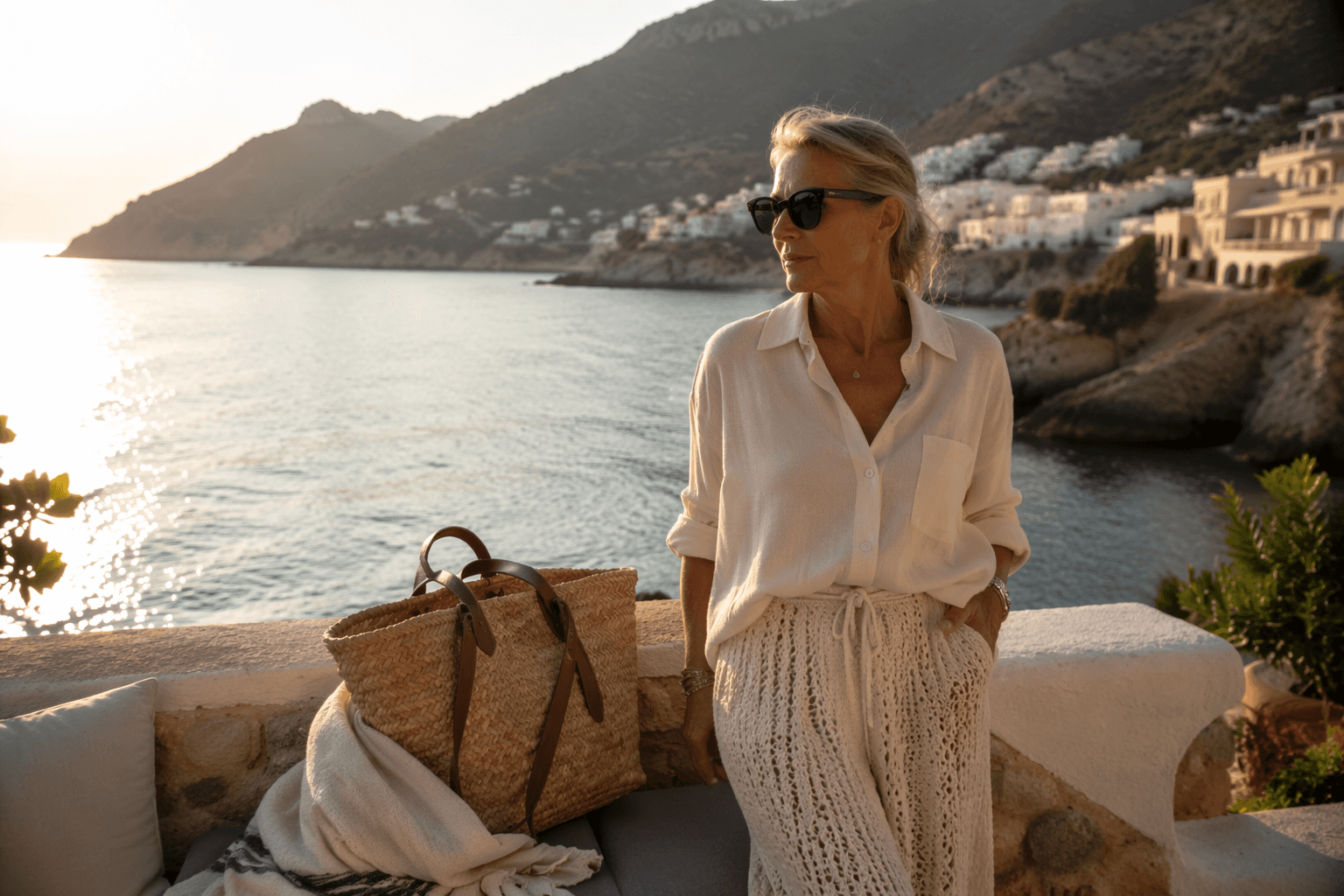
Coastal Design Evolves in 2026, Ditching Nautical Clichés for Refined Textures
Coastal style shed its anchor prints; what's left is linen, shell tones, and the kind of quiet elegance that actually ages well.
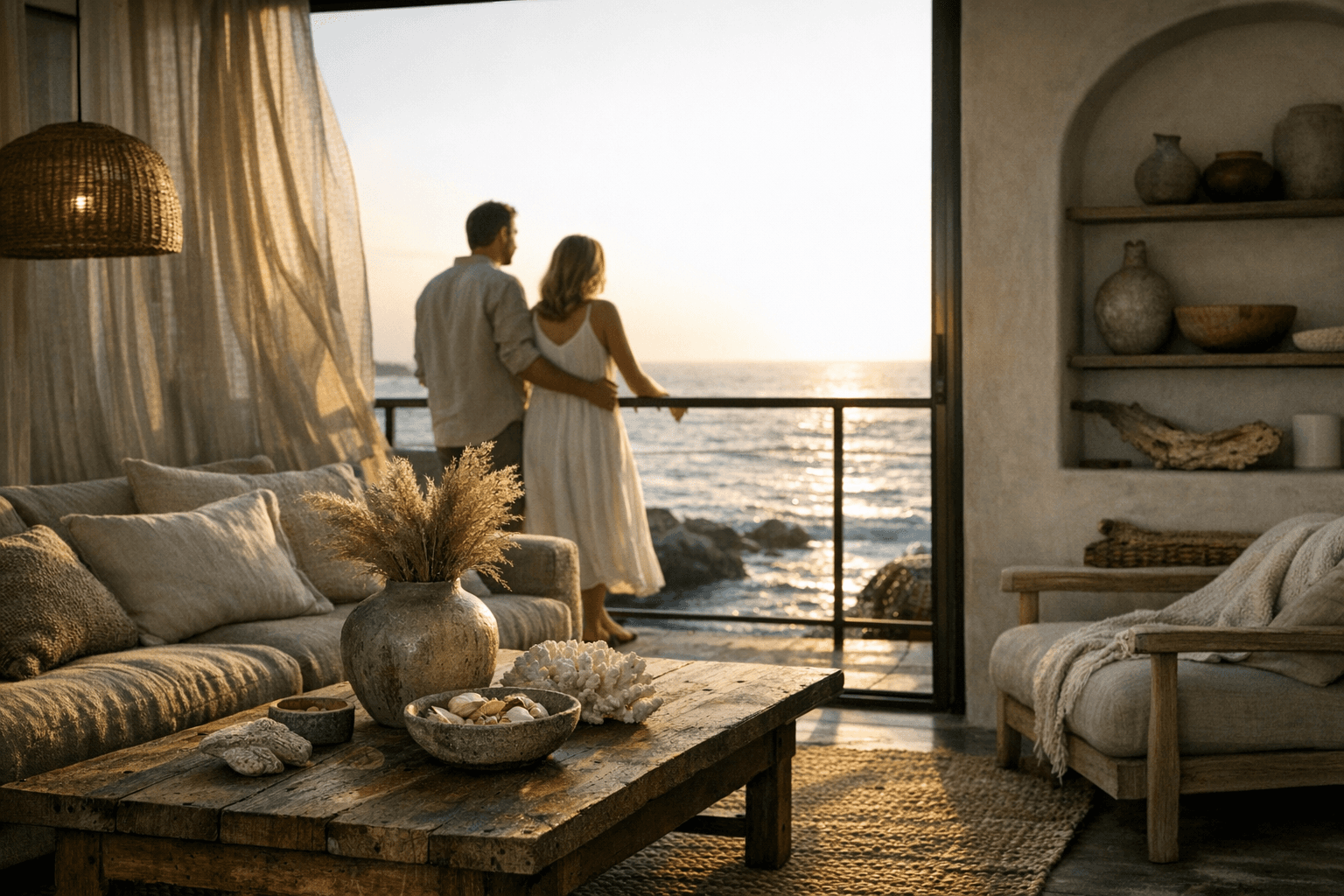
The anchor print had to go. So did the lobster-red stripe, the ship's wheel hardware, and every other literal shorthand for "I summer near water." The 2026 coastal shift, now rippling from interior design directly into wardrobe planning, is operating on a different frequency: texture over theme, mood over motif, restraint over reference. And the aesthetic that's absorbing all of it most naturally? The coastal grandmother, finally recognized as the template she always was.
Interior designers this season are describing a palette built around sand, warm whites, deep navy, and soft earthy neutrals layered with weight and intention rather than punched together in high-contrast combinations. That color logic translates directly to cloth. Think of it as the difference between a navy canvas tote with a crab on it and a midnight linen blazer with bone buttons. Same coastal zip code, entirely different conversation.
The Color Palette: Shell Tones Over Sailor Hues
The 2026 coastal palette is not blue-and-white. It is the hour before sunset at a grey-shingled beach house: bleached linen, warm oatmeal, the muted gold of dried sea grass, and a navy that reads more "old wool peacoat" than "yacht club uniform." Designers are recommending nuanced layering of these tones rather than high-contrast pops, and that principle works exactly the same way in a wardrobe.
Shell tones specifically, the soft blush-whites, pale sand, and muted ivory that appear in natural coastal materials, are the new neutrals. They read warm without reading pink, coastal without reading tropical. Pair them against each other (ivory against oatmeal, sand against soft grey) for the kind of tonal layering that photographs in natural light like it was curated over decades.
The weathered navy is equally critical. Not cobalt, not royal blue; the kind of faded blue found on the collar of a well-worn chambray shirt or a vintage wool sweater that has been washed in saltwater one too many times. This is the color that anchors the whole palette, used in one piece per look rather than distributed across an outfit.
The Capsule: 8 Pieces That Do the Work
The editorial principle here is the same one interior designers are applying to rooms this season: one focal material or texture at a time, edited with discipline, built to last well beyond the season. Eight pieces, rotated across three distinct looks.
- Wide-leg linen trousers in ivory or oatmeal (the workhorse; this piece appears in every look)
- Loose linen button-down in warm white, worn open or knotted at the waist
- Relaxed chambray shirt dress in faded blue, long enough to qualify as a midi
- Cream or oatmeal cashmere cardigan, lightweight, drape-quality, for shoulders or arms
- Silk or silk-blend cami in a soft shell tone: ivory, blush-sand, or pale dove
- Flowing linen or cotton midi dress with clean lines and no print
- Softened stripe knit top in navy and cream, with enough weight to hold its shape
- Woven raffia tote, structured rather than floppy, in natural or cognac
Two additions round the capsule to ten: a wide-brim raffia or panama hat, and a pair of relaxed straight-leg jeans in a washed, mid-tone denim that reads closer to "off-duty fisherman" than "weekend casual."
Fabrics do the heavy lifting here. Linen is non-negotiable, and it should be the kind that softens with washing rather than stiffening after it. Cashmere earns its place because the coastal grandmother is often cold on restaurant terraces and never apologizes for it. Raffia appears as an accessory fiber rather than a statement: the bag, the sandal weave, the hat band. The sustainability principle that interior designers are applying to their sourcing choices (prioritizing recycled natural materials, lasting craftsmanship, and textural depth over novelty) applies here too. Buy fewer pieces, buy them with intention, and let them become yours.
Three Looks That Earn Their Keep
For Travel
The linen trousers in ivory, the warm white button-down open over the silk cami, a cashmere cardigan tied at the shoulders, and the raffia tote as carry-on companion. Footwear: a clean leather slide or a simple espadrille. The entire look packs without catastrophic wrinkling (linen crumples beautifully; that is the point), and it transitions from gate to taxi to hotel check-in without looking like an airport outfit. Colors stay within the sand-to-cream range, so the cardigan functions as a blanket on a cool flight without looking like a prop.
For Weekend Errands
The chambray shirt dress in faded blue, belted loosely with a tan leather or woven strap, canvas sneakers or leather slides, and the woven tote doing farmers'-market duty. Add the wide-brim hat if the sun is honest. This is the look that borrows from interior design's embrace of a "collected-over-time" ease: nothing matches perfectly, everything coordinates. The weathered blue of the dress against the natural tote against the warm tan belt works because the palette is already calibrated to harmonize, not match.
For Dinner by the Water
The softened stripe knit top in navy and cream, tucked into the ivory linen trousers, with a single gold chain necklace and a low heel or elegant flat in leather or woven material. The stripe, when softened and scaled correctly, reads as texture rather than pattern. It is the design world's advice about abstract nods over literal motifs, applied directly to cloth. This look does not try hard, which is exactly why it works at a candlelit table within earshot of the water.
Texture as the New Statement
The interior design world's pivot toward tactile surfaces (plastered walls, woven panels, weathered wood, recycled natural materials) maps cleanly onto fabric choice. Raffia, raw linen, open-weave cotton, and cashmere ribbing are all doing the same conceptual work in a wardrobe that a plaster finish does in a room: communicating quality, time, and deliberate restraint without announcing it.
The key principle from designers this season is discipline: one focal texture per look. A raffia bag with a smooth linen dress and simple leather sandals lets the bag read. A woven knit top with clean-line trousers and minimal accessories lets the knit breathe. The moment two competing textures arrive simultaneously (raffia bag, woven belt, stripe top), the edit collapses under its own effort.
The Restraint That Makes It Work
The mistake in coastal dressing has always been reaching for too many signals at once: the hat and the tote and the stripe and the shell jewelry and the rope-detail sandal, all in one look. The 2026 interior design principle of "collected-over-time" feel applies with equal force to a wardrobe: nothing looks purchased together; everything looks considered.
The coastal grandmother understood this before it became a trend with a name. She did not buy a "coastal wardrobe." She bought a linen shirt she has worn for years, a cashmere cardigan that has crossed three continents, and a raffia bag from a market in a town she loves. That cumulative, quiet confidence is what shell-inspired art in an interior and a perfectly worn linen dress in a wardrobe have in common: neither announces itself, and neither needs to.
This article was produced by Prism’s automated news system from verified source data, official records, and press releases, then run through automated quality and moderation checks before publishing. The system is built and supervised by the people who set the standards it runs under. Read our full AI policy.
Did this article answer your question?