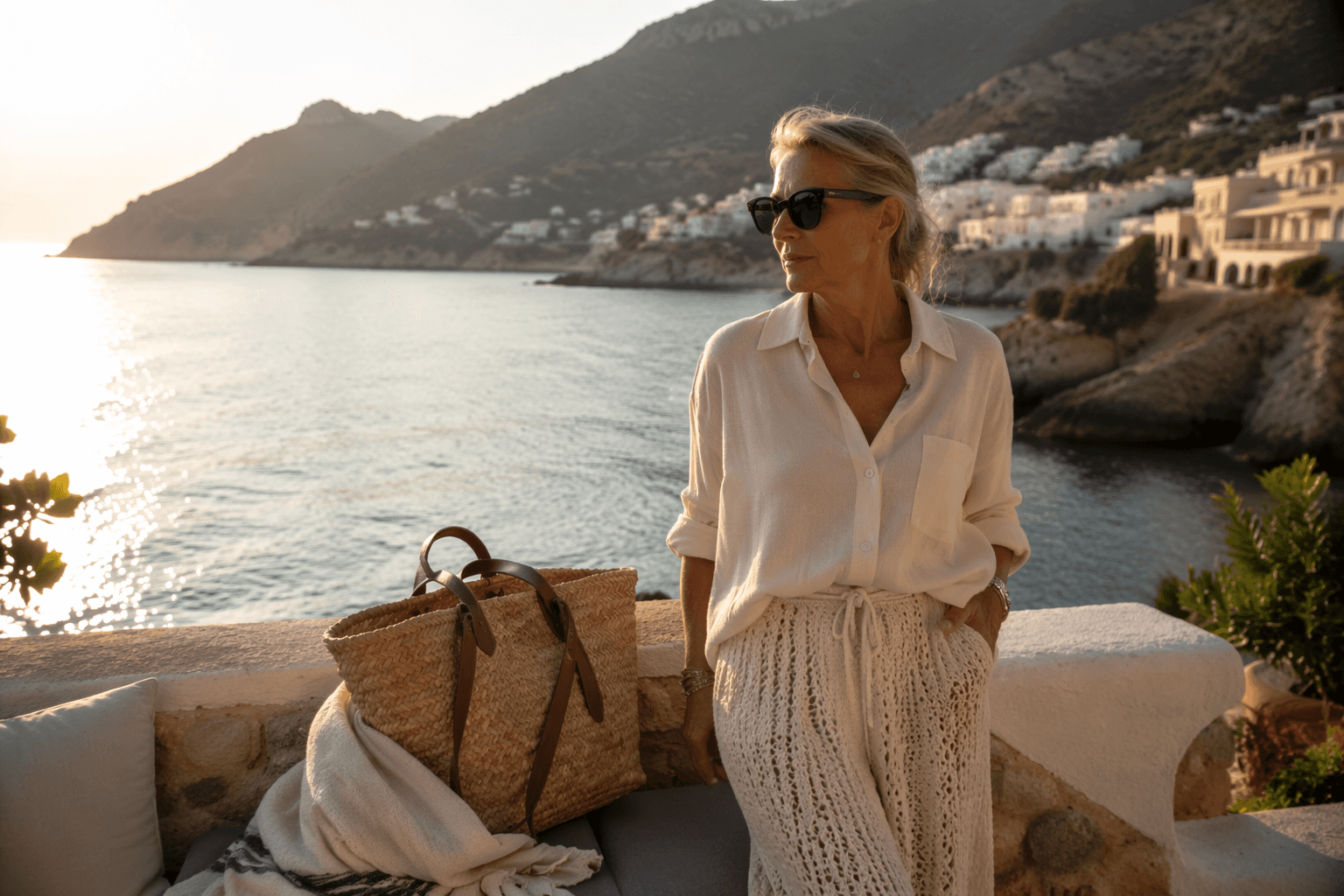
Coastal grandmother menswear embraces soft tailoring and vivid color
Spring 2026 menswear turns coastal grandmother into a cross-gender uniform: linen, pajama suiting, soft tailoring, and color that feels sun-warmed, not precious.

The new menswear coast
Menswear is dressing like it has somewhere to be after lunch, and that is exactly why it feels fresh. Spring 2026 leans into leisure, soft power, and a clean sense of escapism, with fluid silhouettes, lightweight layers, pajama dressing, and artisanal textures pushing the season away from rigid tailoring and toward something looser, smarter, and easier to wear.
That shift is the real story behind coastal grandmother now. This is no longer just a womenswear mood built from cream knits and seaside interiors. On the men’s runway, it becomes a broader fashion direction: relaxed structure, linen layers, washed cotton, and polished pieces that still breathe. The result is clothing that looks considered without looking armored, and that balance is exactly what makes the trend feel ready to move across gender lines.
Soft tailoring is the new status signal
The strongest menswear collections in Milan, Paris, and beyond made one thing obvious: ease has become the new authority. Buyers in Milan responded especially well to relaxed tailoring and vibrant colors, and the names that kept coming up were the names that know how to sell polish without stiffness: Giorgio Armani, Prada, Ralph Lauren, and Umit Benan.
This matters because the season is not selling slouch as laziness. It is selling control through softness. Jackets fall away from the body instead of pinching it, trousers are easier through the leg, and the whole silhouette reads as more lived-in than locked down. That is exactly the kind of structure coastal grandmother has always loved, and menswear is now validating it on a much bigger stage.
Color does the work that tailoring used to do
If the silhouette is gentler, the color is doing the heavy lifting. Tomato red, pistachio green, butter yellow, faded pink, and cobalt blue are the season’s key notes, and they give the collections a hit of optimism that keeps all that softness from drifting into blandness. These shades refresh classic menswear staples instead of fighting them, which is why the clothes still feel wearable.
That palette is important for women’s and shared-lifestyle wardrobes too. The same colors can slide straight into relaxed shirting, drawstring trousers, knit sets, and easy resort pieces without feeling costume-y. For shoppers who already lean toward natural fabrics and unfussy polish, the message is clear: vivid color is no longer reserved for statement dressing. It is part of the everyday uniform.
The Prada and Kiko showings told the story best
Prada gave the season one of its sharpest emotional anchors. The house’s Spring 2026 men’s show in Milan, presented in June 2025, was tied to Rineke Dijkstra’s 1993 portrait of an adolescent boy on the beach in Odesa, Ukraine. That reference sharpened the collection’s sense of vulnerability and transition, which is exactly where this menswear moment lives: between formality and ease, between city polish and beachside drift.
Kiko Kostadinov went even more literal with the fantasy. WWD described the Spring 2026 men’s collection as an “island in the sun” wardrobe built for warm-weather reality, and that phrase lands because it captures the season’s mood without overexplaining it. These clothes are not pretending summer is a theme; they are built for actual heat, actual movement, and actual life.
What the season is really asking men to wear
WWD’s Milan coverage distilled the season into a practical wardrobe list, and that is where the trend becomes genuinely useful. Relaxed blazers, shirt jackets, sartorial shorts, knit sweaters, and suede outerwear are all part of the picture, which means this is not just an abstract aesthetic. It is already translating into buyable product for next summer.
The pieces that define the shift
- Relaxed blazers that skim instead of squeeze
- Shirt jackets that sit between outerwear and layering piece
- Sartorial shorts that keep tailoring in the frame without the heat
- Knit sweaters with a softer, more tactile hand
- Suede outerwear that adds texture without looking heavy
The common thread is versatility. Pitti Uomo pushed that idea hard for Spring 2026, emphasizing wardrobes that can move from workwear to soft tailoring without a costume change. That is why the season feels bigger than menswear alone. It is about clothes that can live in a shared closet, move from weekday to weekend, and still look intentional when they’re thrown on at speed.
Why coastal grandmother now belongs to everyone
This is where the coastal grandmother idea stops being a niche mood board and starts looking like an industry shift. The ingredients are all here: linen, washed cotton, pajama dressing, artisanal texture, relaxed tailoring, and a palette that swings from sandy softness to vivid color. Put them together and you get clothing that feels polished, but never precious.
That is the cross-gender pull. Women have already been living in this language for years, through easy trousers, oversized shirting, and quiet luxury’s softer cousin. Menswear is now catching up, and in some places it looks even more convincing because it has shed the old obsession with rigidity. The smartest brands will translate this into womenswear, shared wardrobe capsules, and lifestyle merchandising that stretches from beach to city without breaking character.
Spring 2026 makes the case plainly: the future of dressing is not harder. It is softer, lighter, and far more wearable, with enough color to keep it alive.
This article was produced by Prism’s automated news system from verified source data, official records, and press releases, then run through automated quality and moderation checks before publishing. The system is built and supervised by the people who set the standards it runs under. Read our full AI policy.
Did this article answer your question?