Hamptons packing guide: coastal grandmother style for beach to dinner
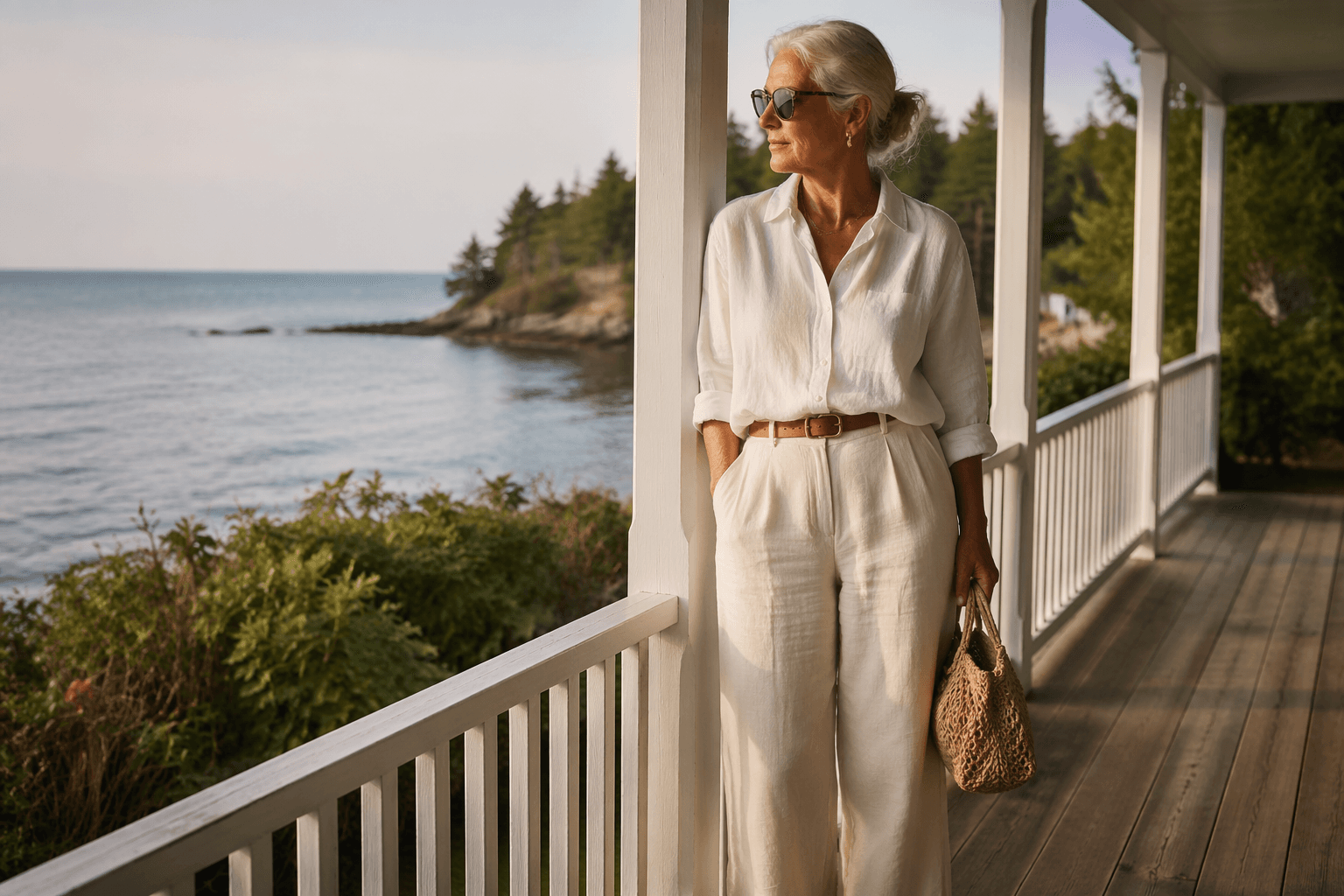
Coastal grandmother lives on in the Hamptons because it solves the hardest summer dress code: polished enough for dinner, easy enough for sand, docks, and long lunches. Sag Harbor and East Hampton reward white denim, linen, and raffia, not costume dressing.
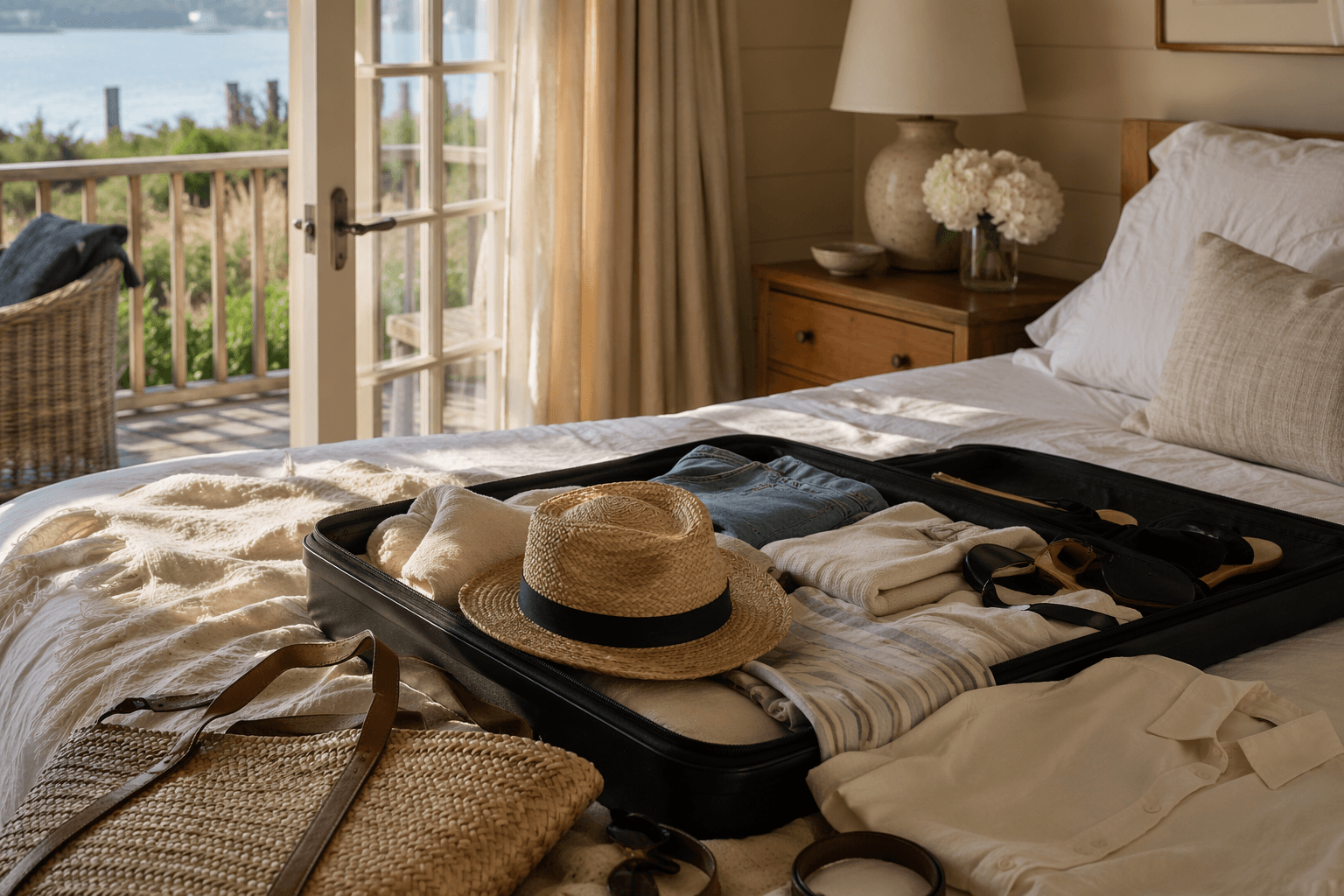
White jeans, breezy tops, coordinating linen sets, cover-ups, broderie, raffia bags, and boat-day layers make sense in the Hamptons because the social calendar is as much about dockside plans as it is about reservations. The Hamptons version of coastal grandmother is not about dressing like a character. It is about moving cleanly from beach mornings to marina lunches, then into Sag Harbor or East Hampton at dusk without looking as if you changed your whole personality for dinner.
Why coastal grandmother still works out east
The term coastal grandmother was popularized on TikTok in 2022 by Lex Nicoleta, and its visual grammar was shaped in part by Nancy Meyers films, especially *Something’s Gotta Give*. What made it spread was not nostalgia alone, but its promise of a wardrobe that looks seasonless and lived-in: linen, cotton, stripes, straw hats, neutral tones, and a relaxed polish that never reads sloppy. The hashtag has drawn more than 107 million views on TikTok and more than 10,000 on Instagram.
In the Hamptons, that aesthetic lines up with the region’s long-running language of quiet luxury. The clothes are supposed to look expensive without announcing themselves, and they need to work for a day that starts in sand, passes through a marina, and ends at a restaurant with the sea breeze still on your skin. Coastal grandmother is a lasting reference point for summer vacation dressing, not a one-season internet costume.
The Hamptons wardrobe formula
Start with white denim, because it gives the whole look shape. A good pair of white jeans does the heavy lifting that shorts cannot: it works with a striped knit at breakfast, a broderie blouse at lunch, and a silkier top at dinner. In the Hamptons, white denim has the right level of crispness for polished but easy dressing, especially when the rest of the outfit stays soft in linen or cotton.
From there, build in breezy tops and coordinating sets. A matching linen shirt and trouser set has the advantage of looking intentional even when you are dressing quickly, and it photographs beautifully against cedar shingles, dock wood, and marina light. Cover-ups matter too, but the best ones do not look like afterthoughts. Choose pieces with enough structure to hold their own once the beach bag is gone, so you can go straight from towel duty to a table in Sag Harbor.
What to pack for beach mornings
Beach mornings in the Hamptons ask for ease first, polish second. Think of a cover-up as a bridge piece, not a throwaway layer: a crisp popover, a loose striped shirt, or a broderie set that catches the light without feeling fussy. The coastal grandmother version of beachwear avoids neon, logos, and anything too athletic, because the mood is less sport and more seaside ease.
- a cotton or linen shirt that can be tied, draped, or worn open over a swimsuit
- white jeans for the drive back or a late lunch when you want to look pulled together
- a neutral towel or pareo that does not fight with the rest of the palette
- straw or raffia accessories that reinforce the texture story without feeling forced
The most effective pieces are the ones that photograph well but still behave in wind, salt, and heat:
Raffia bags are especially useful because they sit right in the middle of practical and recognizable. They read Hamptons immediately, but they also have enough texture to keep an all-white or all-beige outfit from going flat.
What works from marina to dinner
Sag Harbor and East Hampton are the places where the wardrobe has to earn its keep. They anchor the East End’s restaurant hopping, marina views, and beach-to-evening plans, and that means your clothes need to survive the transition from daytime ease to seated dinner without a change in mood. Sag Harbor’s marina setting includes Le Bilboquet’s water views.
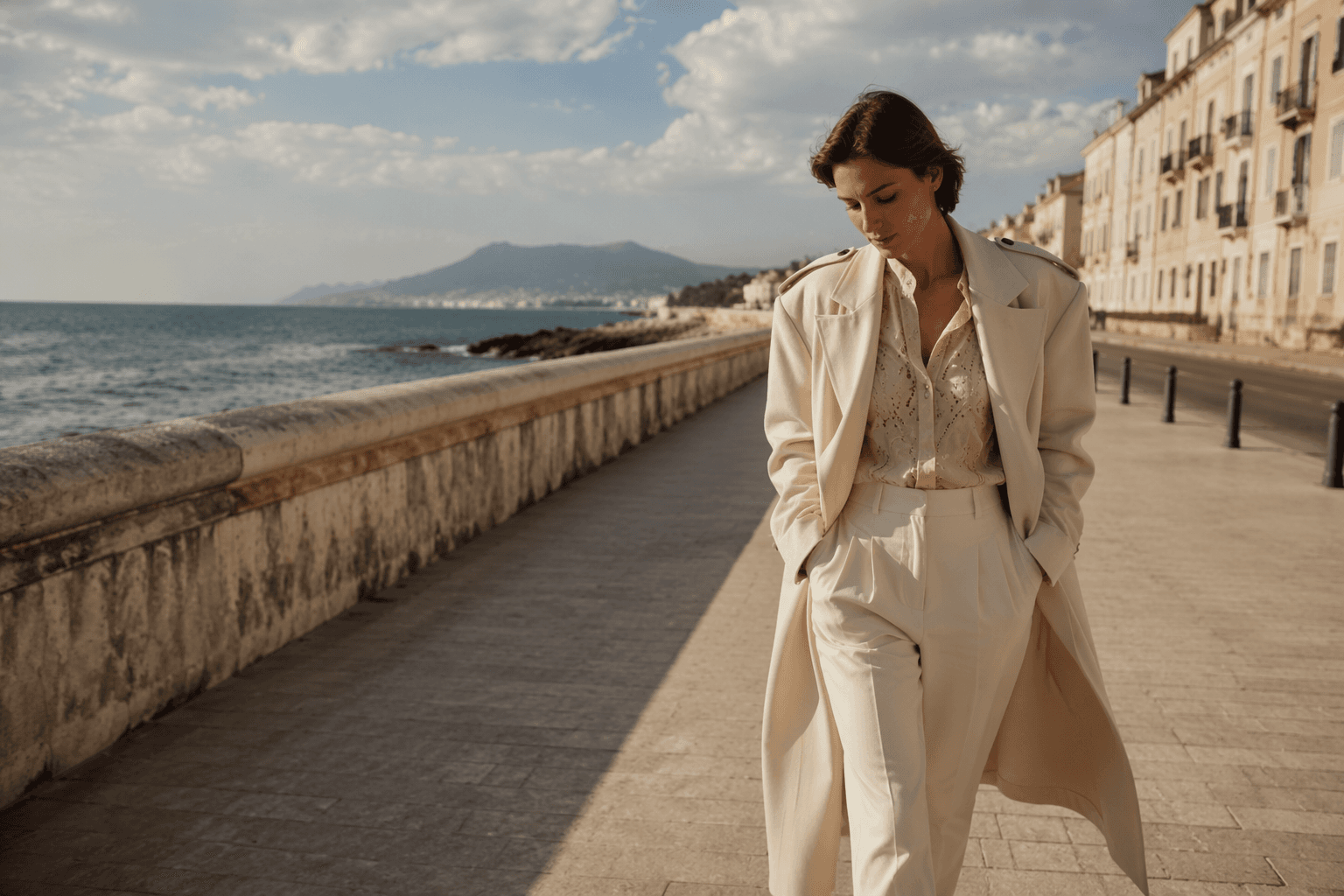
A linen trouser with a crisp tank and a light cardigan can feel right at both a waterfront lunch and a later reservation. A broderie top with white denim gives enough detail for dinner, but still feels coastal in daylight. If the outfit has one slightly sharper element, let it be the shoe or bag, not the silhouette itself.
Boat-day dressing without the costume
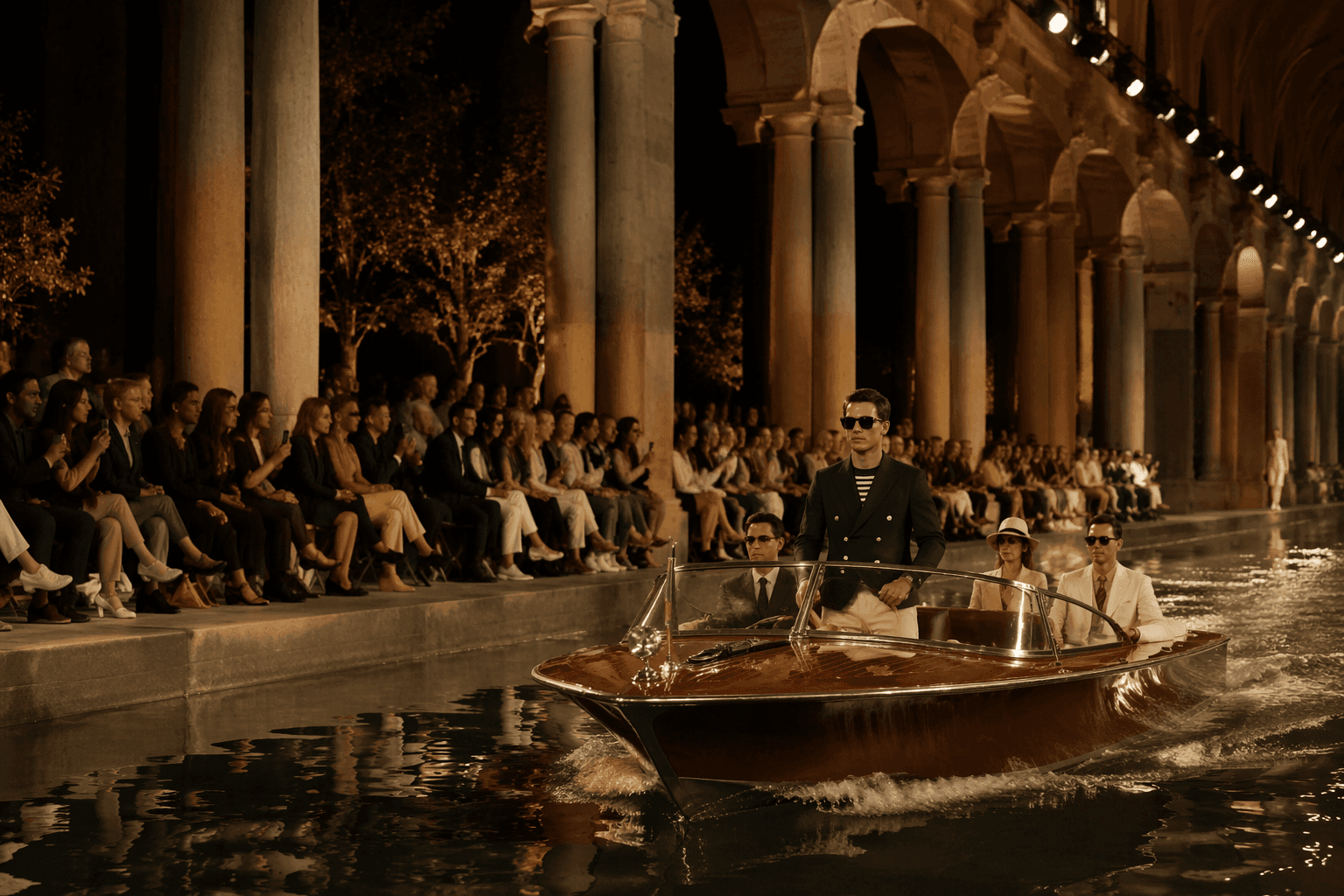
Boat-day dressing is where coastal grandmother can tip into parody if you overplay the references. The safest route is to keep the lines simple and the fabrics breathable. Stripes are useful here because they nod to the nautical tradition without becoming a theme party, and they sit naturally inside the look’s broader vocabulary of cotton and linen. A striped sweater thrown over the shoulders, a buttoned shirt with brass details, or a clean knit tucked into white denim can read more current than a full head-to-toe maritime reference.
The best boat-day outfit is built around movement: something that does not wrinkle badly, catch too much wind, or require constant adjustment. That is why coordinated separates beat overstyled dresses in this setting. You want the flexibility to sit on a dock, step into a car, or keep the same outfit on for a sunset drink.
How to make it feel current, not nostalgic
The difference between coastal grandmother and costume is editing. Keep the palette neutral, but not flat. Mix creamy whites, oat, stone, pale blue, and sand, then break them up with texture from raffia, straw, and linen weave. Use one recognizable summer detail at a time: a striped top, a brass button, a sailor neckline, a polished flat.
This article was produced by Prism’s automated news system from verified source data, official records, and press releases, then run through automated quality and moderation checks before publishing. The system is built and supervised by the people who set the standards it runs under. Read our full AI policy.
Did this article answer your question?