Nancy Meyers' Cinematic Coastal Grandmother Aesthetic Translated into Livable Homes
Nancy Meyers’ films sell a domestic mood, layered neutrals, natural textures, and curated clutter, that you can recreate room by room, often without spending a fortune.
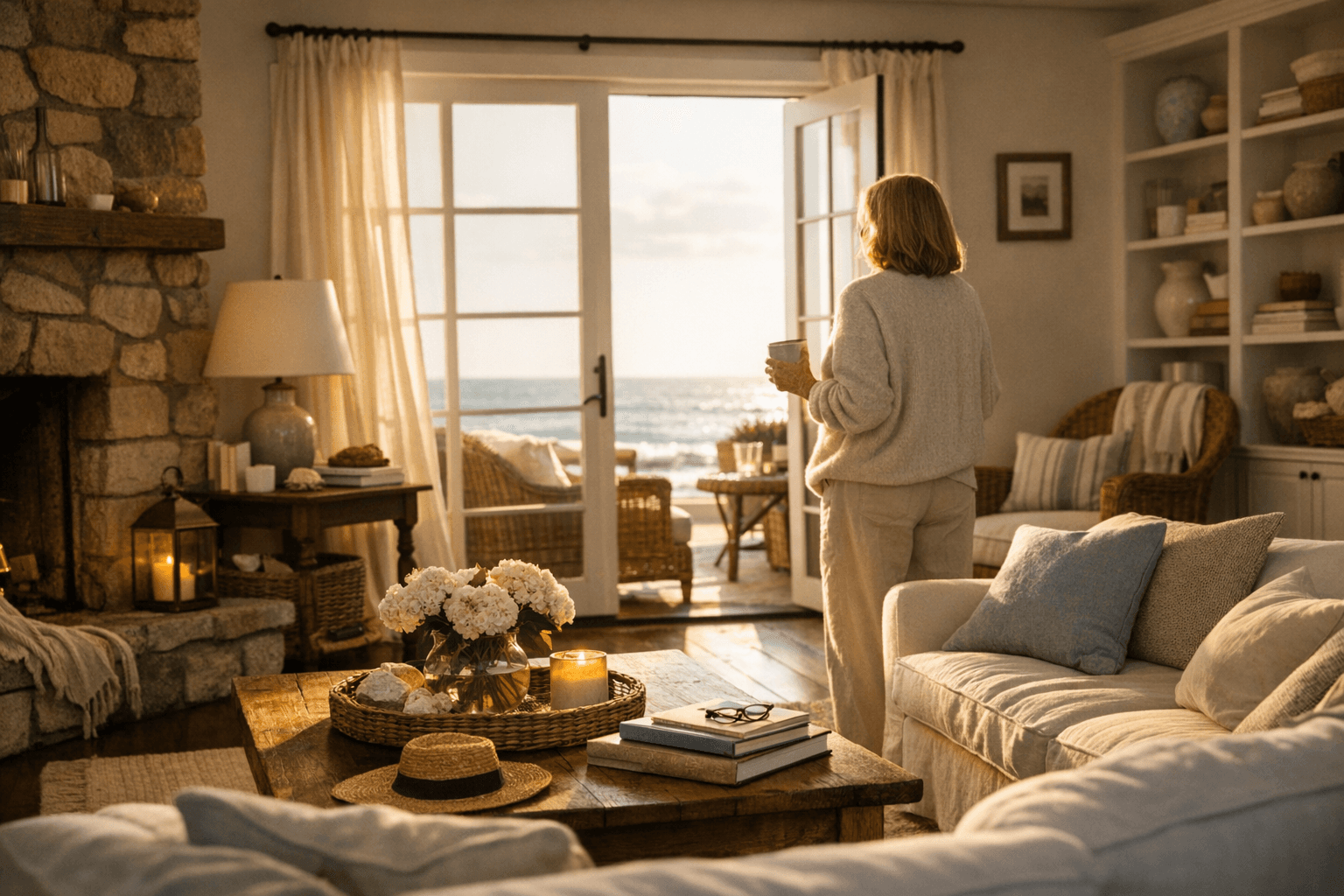
Nancy Meyers stages homes the way a costume designer dresses a character: every cushion, candle and well-thumbed book reveals personality. Maison de Cinq even distilled her approach into a “10 Essentials” primer, including clear rules such as “Avoid anything too trendy” and “Use natural materials”, while a February 12, 2026 piece walked readers through translating these bright kitchens, layered neutrals, natural textures and curated clutter into livable interiors (the original excerpt ends in a truncated word: “aspirational s”). What follows is a practical, room-by-room blueprint that keeps her film-set polish but makes the look liveable and affordable.
1. Core thesis: warmth and lived-in elegance over price
Nancy Meyers’ aesthetic isn’t about showpiece expense; it’s about comfort first. As the repeated Big Takeaway puts it: “The Nancy Meyers aesthetic isn’t about having the most expensive home or the most perfectly styled room. It’s about creating spaces that feel warm, welcoming, and unmistakably yours. Layer gradually. Mix new with old. Prioritize soft lighting, natural materials, and the things that make your house feel lived in. That’s the whole secret, and it’s one you can start building today, one farmhouse sink or stack of books at a time.” Across outlets that was the single, non-negotiable ruling: start small, build texture, favor what’s used.
2. What it looks like on screen: three visual touchstones
If you need shorthand, use these Meyers references: The Intern’s brownstone living room with mouldings and an elegant fireplace; Something’s Gotta Give’s sunlit living spaces; and Meyers’ own kitchen as shown via Architectural Digest. AOL highlights The Intern specifically, “For your coffee table, think stacks of books, fresh flowers, and personal touches reminiscent of The Intern,”, and Maison de Cinq cites film stills as teaching tools. These are not photo-staged rooms: they read like homes inhabited by intelligent, hospitable people.
3. Palette and color language: layered warm neutrals with punctuation
Homes & Gardens captures the chromatic rules: “Stick with warm neutrals: creamy whites, pale linens, muted blues, and aged woods,” advises Eli; and “Layer different shades of white, from ivory to natural canvas, to keep the look cohesive and dimensional.” That calming base is what makes individual objects read like storytelling devices instead of decoration. Use muted blues as punctuation and let contrast come from texture and object rather than screaming color.
4. Natural materials and textures: the tangible vocabulary
The films speak in limestone, marble, linen and woven fibers. Life & Style recommends “marble or stone countertops (or even marble-look accessories if you’re renting), woven shades on the windows, linen dish towels, and wicker baskets for storage,” and Maison de Cinq’s #2 essential is blunt: “Use natural materials.” Bring in limestone, whitewashed teak, sisal rugs, and woven fibers to add warmth; these are the tactile elements that survive trends and read authentic on camera.
5. Furniture, finishes and the mixed-wood rule
Furniture should feel collected, not matched. Emily Henderson’s screenshot study notes a surprising detail: “I quickly noticed that there were no light wood tones in sight, which I showcased below through the mahogany-finished chest of drawers.” Maison de Cinq complements that observation: “Wood tones are mixed, not matching, creating a collected feel that adds to the timelessness of her spaces.” The prescription is practical: favor classic silhouettes (slipcover sofas, upholstered ottomans, armchairs in linen or subtle pinstripe) and introduce one darker, mahogany piece to anchor a palette if your room feels too bland.
6. Styling and “curated clutter”: books, copper, and the everyday on display
The signature move is domestic evidence, stacks of books, open shelving of white dishes, and copper pots left to be used. AOL’s how-to is literal: “For your coffee table, think stacks of books, fresh flowers, and personal touches reminiscent of The Intern… And scatter books everywhere to create warmth, intelligence, and personality.” Life & Style echoes it for kitchens: “Open shelving stocked with white dishes, cookbooks stacked casually, and copper pots hanging or sitting out all contribute to that signature ‘this kitchen is actually used’ feeling.” Hunt library sales and secondhand bookstores; this is where the look gains authenticity without the price tag.
7. Lighting and candles: softness is the plot device
Lighting reads like mise-en-scène: small lamps on countertops, dimmer switches, and plenty of candles. Life & Style advises leaning into softness, “lamps on the counter, dimmer switches if you can swing them, and candles on the table.” Emily Henderson offers a style-specific candle note: prefer “larger pillar candles and clear hurricane vases over tapers and candlesticks because it felt more ‘Meryl Streep in Santa Barbara.’” Add lantern-lit corners outdoors for the same cinematic effect.
- Kitchen: Bright, used, and hospitable; think stone or marble (or marble-look) counters, woven shades, linen dish towels, wicker baskets, a farmhouse sink as a starter swap, and soft lamps or candles for evening. Life & Style and the Original Report place kitchens front-and-center for the aesthetic.
- Living room: Mix vintage architectural detail with contemporary furniture; “Nancy Meyers’ living rooms are renowned for their blend of vintage charm and contemporary comfort,” Butler said. Layer slipcovers, quilts that aren’t “in your face,” sisal or striped rugs, and stacks of books with fresh flowers.
- Bedroom: “The bedroom might be where this aesthetic pays off the most… basically a masterclass in making your space feel restful,” AOL notes. Build it with layered linens, quilts, pinstripe or gingham percale if you prefer (Emily Henderson admits to swapping her pinstripe linen for a slate blue gingham and considering a Meyers-style edit).
- Patio/outdoor: Homes & Gardens insists: “Don’t skip the soft goods.” Use washed-linen or block-printed cotton pillows, striped Sunbrella for durability, a faded-tonal outdoor rug, lanterns, and whitewashed teak or limestone accents to create an open-air living room ready for long lunches beneath a patio umbrella.
8. Room-by-room: kitchen, living room, bedroom and patio playbooks
9. Pattern, fabrics and small props to collect
Textiles are modestly patterned: Delft chintz accents, slate ginghams, subtle pinstripes, and quilts used sparingly. Style by Emily Henderson lists rugs as “almost always sisal or an Annie Selke-like stripe,” and recommends armchairs in linen or canvas. Add pillar candles in clear hurricanes, wicker baskets, and a mahogany chest or two to punctuate the room’s story.
10. Budget strategy and sourcing: mix new with thrifted
This aesthetic rewards thrift. Maison de Cinq emphasizes that, despite film budgets, “this is a style that can be achieved on any budget!” AOL underscores the pragmatic joy of secondhand sourcing, a vintage chair beside a modern lamp is not cutting corners; it’s exactly the point. Practical substitutions are encouraged: marble-look accessories for renters, library-sale books for coffee-table heft, and a single invested piece (a slipcover sofa or farmhouse sink) paired with thrifted finds.
11. The makers behind the look and how to read their grammar
Emily Henderson credits production designers Jon Hutman and Beth Rubino as the craftsmen of this visual language: “Jon Hutman and Beth Rubino… have figured out a way to create rooms that are nostalgic without being dated.” Homes & Gardens’ contributors (Eli and Nina) supply the material palette and the outdoor translations; Butler provides the living-room assessment used above. Treat these names as the shorthand for the Meyers vocabulary if you want to decode a still frame or your own living room.
Conclusion Nancy Meyers’ cinematic domesticity translates because it is a design grammar, not a shopping list: warm neutrals, layered textures, soft lighting, and an honest accumulation of objects tell the story of a life being lived, not staged. As the Big Takeaway reminds us, “The Nancy Meyers aesthetic isn’t about having the most expensive home or the most perfectly styled room… Layer gradually. Mix new with old. Prioritize soft lighting, natural materials, and the things that make your house feel lived in. That’s the whole secret, and it’s one you can start building today, one farmhouse sink or stack of books at a time.”
This article was produced by Prism’s automated news system from verified source data, official records, and press releases, then run through automated quality and moderation checks before publishing. The system is built and supervised by the people who set the standards it runs under. Read our full AI policy.
Did this article answer your question?