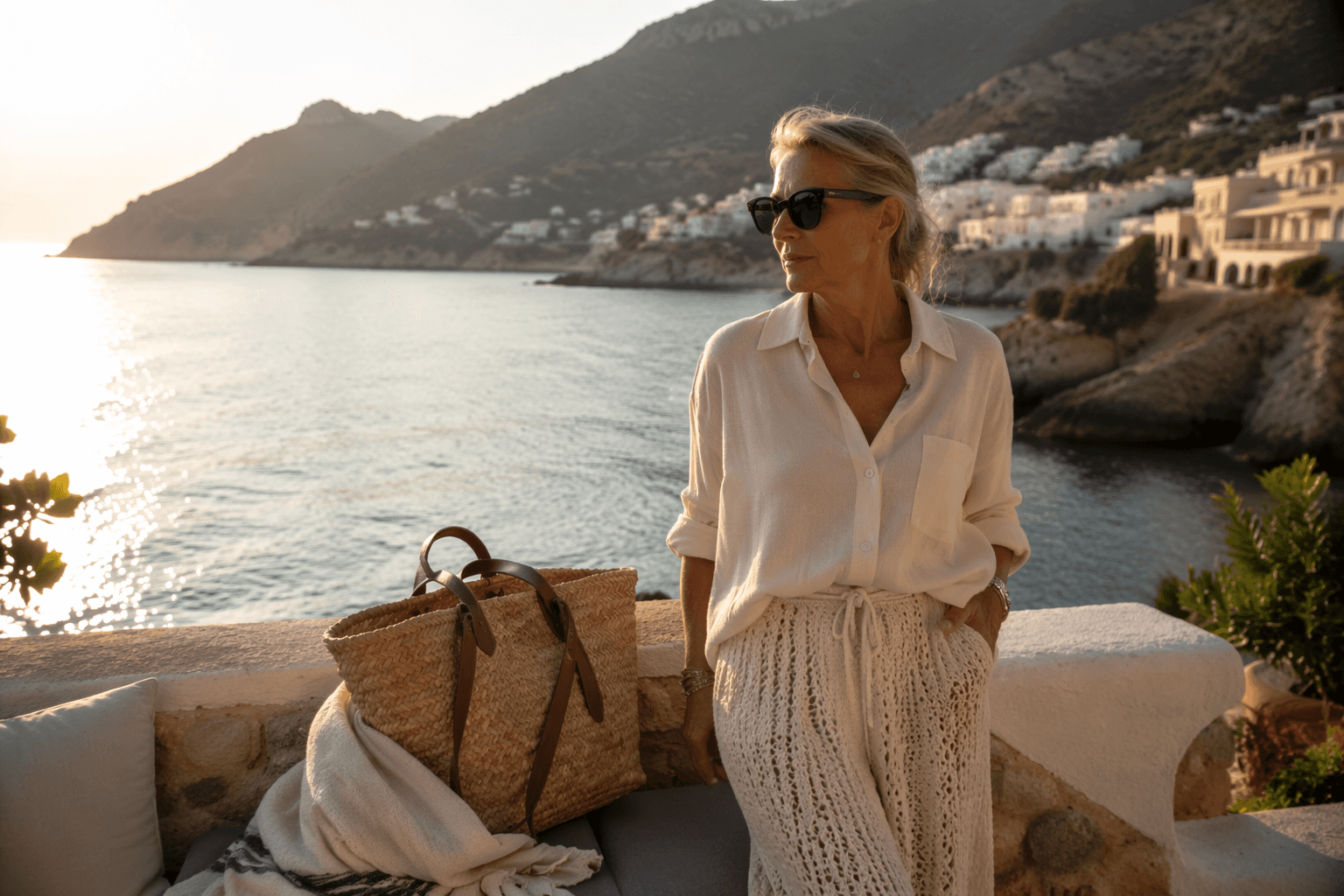
Six Quiet-Luxury Handbags Perfect for a Coastal Grandmother Spring
Linen breezes and natural leather: the six quiet-luxury bags worth carrying into a coastal grandmother spring.
Salt air and white linen. That's the entire mood, and the right bag either locks it in or blows it up. The coastal grandmother aesthetic has never been about logos or statement hardware — it's about things that feel considered without announcing themselves, the kind of accessory that looks better the longer you carry it. These six bags live entirely in that register: clean lines, muted tones, leathers that soften with wear, and silhouettes that disappear effortlessly into a morning at the farmers market or a late afternoon walk along the water.
The benchmark for this edit is simple: does it work with linen trousers, a cotton shirt, and flat sandals without trying too hard? Every bag below clears that bar.
The Row Marlo
If there's a single bag that defines the quiet-luxury moment right now, it's the Marlo. The Row has built its entire identity around the idea that restraint is a form of sophistication, and the Marlo is probably the clearest expression of that philosophy in their accessories line. The silhouette is structured without being rigid — a soft rectangular frame with minimal visible hardware, executed in full-grain leather that develops a patina rather than staying static. There's nothing decorative here, no buckles competing for attention, no embossed branding. The bag simply is what it is, and that confidence reads immediately.
For the coastal grandmother wardrobe, the Marlo earns its place because it transitions without effort. It works at a scale that holds a paperback, sunglasses, and a wallet without looking bloated, and the neutral colorways, particularly the raw natural tones The Row gravitates toward, sit exactly at the intersection of beach-adjacent and genuinely luxurious. The price point sits firmly in investment territory, which actually aligns with the aesthetic's ethos: buy once, carry for a decade.
Bottega Veneta
Bottega Veneta under Matthieu Blazy has continued to refine what made the house essential under Daniel Lee — the Intrecciato weave remains the signature, but the shapes have loosened and softened in ways that feel more relevant to how people actually dress now. For a spring coastal edit, the appeal is tactile before it's visual: woven leather has a give and a warmth that smooth grain doesn't, and in the sandstone, clay, and pale celadon shades Bottega has been working with, the bags feel almost organic, like something you'd find at a very good craft market rather than a glass-fronted boutique.
The Andiamo, one of the house's more recent introductions, is worth particular attention here. It's a simple tote format with a slight trapezoid lean, offered in the Intrecciato weave, and it has exactly the unfussy ease that coastal grandmother dressing demands. No feet, no studs, no logo plate — just the weave itself as the only decorative gesture. Carry it against a wide-leg linen pant and an oversized cotton button-down and the whole look snaps into focus.
The Case for Natural Leather and Why It Matters This Season
Both The Row and Bottega Veneta are pointing at something broader that's worth naming directly: natural, undyed, or lightly finished leathers are having a significant moment in quiet-luxury accessories right now. The appeal is partly aesthetic and partly philosophical — these materials show use, they change over time, and they resist the kind of pristine showroom perfection that can make a bag feel like it's wearing you rather than the other way around.
For a coastal grandmother spring specifically, this matters because the whole wardrobe vocabulary is built on texture and ease: nubby linen, washed cotton, worn denim. A bag in raw natural leather or undyed calf fits into that world in a way that a highly lacquered smooth leather simply doesn't. It looks lived-in from the second purchase, and that's the goal.
What to Look For Beyond the Name
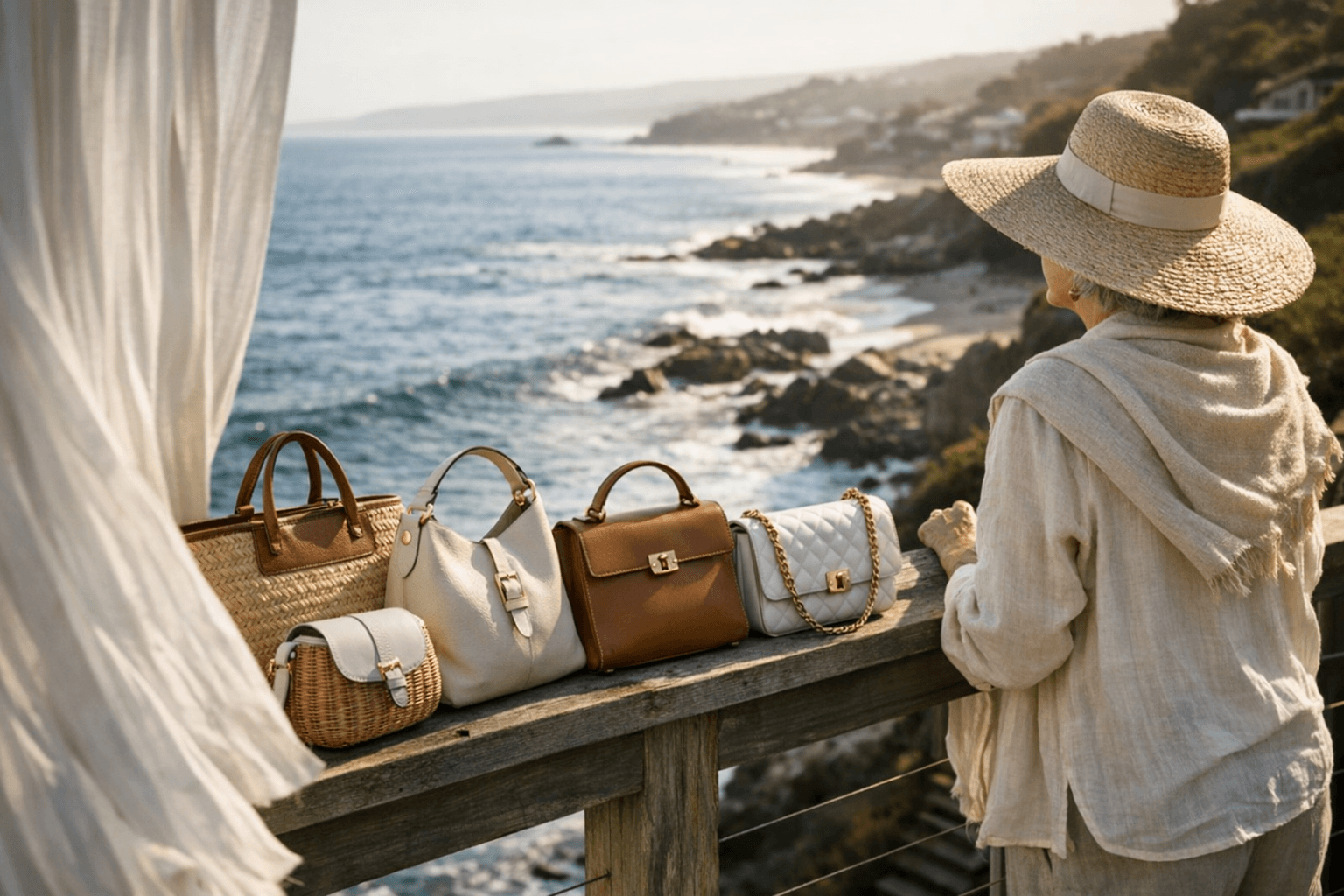
The six bags in this edit share specific construction and design markers that separate them from bags that only approximate quiet luxury without actually delivering it:
- Minimal or recessed hardware — no visible zippers in contrasting metal, no logo-engraved clasps
- Leathers tanned for patina, not surface perfection — full-grain, vegetable-tanned, or woven constructions that improve rather than degrade
- Silhouettes scaled for actual use — not micro, not oversized, but genuinely functional at a scale that fits the relaxed pace of coastal dressing
- Neutral colorways that read as natural rather than greige-by-formula: raw, ecru, warm stone, faded clay
Styling the Coastal Grandmother Bag in Practice
The styling math is almost embarrassingly simple, which is the point. Wide-leg linen trousers in oatmeal or natural white, a cotton poplin shirt with the sleeves rolled, flat leather slides or espadrilles — the bag needs to disappear into this outfit rather than punch above it. Every bag in this edit is sized and finished to do exactly that. Carry cross-body or tucked under one arm; both work equally well and neither reads as overthought.
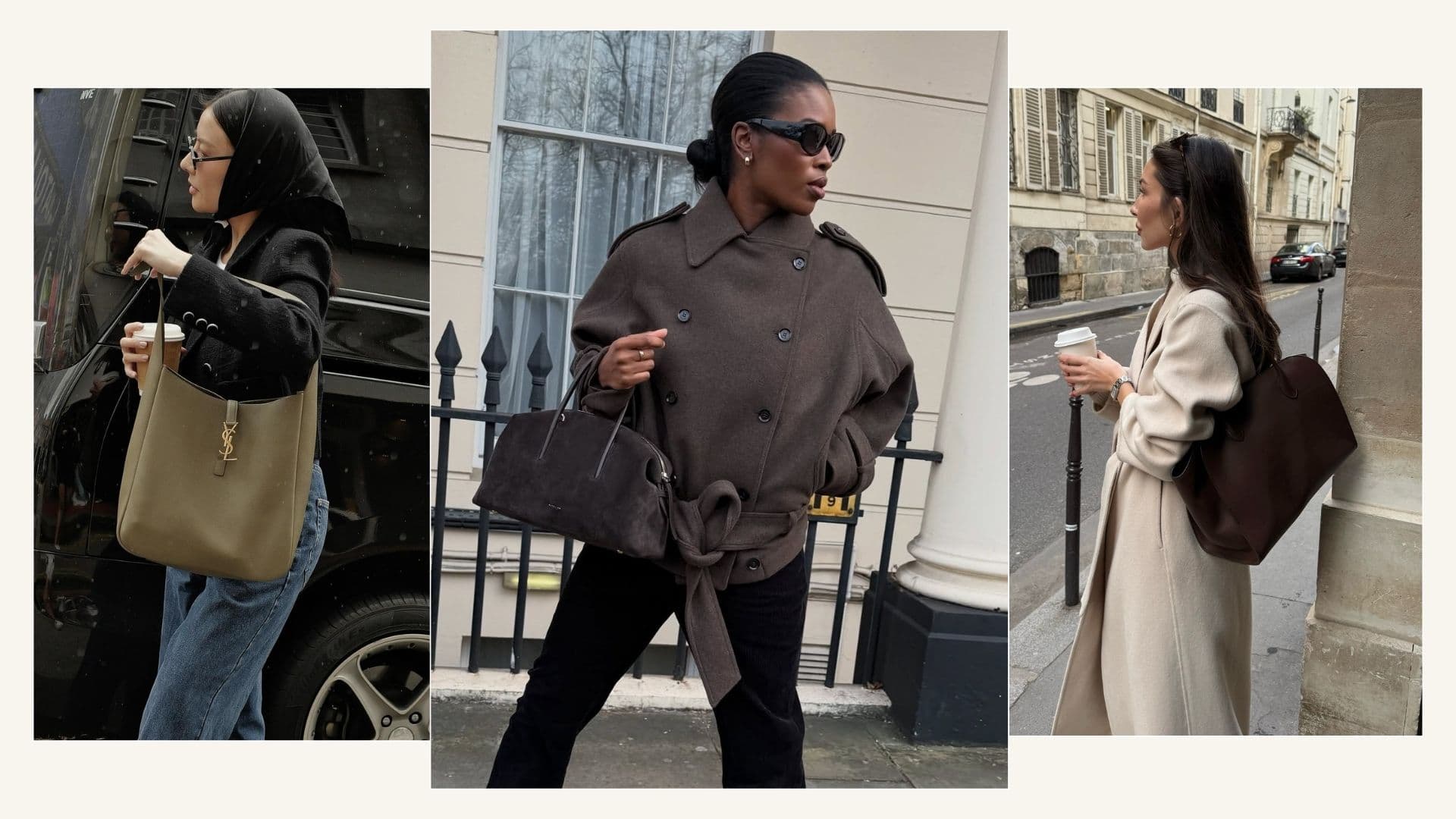
What disrupts the look is anything with visible brand architecture: a logo charm, a logo-printed canvas body, hardware in a fashion-forward finish. The coastal grandmother aesthetic is fundamentally about things that don't shout, which is precisely why The Row and Bottega Veneta are the anchoring reference points for this category — both houses have built commercial empires on exactly that restraint.
The Investment Logic
Quiet-luxury bags are not cheap, and they're not supposed to be. The case for spending seriously here is that the aesthetic itself is built on longevity: pieces you return to every spring because they still look right, bags that outlast the trend cycles because they were never playing the trend game to begin with. The Row and Bottega Veneta both have strong secondary market performance precisely because their bags are identifiable by material and construction quality rather than by a logo, which means they hold value even as seasons shift.
A bag in this category, purchased thoughtfully and carried consistently, is closer in logic to a piece of furniture than to a fashion accessory. It becomes part of the wardrobe infrastructure, not a seasonal statement. For a dressing philosophy that's fundamentally about building rather than accumulating, that's exactly the right investment to make.
This article was produced by Prism’s automated news system from verified source data, official records, and press releases, then run through automated quality and moderation checks before publishing. The system is built and supervised by the people who set the standards it runs under. Read our full AI policy.
Did this article answer your question?