Demna turns Times Square into Gucci’s cruise runway in New York
Demna's first Gucci cruise show made Times Square a reset, turning GucciCore and New York history into a sharper answer to what Gucci means now.
What Gucci means now
The most interesting thing about Demna’s first Gucci cruise show was not the takeover of Times Square, but the question underneath it: what, exactly, does Gucci mean now? In his hands, the brand is being rebuilt through atmosphere, memory, and a very deliberate kind of visual excess, with the cruise 2027 collection, GucciCore, presented as a homecoming rather than a stunt. That framing matters, because it suggests Demna is not just dressing a house for the season ahead, but testing which parts of Gucci still carry force in public.
Times Square as a brand argument
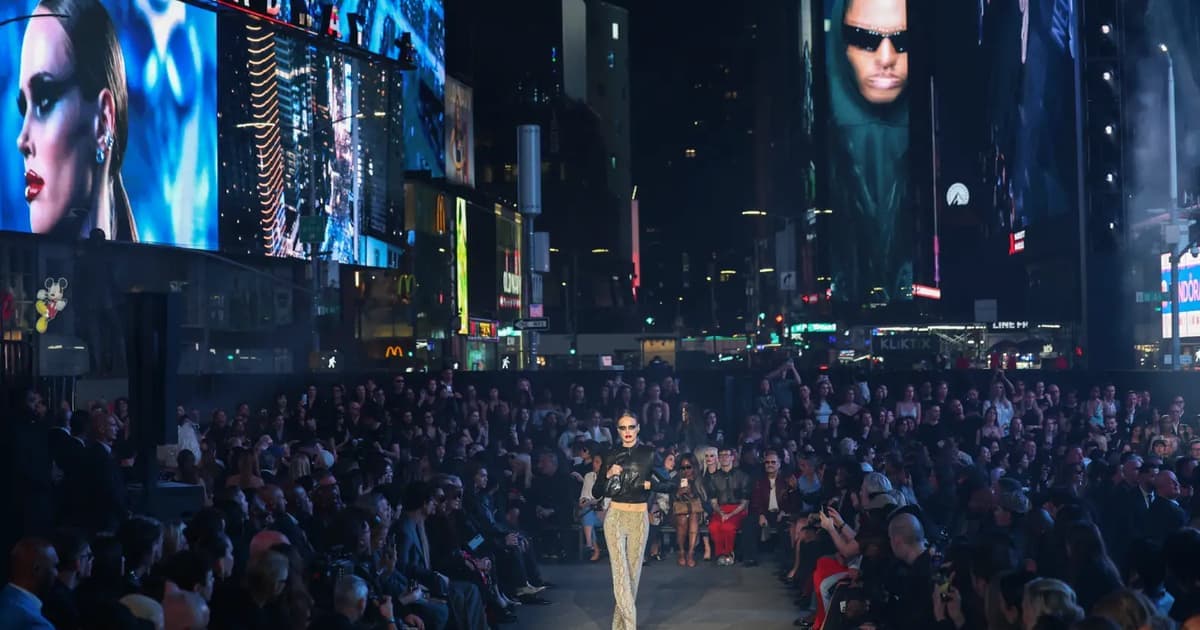
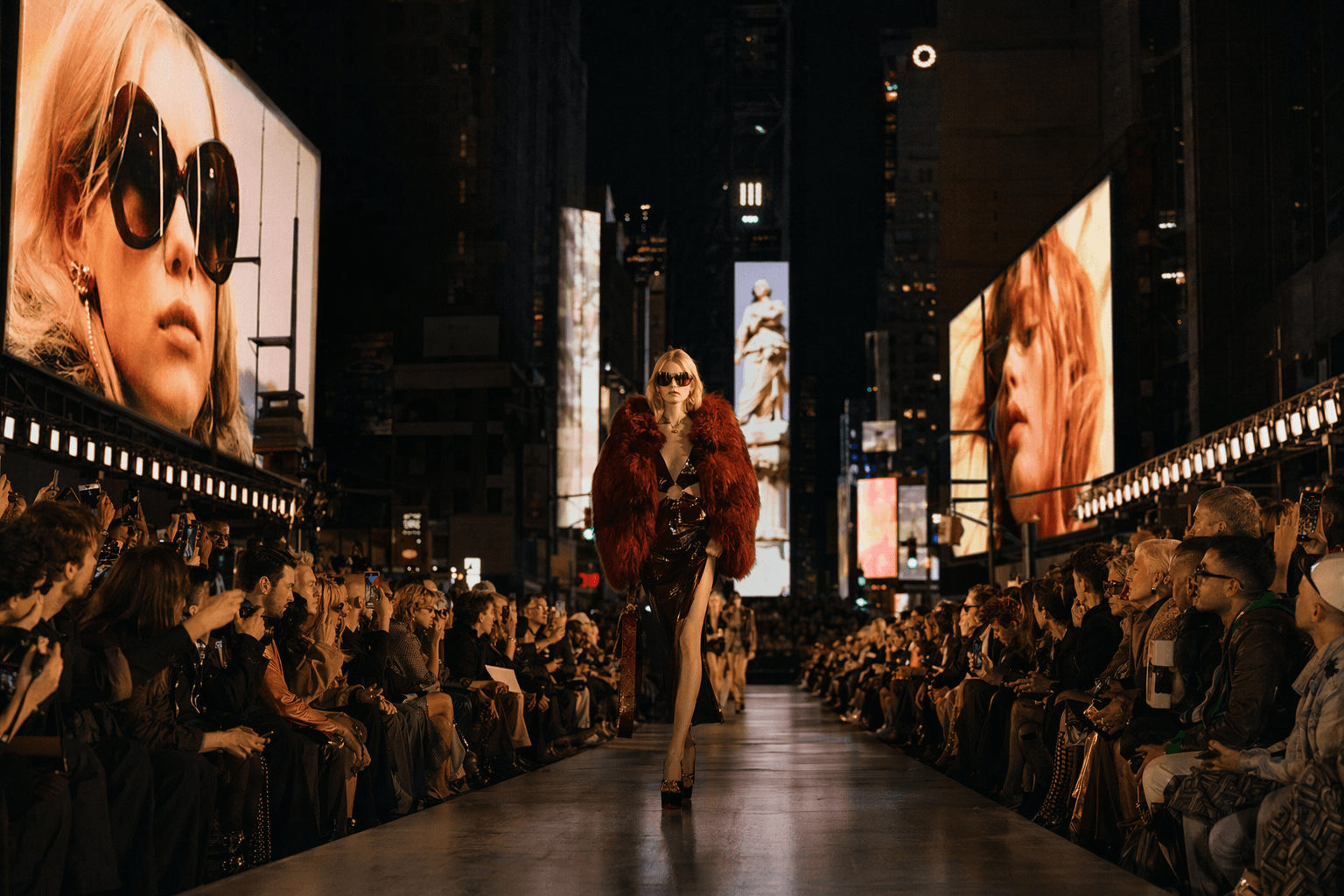
On Saturday night, May 16, 2026, Gucci turned Broadway between 46th and 48th Streets into a runway and billboard livestream, pulling one of New York’s busiest tourist districts into its own orbit. The choice of Times Square was not random spectacle. It placed Gucci inside the city where the brand opened its first store outside Italy in 1953, giving the show a built-in historical echo while Kering looks to revive its flagship label.
That is where Demna’s method becomes clear. He is using location as language, and in this case Times Square spoke in neon, scale, and permanent motion. Luxury houses often use destination shows to reset the narrative, but here the setting did even more work: it made Gucci feel both aggressively present and newly self-aware, as if the house were asking New York to witness its recalibration in real time.
The clothes were built to be worn, not merely admired
The collection itself, GucciCore, pushed against the expectation that cruise means fantasy first and wardrobe second. Reviews described it as more commercial and more grounded than the usual resort daydream, with peacoats, pencil skirts, and other pragmatic staples filtered through Gucci’s codes and Demna’s New York sensibility. That is an important distinction, because it suggests the show was not chasing escapism for its own sake, but trying to translate brand identity into clothes that can actually live beyond the runway flash.
There is a certain discipline in that move. A peacoat has structure and weight; a pencil skirt sharpens the silhouette without needing theatrical volume; together they suggest a closet that values precision over ornament. Under Demna, Gucci’s challenge is not to become quieter, but to become legible, to make its codes feel wearable without flattening the brand’s edge.
Casting turned the show into a cultural event
The runway presence reinforced that strategy. Cindy Crawford and Tom Brady walked in the show, giving Gucci the kind of familiar, high-recognition figures that can cut through noise instantly. Around them, Mariah Carey, Kim Kardashian, Shawn Mendes, Lindsay Lohan, Paris Hilton, Emily Ratajkowski, and Iman were reported among the guests and front-row attendees, a crowd that extended the brand’s reach across fashion, music, film, and celebrity culture.
That kind of casting does more than generate headlines. It creates a social texture around the clothes, making the collection feel embedded in the culture rather than sealed off from it. In a house reset, that matters: the audience itself becomes part of the argument about who Gucci is speaking to now.
1953 gives the show its deeper logic
The historical reference point was unusually strong. Gucci’s own history marks 1953 as a pivotal year, when the house expanded outside Italy with its first New York store. The same year also saw the introduction of the Horsebit 1953 loafer, one of Gucci’s signature products, which gives the brand a neat and powerful circle: New York as both entry point and proving ground.
That history made Times Square feel less like an arbitrary backdrop and more like a return to the scene of an early expansion. Gucci is not merely borrowing New York’s energy; it is reminding the city that it has long been part of the brand’s story. In luxury, provenance still matters, and Demna is smart enough to understand that a house’s future often lands harder when it is anchored to an origin point.
Gucci’s recent runway geography is part of the message
The move also fits a broader pattern in Gucci’s recent show history. Cruise 2026 was staged in Florence at Palazzo Settimanni, with the finale extending into Piazza Santo Spirito, a setting that foregrounded heritage and Italian continuity. Times Square offered the opposite register, all velocity and urban glare, but the logic was the same: the location is part of the collection message, not an accessory to it.
That is why Demna’s New York cruise show feels more strategic than extravagant. The excess was real, but it was deployed with purpose, to reset the eye on Gucci and to test how much of the brand can be recharged through place, casting, and a wardrobe that looks closer to life than fantasy. If Gucci once meant Italian glamour exported to New York, Demna is now asking whether it can mean something sharper: a house that knows its history, understands its audience, and is willing to reintroduce itself in the loudest room in the city.
Know something we missed? Have a correction or additional information?
Submit a Tip