Menswear leans into easy dressing with color, texture and polish
Menswear’s new luxury is ease: fluid tailoring, pajama cues and rich texture are replacing stiffness without losing polish.
The new menswear mandate is comfort with structure
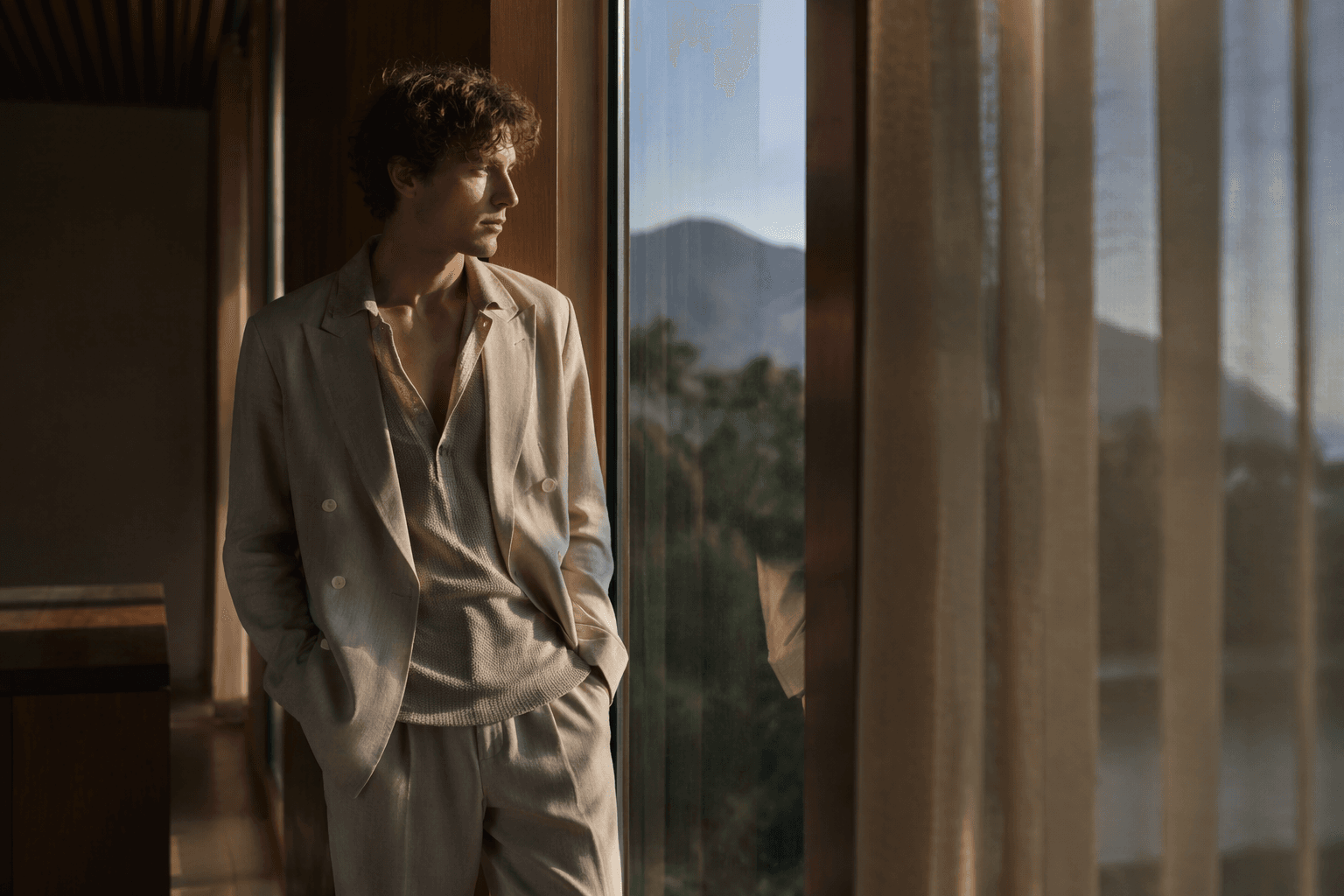
Menswear is no longer dressing for friction. The Spring 2026 conversation, shaped across Milan and Paris and then sharpened in the buyers’ roundups, made one thing clear: ease is now a business proposition, not a styling trick. WWD’s trend report puts the season’s center of gravity on fluid silhouettes, lightweight layers, pajama dressing, artisanal textures and color, all in service of clothing that feels comfortable, wearable and still polished.
That matters because the best collections did not read as casual in the lazy sense. They looked deliberate, airy and controlled, with trousers cut to move, jackets softened at the shoulder and layers that skimmed rather than clung. The mood was relaxed, but the execution was exacting, which is why this shift has real retail legs.
Why easy dressing is the season’s core story
The strongest signal from the season is that designers are treating comfort as design language. Across the major menswear calendar in June and July 2025, collections repeatedly offered alternatives to the usual summer uniform of stiff tailoring and polished overcoats. FashionNetwork captured the mood plainly: men are increasingly keen on comfort, and pyjamas and dressing gowns are stepping in as substitutes for suits and overcoats.
That does not mean the runway abandoned sophistication. It means luxury menswear is recalibrating its idea of authority. A pajama stripe, a robe-like wrap or a pair of loose trousers can now read as considered, especially when the fabric has depth and the silhouette feels edited rather than sloppy. The result is a wardrobe that signals confidence without the old insistence on hardness.
The broader backdrop matters too. FashionNetwork noted that the Spring/Summer 2026 shows projected optimism even amid a deteriorating global economic and geopolitical situation. In practical terms, that optimism showed up as color, ease and garments that suggest a life with less armor. That is exactly the kind of message consumers respond to when they want pieces that can move from weekday to weekend without losing shape.
The brands setting the pace
Milan gave the season some of its clearest commercial cues. WWD’s buyers’ roundup said the city’s men’s Spring 2026 collections were marked by relaxed tailoring and vibrant colors, with Prada, Giorgio Armani, Ralph Lauren and Umit Benan among the standouts. That is an instructive lineup: these are not niche provocateurs only speaking to editors. They are brands with enough reach to translate runway ideas into wardrobes that actual customers adopt.
Prada’s presence in that roundup signals how much appetite there is for tailoring that feels lighter and less armored. Giorgio Armani, long associated with softness and fluidity, continues to prove that polish does not require rigidity. Ralph Lauren adds the American side of the equation, where ease is often tied to refinement and ease of movement rather than pure nonchalance. Umit Benan, meanwhile, brings a more distinctive point of view, showing that relaxed dressing can still carry personality and sharpness.
What ties them together is not sameness but a shared understanding of the moment. They are all offering clothes that look current because they are built around movement, color and tactility. In a market that increasingly rewards wearability, that combination is the one to watch.
Texture is doing as much work as silhouette
If relaxed tailoring is the skeleton of the season, texture is the skin. WWD’s report singled out artisanal textures as one of the drivers behind the move toward easy dressing, and that is where the clothes become interesting up close. A soft wool with visible weave, a lightly crinkled cotton, a brushed surface or a hand-finished feel turns an otherwise simple outfit into something richer and more dimensional.
This is also where menswear avoids looking generic. Easy dressing can become dull fast if it relies only on loose proportions. Texture keeps the look alive, especially when paired with lightweight layering. A shirt that catches the light differently from the jacket over it, or trousers that feel relaxed but still have structure, gives the outfit a sense of intention. That is the difference between looking comfortable and looking unfinished.
Color is part of the same story. The season’s vibrant palette, especially in Milan, pushed the category away from the usual gray-beige safety net. Whether through sunlit neutrals, stronger brights or a more saturated accent, color helps these clothes feel optimistic rather than merely practical. In a season built on ease, color becomes the quickest way to make soft dressing feel directional.
Dries Van Noten shows how to make ease feel intelligent
One of the clearest examples came from Dries Van Noten’s Men’s Spring 2026 collection, designed by Julian Klausner. WWD described it as a freewheeling juxtaposition of formal and sporty archetypes, and that tension is exactly what gives the season its strongest ideas. The collection did not choose between polish and relaxation; it used both.
That is the takeaway retail can use. The looks most likely to move beyond the runway are the ones that combine opposites in a way that feels natural: a formal jacket worn with softer, looser pieces; a sporty element elevated through fabric and proportion; a garment that borrows the ease of loungewear but is cut with enough precision to pass in public. This is where easy dressing stops being a trend and starts becoming a wardrobe system.
Klausner’s approach also underlines how valuable ambiguity has become. A piece can feel slightly robe-like without becoming costume. A jacket can loosen the rules without losing authority. That balance is what will help the season translate into everyday adoption, because it gives men permission to dress down while still looking as though they made a decision.
What to expect to reach the floor
The runway message is already pointing toward what will sell. Relaxed tailoring is the obvious anchor: softer suits, easy trousers and jackets with less tension in the construction. From there, the more commercial versions of pajama dressing are likely to arrive as striped shirts, drawstring waists, robe-inspired layers and relaxed sets that can be broken apart and worn separately.
The most promising pieces are the ones that preserve the feeling of polish. A trouser that drapes cleanly, a shirt in a refined print, a light jacket with texture, a tonal look broken by one vivid shade: these are the details that make the new ease convincing. Luxury menswear has spent years leaning on severity and precision; this season suggests that the next wave of buying will favor clothes that feel softer on the body and smarter in the mirror.
That is the real shift. Menswear is not getting casual so much as it is getting fluent in comfort, and the brands that understand how to make that comfort look expensive are the ones defining the season.
Know something we missed? Have a correction or additional information?
Submit a Tip