Luxury resets with lived-in glamour as fashion houses reinvent classics
Luxury is loosening its collar, and the smartest houses are turning archives into lived-in clothes that feel ready for real life.
The new luxury reset is less about polish than permission
Luxury is recalibrating around a quieter kind of credibility. The message coming out of fashion now is not that elegance is gone, but that it has to look worn-in, practical, and a little downtown to feel desirable again. At the TWA Hotel at John F. Kennedy International Airport in Queens, that idea came into focus through reworked trench coats, softened tweeds, silk slips, and cocktail dressing stripped of its old stiffness.
The timing matters. WWD described 2025 as a sweeping game of musical chairs, with new designers arriving at Chanel, Dior, Gucci, Balenciaga, Celine, Loewe, Givenchy, Versace, Maison Margiela, Fendi, Tom Ford, Jil Sander, Bottega Veneta, Dries Van Noten, Balmain, Blumarine, Marni, Proenza Schouler, Alberta Ferretti, Carven, Mugler, Jean Paul Gaultier, Lanvin, and Fforme. In a sluggish market for fashion and luxury, that much turnover is not just gossip fodder. It is a signal that heritage houses are being asked to prove, all over again, why their codes still matter.
Why the reset feels different now
This season’s luxury mood is not chasing novelty for its own sake. It is trying to make classic clothes feel believable in real life, which is a harder sell and a smarter one. Alex Badia framed the shift as a more lived-in, downtown version of modern dressing, with clothes that feel less precious and more useful, the kind of wardrobe that can move from day to evening without losing its edge.
That is why the archive has become such a powerful commercial tool. A trench coat does not need to be reinvented into something unrecognizable to feel fresh. A house can rework the shoulder, soften the fabrication, or loosen the proportions and suddenly the garment reads as modern without sacrificing the memory that gives it value. The same is true for tweeds and slips: familiar enough to feel expensive, flexible enough to feel wearable.
The best houses are leaning into that tension. They are not abandoning heritage, they are editing it for people who want proof that luxury can still function outside a special occasion.
The TWA Hotel makes the message impossible to miss
The setting sharpened the point. The TWA Flight Center at JFK was designed by Eero Saarinen and opened in 1962, its bird-like profile becoming a symbol of aviation glamour. After TWA’s bankruptcy and liquidation, the building closed in 2001 and sat dormant for nearly 16 years before reopening as the TWA Hotel on May 15, 2019.
The rebirth was not cosmetic. More than $250 million went into the conversion, which added two new wings with 512 guestrooms. The restored property includes the Sunken Lounge and the Connie airplane cocktail lounge, both of which preserve the midcentury fantasy of travel as theater. Even the pool participates in the idea: a 63-by-20-foot infinity-edge pool with runway views turns a practical amenity into a very specific kind of glamour.
That is exactly why the location works for this moment. The hotel is nostalgic, but not delicate. It is glamorous, but lived-in. It offers a visual language for fashion houses that want prestige to feel less like a museum and more like a room you would actually want to enter.
What the clothes look like when luxury loosens up
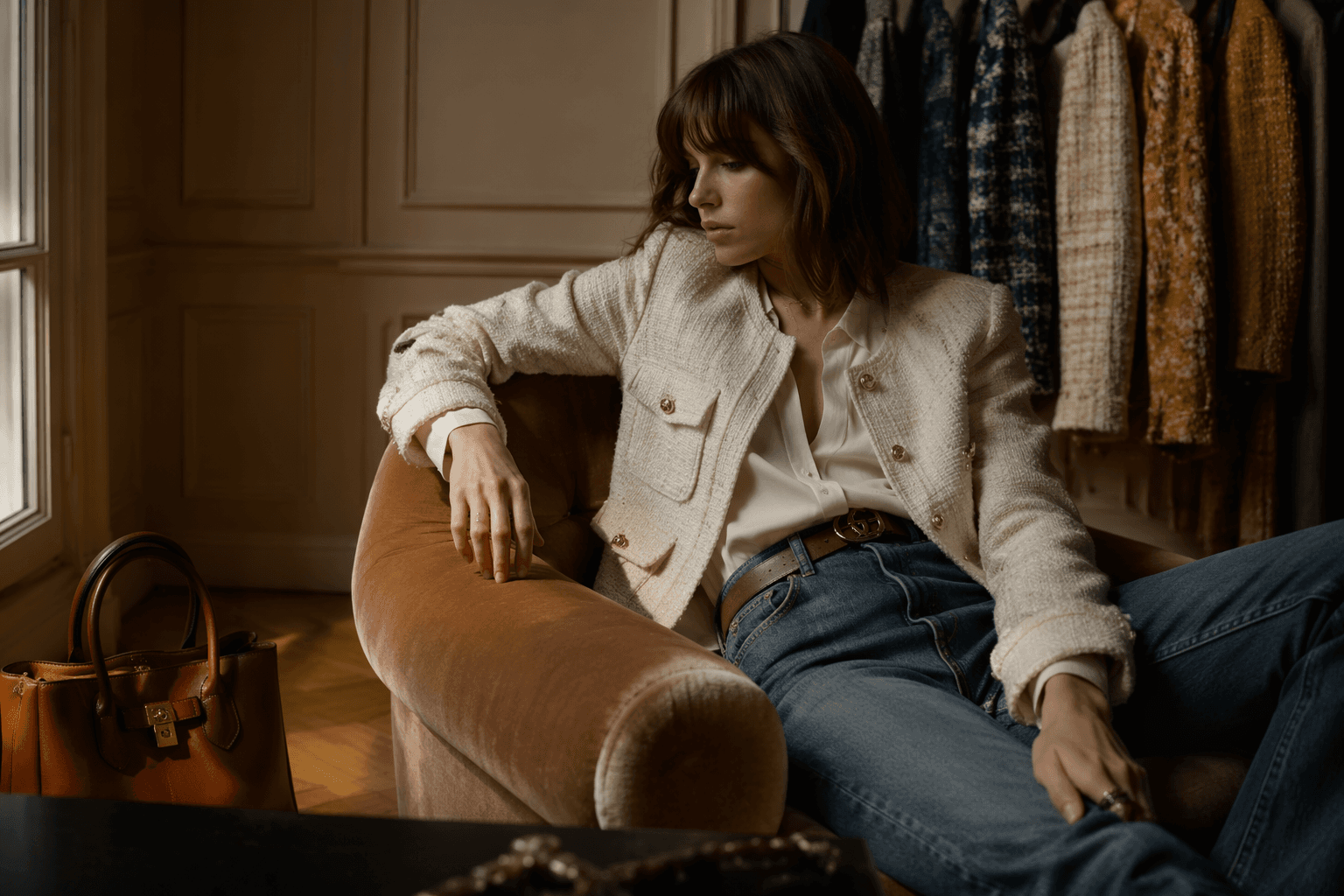
The most interesting part of the reset is how tangible it becomes on the body. Trench coats are being reworked to feel less rigid and more fluid, which gives an old outerwear staple a new kind of ease. Tweeds, once code for formality and distance, are being handled with a lighter touch, so they read as textured and urbane instead of strict.
Silk slips are another key piece in the puzzle. They have the instant allure luxury loves, but when they are styled without too much ceremony, they become part of daytime dressing rather than a costume for night. Cocktail dressing is following the same logic. The point is no longer to look polished in a brittle way, but to look like you stepped out in something beautiful that already belongs to your life.
A few wardrobe shifts define the mood:
- Reworked trenches, cut with softer lines and less armor.
- Tweeds with more drape and less stiffness.
- Silk slips styled as part of the everyday wardrobe, not reserved for after dark.
- Cocktail pieces that trade preciousness for ease, while keeping the glamour intact.
What connects them is attitude. The look is still luxury, but it is luxury with movement, with scuffs at the heel and confidence in the shoulder. WWD captured that spirit as a summertime embrace of a more relaxed style, clothes that look lived-in rather than overly precious, with a downtown “cool-kids” attitude.
The houses leading the consolidation of taste
Two appointments make the stakes especially clear. Chanel named Matthieu Blazy as artistic director of fashion activities in 2025, giving him responsibility for haute couture, ready-to-wear, and accessories. That kind of consolidation matters because it lets one vision shape the full wardrobe, from the most formal pieces to the things people actually buy and wear every week.
Dior made a similar move by expanding Jonathan Anderson’s role in 2025 to cover women’s, men’s, and haute couture collections. That is not just administrative reshuffling. It is a statement that the house wants one coherent point of view, one language of luxury that can travel across categories without feeling diluted.
For heritage brands, this is the balancing act of the moment. The archive supplies authority, the new creative directors supply momentum, and the market demands clothes that can justify their price through both feeling and function. Chanel, Dior, Gucci, Jil Sander, Celine, and Mugler all sit inside that larger reset, where the goal is not to erase history but to make it look alive.
That is the real luxury story now: not grand formality, but credibility with a pulse. The houses that win will be the ones that can make a trench, a slip, or a tweed jacket feel as convincing at the airport lounge as it does in a showroom.
Know something we missed? Have a correction or additional information?
Submit a Tip