Shein acquires Everlane, marking a sharp DTC collapse
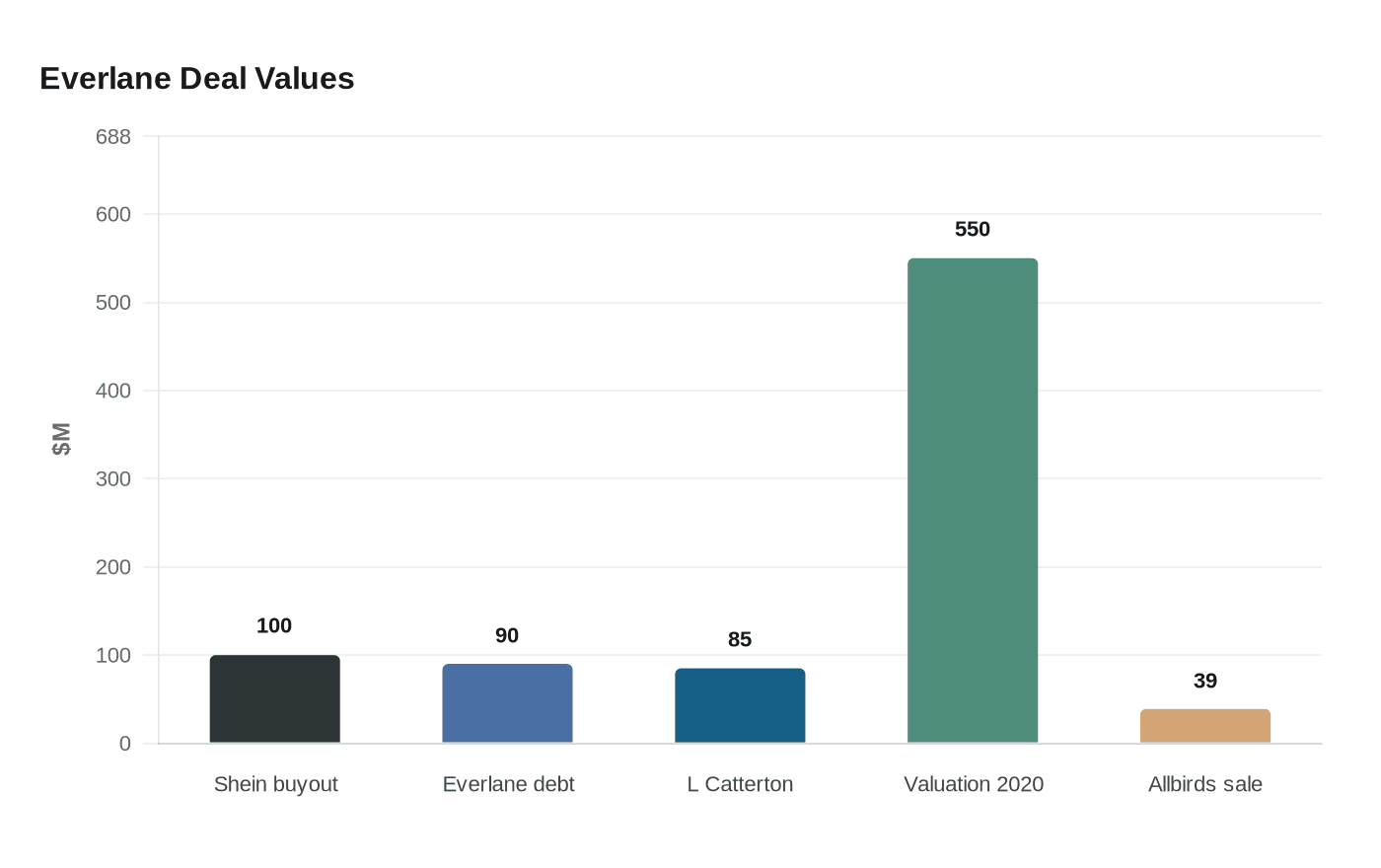
Everlane, once the millennial poster child for Radical Transparency, is being swallowed by Shein for about $100 million, a brutal marker of DTC's collapse.

Everlane, the brand that turned minimalist tees and “Radical Transparency” into a millennial religion, is being folded into Shein for about $100 million. It is a savage ending for a label that once sold the fantasy that ethical basics could be both cool and scalable, and it says plenty about where the direct-to-consumer era ended up: inside the fast-fashion machine it once claimed to outgrow.
Reuters reported that Shein is acquiring Everlane from majority owner L Catterton, and that common stockholders will not get a payout. Puck said Everlane had been shopping for money to cover roughly $90 million in debt, which makes the reported price even harsher. L Catterton put $85 million into Everlane in 2020 at a reported $550 million valuation. That is not a haircut. That is a collapse.

The symbolism is almost too neat. Everlane was founded in San Francisco in 2010 by Michael Preysman and Jesse Farmer and built its identity around transparent pricing and the promise that customers had a right to know what clothes cost to make. The brand’s early mythology was pure internet-era scarcity and virtue: 1,500 T-shirts, a waitlist said to have reached 60,000 sign-ups. Then came the Black Friday theater. In 2012, Everlane shut down its website on Black Friday to protest consumer excess, only to later join Black Friday promotions like everyone else. By 2014, it had launched the Black Friday Fund and says it has donated more than $1 million through it. The whole arc reads like a case study in how fast idealism gets flattened by growth pressure.
The collapse was not just financial, it was philosophical. Harvard Business Impact Education’s 2025 case said internal controversies exposed a disconnect between Everlane’s message and its internal reality. Katina Boutis, Everlane’s former head of sustainability, said she was no longer with the company, a small detail that lands like a coda for the brand’s sustainability halo. When the person who helped sell the conscience is gone, the image starts to look a lot thinner.
For the rest of the market, this is the warning shot. Modern Retail framed the sale as another nail in the coffin for 2010s DTC brands, and the comparison to Allbirds is hard to ignore: in April 2026, Allbirds sold brand assets to American Exchange Group for $39 million. The lesson is blunt. Millennial ethical branding did not so much win as get absorbed, priced down, and stripped for parts. Everlane once promised transparency. Now it is being used as evidence that the old DTC moral premium no longer holds.
Know something we missed? Have a correction or additional information?
Submit a Tip