Windbreakers return to the runway, but can they look chic?
Windbreakers are back, but only the sharper, more tailored versions have a real shot at everyday wardrobes. The runway wants utility to read as chic, not just practical.
Windbreakers are back on the spring/summer 2026 runway, from Tory Burch to Saint Laurent, but the real question is whether a jacket built for weather can ever fully read as style. The answer depends on whether designers keep giving it shape, polish, and a little discipline.
The runway says yes, but with conditions
Tory Burch gave the clearest argument for the comeback at New York Fashion Week in September 2025, where her spring/summer 2026 collection leaned into a more feminine take on American sportswear. WWD described the lineup as a balance of precision and imperfection, with crisp tailoring set against slouchier prep polos, pop colors, and double-layered jackets.
That mix matters because it shows how the windbreaker is being recast. On its own, the jacket can feel like pure utility. Put it near sharp button-downs, a piped blazer, or a cleaner, more intentional silhouette, and it starts to look less like weekend gear and more like a deliberate wardrobe piece. Tory Burch put it plainly in the review: she was mixing femininity with the sharpness of tailoring, and she said, “The whole quiet luxury is gone.”
Why utility is everywhere right now
The windbreaker is not returning in isolation. Vogue Singapore said nearly 15 newly appointed creative directors debuted new visions for spring/summer 2026, and the season felt less like a single trend cycle than a broad reset. In that context, utility jackets emerged as one of the key themes, part of what the magazine called “fashion as feeling,” a mood driven by wearability, personality, and transitional layering.
WWD’s utility coverage placed the look at Prada, Burberry, and Balmain, while Refinery29 singled out oversized windbreakers at Loewe and Fendi. Together, those references make one thing clear: this is not a niche revival or a nostalgic footnote. Luxury houses are treating the windbreaker as a shape worth refining, whether they push it oversized, double-layered, or crisp enough to sit beside tailoring.
A jacket with real history, not just runway momentum
The windbreaker’s appeal makes more sense when you look at where it came from. It descends from Inuit parkas and Arctic wear, and the word anorak comes from an Inuit term that passed through Danish usage. After World War II, nylon and other synthetic fabrics made parkas and windbreakers thinner and less bulky, which helped turn them into practical outerwear for everyday life.
By the 1970s, the jacket had become a familiar informal layer, especially among younger men and sports fans who wanted something functional that still looked current. That history is the reason the windbreaker keeps resurfacing: it already has utility credibility. The tension now is whether that credibility can be translated into something polished enough to wear with intention rather than irony.
What has to change for it to look chic
For the windbreaker to move beyond editor talk, it needs a few things in its favor. First, the silhouette has to be controlled. The most convincing versions on the runway either sat inside a tailored look, as at Tory Burch, or exaggerated volume so aggressively at Loewe and Fendi that the shape itself became the point.
Second, the styling has to do some of the work. Windbreakers look strongest when they are paired with pieces that create contrast: crisp shirting, sharper trousers, or layered prep pieces that keep the outfit from collapsing into pure sportswear. Worn that way, the jacket reads as a fashion choice. Worn too casually, it slides straight back into practical outerwear.
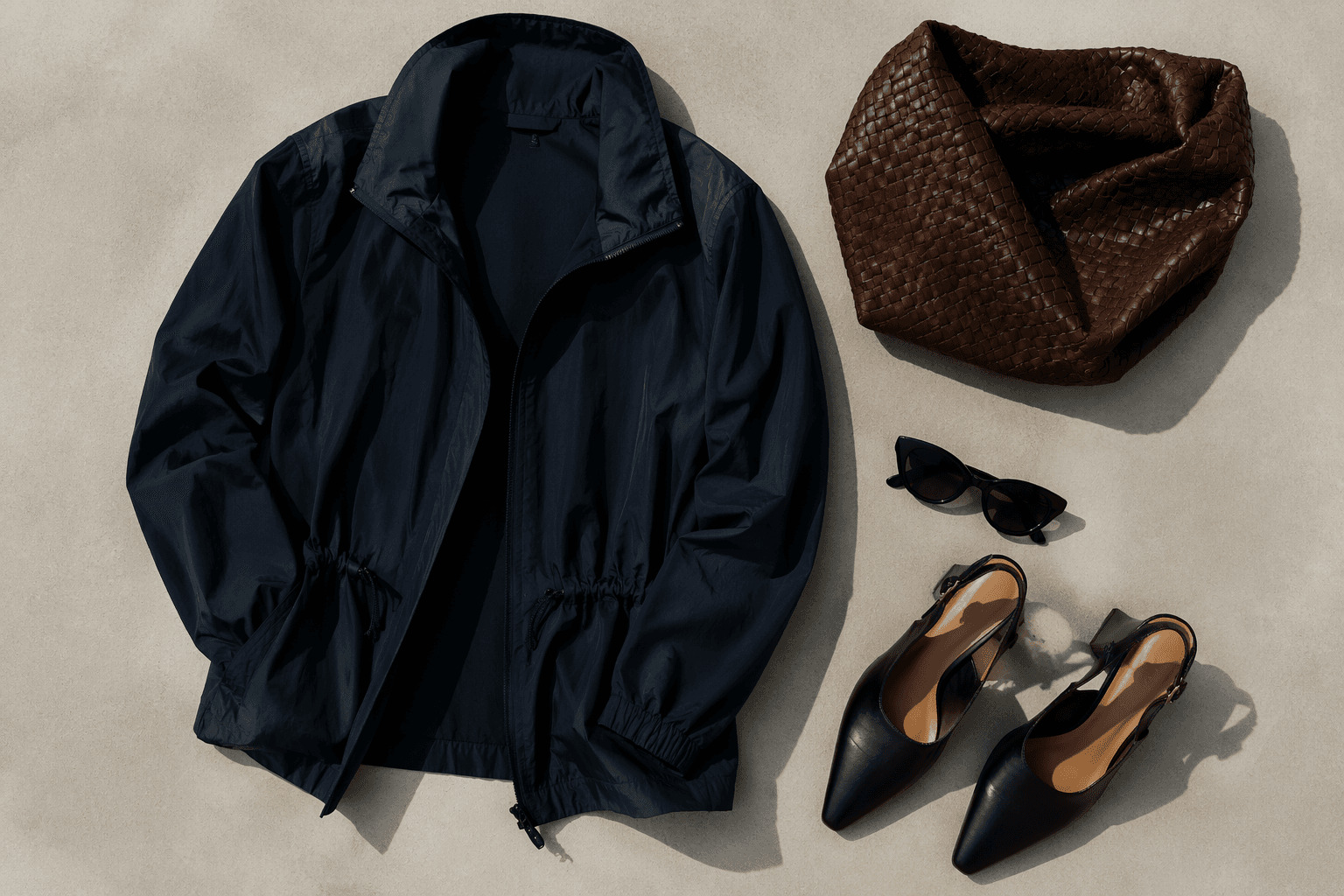
Third, the material has to feel considered. Nylon is part of the category’s DNA, but the finish matters. A cleaner cut, a less plasticky sheen, and a more tailored line are what separate a runway windbreaker from the one you keep in the back of the closet for unexpected rain.
What to wear, and what to skip
If you want the trend to work in real life, the runway already gives you the formula.
- Pair a windbreaker with crisp tailoring, the way Tory Burch did with sharp button-downs and structured layers. The contrast makes the jacket feel intentional.
- Look for versions with shape, not just size. Double-layered construction and slightly sculpted seams keep the piece from reading as disposable activewear.
- Use color strategically. Pop colors can give the jacket personality, but they work best when the rest of the outfit stays clean and restrained.
- Treat layering as the point. Vogue Singapore’s emphasis on transitional dressing is the clue here: the best windbreakers are the ones that can sit over fine knits, polos, or shirting without swallowing everything underneath.
What to skip is equally obvious. Avoid anything so oversized or so flat in construction that it loses the line of the body entirely. And skip the versions that look like they are trying too hard to be sporty, because the whole challenge of this comeback is making utility feel edited.
Why the market is paying attention
This is not just runway nostalgia. Market research puts the global windbreaker market at $2.1 billion in 2025 and projects it will reach $3.5 billion by 2034. That kind of growth signals a category with real commercial weight, not a one-season fashion mood.
That also explains why designers keep returning to it. The windbreaker sits in a rare place: familiar enough to feel useful, but flexible enough to be reworked by luxury houses. The brands that make it truly chic will be the ones that stop treating it like a throwback and start treating it like a tailored solution to modern dressing.
Know something we missed? Have a correction or additional information?
Submit a Tip