2026 Prep Revival, Timeless Staples and Old-Money Ease Return
Quiet, not precious: the prep revival is really a manual for looking polished with only a few sharp staples and disciplined styling.
The new prep code
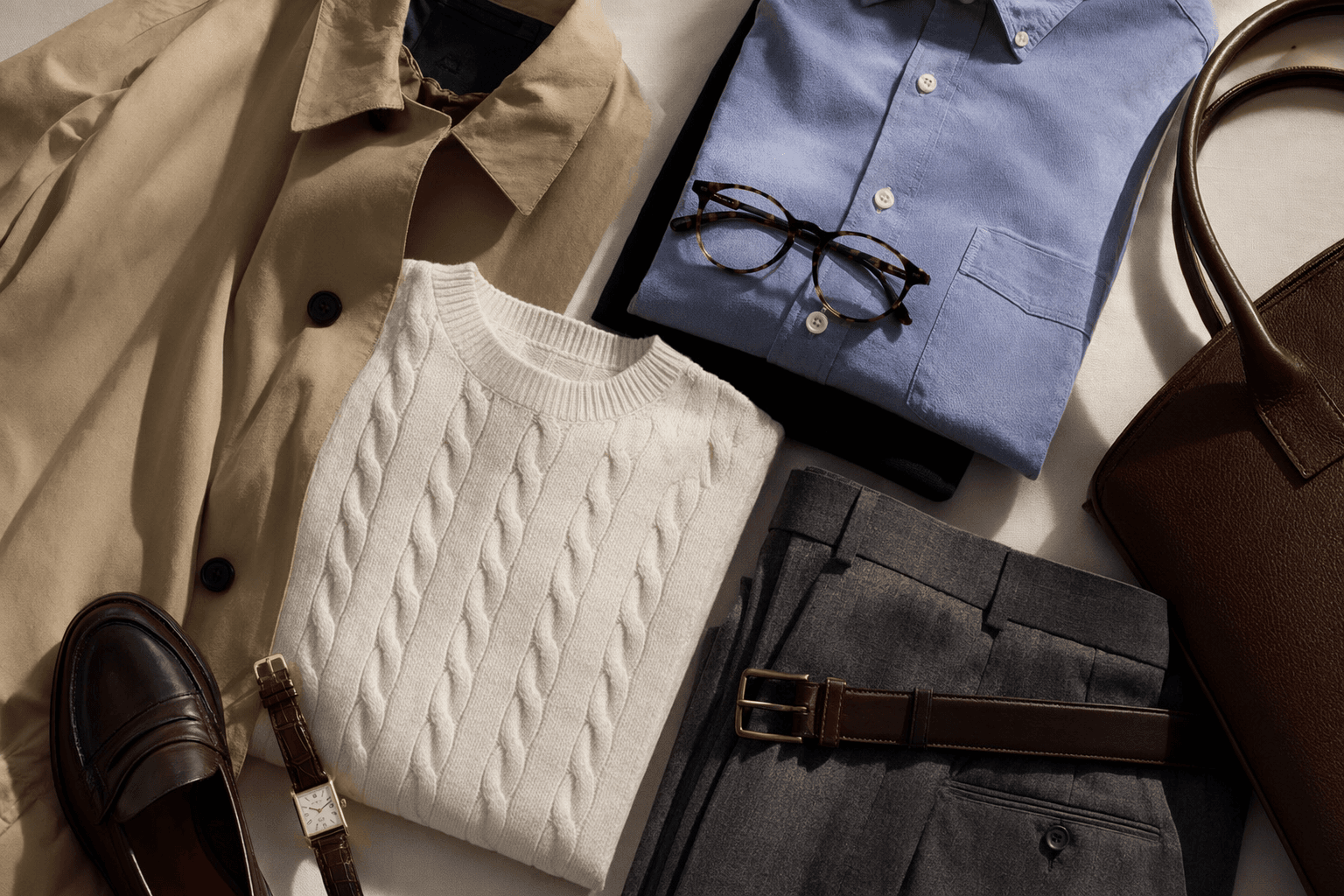
The quickest way into old-money ease in 2026 is not a wardrobe stuffed with references. It is restraint, the kind that makes a rugby shirt look deliberate, a chino feel tailored, and a barn jacket read like inheritance rather than costume. The strongest version of the look is quiet, not precious, and that is exactly why it keeps coming back: it works on real life, from school runs to office commutes to dinner where you want polish without performance.
What separates this prep revival from the collegiate version is the mood. The Atlantic-Pacific framing is useful here, because it treats preppy dressing as a subtler, more refined cousin of quiet luxury and old-money style, not a theme party in navy and khaki. The point is not to look like you have just stepped off a Northeastern campus. It is to borrow the discipline of that dress code, then strip away anything fussy, nostalgic, or too literal.
Why prep still has a pulse
This look has history, and that history is why it never feels entirely new. The Ivy League aesthetic took shape on elite Northeastern campuses in the interwar and postwar years, then widened beyond college life by the 1950s. That expansion matters, because it shows preppy style has never belonged only to the young or to the young-at-heart. It belongs to anyone who understands that clean lines, polished seams, and controlled layering can do more for presence than loud branding ever will.
Ralph Lauren remains the most persuasive emblem of that shift. The Fashion Institute of Technology’s Ivy Style exhibit places him in 1967, when Ivy style had lost popularity in the United States, beginning with ties before founding his company in 1968. Ralph Lauren’s own timeline tells the same origin story, saying, “It all started with a tie...” in 1967 from an Empire State Building drawer. That kind of origin is the whole point of the old-money mood: a single, well-cut object, repeated with discipline, becomes a language.
The pieces that create the look fastest
If you want the aesthetic without the costume, start with the few items that do the heavy lifting. A rugby shirt gives you structure and sport, but its broad collar and sturdy cotton need cleaner companions than a full preppy tableau. Pair it with straight chinos or a crisp khaki pant, not a pleated skirt and boat shoes unless you want the look to slide into theater.
Loafers are the other shortcut. They sharpen denim, ground tailoring, and keep the whole outfit from becoming too collegiate, especially when the rest of the look is pared back. A barn jacket does similar work on the outer layer, adding practical weight and a slightly weathered polish that reads expensive when the silhouette stays neat and the rest of the outfit is calm.
The outfit formulas that feel modern
- Rugby shirt + straight chinos + loafers: the easiest route to polish, especially when the shirt is in navy, forest, or a soft stripe.
- Oxford shirt + dark denim + barn jacket: a formula that feels lived-in rather than styled, with the jacket doing the quiet work.
- Khaki pant + slub tee + loafer or sleek sneaker: the least fussy version, and often the most convincing.
- Blazer + knit polo + tailored trouser: best when the fabrics are soft and the proportions stay relaxed, never shrunken.
These combinations work because they rely on continuity, not decoration. The eye moves from one clean shape to the next, and nothing begs for attention. That is the cheapest way to look old money: restraint.
What the smart brands are signaling
The labels shaping this moment are not pushing a single uniform. They are each interpreting heritage through a slightly different lens, which is why the revival feels broad enough to wear in real life. Polo Ralph Lauren remains the reference point for the mood, but L.L.Bean, Gap, Alex Mill, and Tuckernuck are telling their own versions of the story.
L.L.Bean is leaning into preppy style as “timeless, comfortable clothing and gear built for lasting value and everyday versatility,” with classic patterns and crisp, comfortable layers for weekends or casual days around town. That language is revealing because it treats prep as utility first. A cable knit or field jacket only feels old-money if it is practical enough to be worn hard.
Alex Mill sits in the clean middle, describing itself as a “well-crafted assortment of classic essentials” and building from straightforward design that still feels unique. Its lineup of the woven shirt, the khaki pant, and the slub tee is exactly what this moment needs: familiar shapes, no excess, and enough texture to keep the outfit from looking flat. The brand’s lineage, with Alex Drexler, Somsack Sikhounmuong, and Millard “Mickey” Drexler in the mix, helps explain why it understands how to make basics feel considered rather than basic.
Tuckernuck brings a softer, more decorative edge. Started in 2012 as an e-commerce boutique, it now has two brick-and-mortar stores, in Georgetown and on the Upper East Side, and says its collections are inspired by heritage fabrics, beautiful interiors, and vintage textiles. That combination nudges prep toward a more refined domesticity, the kind of dressing that feels at home beside a tailored sofa, a lacquered table, or a weekend bag with structure.
Gap may be the most useful proof that this aesthetic is not about nostalgia alone. In March 2026, it released a collaboration with Awake NY rooted in 1990s street culture, then followed with a KATSEYE hoodie collaboration in April. Those moves show how heritage brands are chasing classic silhouettes while keeping one foot in contemporary culture. The message is clear: people want recognizable shapes, but they want them stripped of hype.
How to keep it from reading like a costume
The mistake is stacking too many signals at once. If you wear a rugby shirt, let the rest of the outfit breathe. If you choose loafers, keep the pant line clean and the hem precise. If you reach for a barn jacket, avoid layering it over anything too ironic or overly styled, because the jacket already carries enough character on its own.
Color also matters. The most convincing prep wardrobe stays inside a disciplined range of navy, cream, khaki, brown, and washed green, with the occasional stripe or checked pattern for depth. Fabrics should look touchable rather than precious: brushed cotton, crisp poplin, sturdy twill, soft knits. The goal is not perfection. It is composure.
That is why this revival feels less like a trend and more like a correction. After years of logo-heavy dressing and overexplained outfits, the appeal of a clean collar, a polished seam, and a jacket that looks better with age is almost radical. Preppy style endures because it offers the same promise every time: look pulled together, move easily, and never seem like you tried too hard.
This article was produced by Prism’s automated news system from verified source data, official records, and press releases, then run through automated quality and moderation checks before publishing. The system is built and supervised by the people who set the standards it runs under. Read our full AI policy.
Did this article answer your question?