Basque-waist dresses bring Victorian polish to summer dressing
The Basque waist is back as fashion’s most aristocratic summer line, turning Victorian structure into a cool, polished shape that reads expensive without trying.
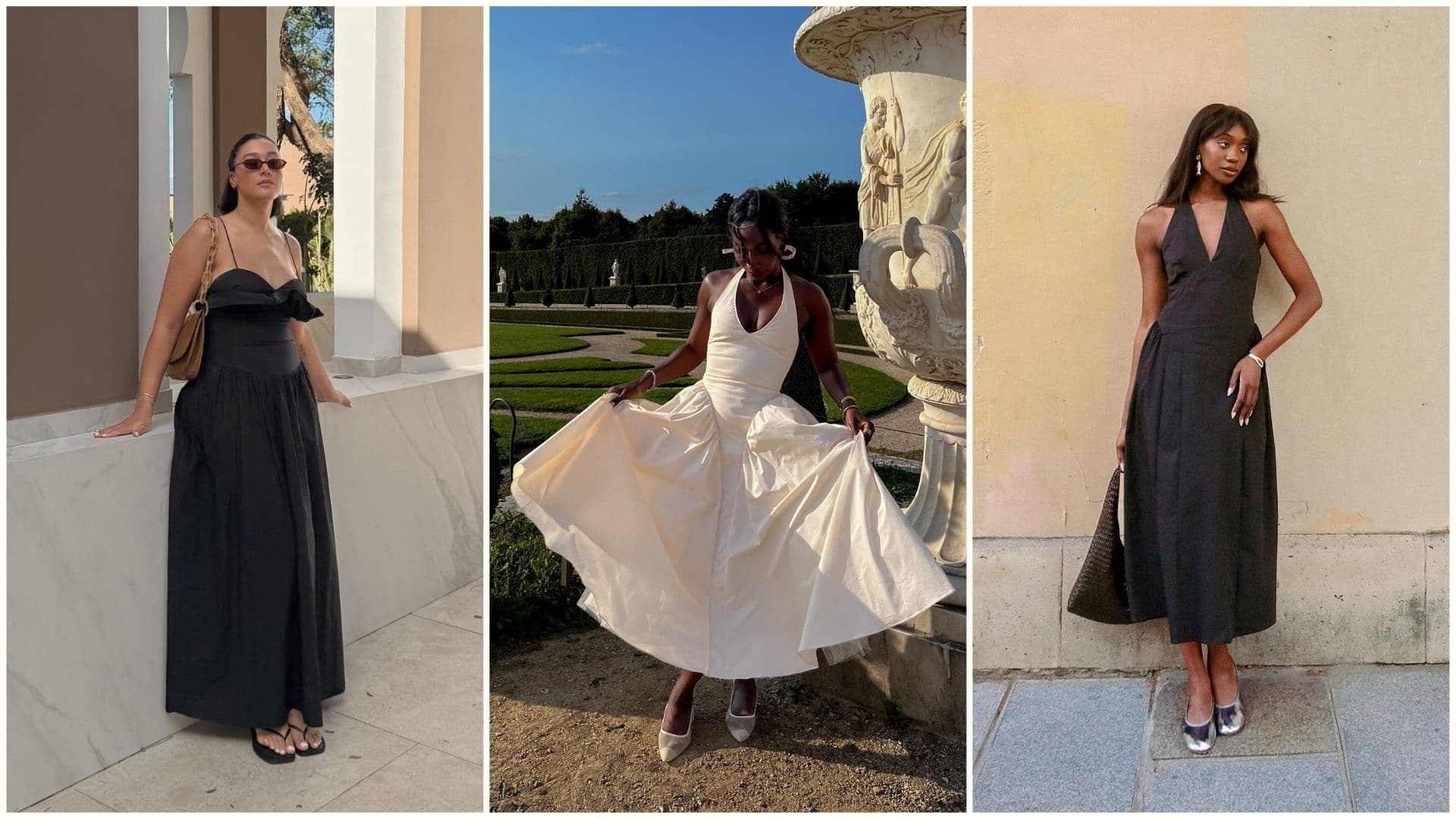
The Basque-waist dress has the kind of polish that never looks desperate. It draws the eye inward, shapes the body with restraint, and creates an hourglass line that feels far more finished than a standard nipped-in dress. In a season crowded with breezy silhouettes, this one stands apart because it offers structure without heaviness, which is exactly why it now reads as the chic, status-coded choice.
Why the Basque waist feels expensive
The Basque waist is defined by its scooped, elongated V that dips below the natural waistline, and that detail changes everything. Instead of stopping at the narrowest point of the torso, it extends the eye lower, which makes the waist look cinched and the hips look gently framed. The effect is formal, almost ceremonial, but when it is cut with restraint it never feels costume-like.
That is the heart of its appeal in old-money dressing. The shape suggests discipline, not decoration. It recalls the logic of polished summer occasion wear, where the best clothes never shout but still communicate lineage, taste, and a certain ease with formal codes. A Basque-waist dress can work for a coffee run, an office commute, or an evening dinner because its drama lives in the architecture, not in excess styling.
The Victorian blueprint behind the silhouette
The silhouette is hardly new. Fashion history places the Basque waist in the 1850s, when a particularly fashionable bodice extended over the hips and helped build the hourglass shape then prized in women’s dress. Victorian clothing relied on structure beneath the surface, and the Victoria and Albert Museum has long emphasized how corsets, cage crinolines, and bustles gave women’s fashion its form.
The Metropolitan Museum of Art’s fashion history essays make the bigger point: waist placement has shifted repeatedly over time, and women’s dress has often ignored the natural waist entirely. That is why the Basque waist feels so charged today. It does not just flatter the body; it references an older fashion language, one built around control, posture, and the social meaning of being properly dressed.
There is also a geographic elegance to the name. The Basque region spans parts of Spain and France along the Bay of Biscay and the western Pyrenees, and that European association gives the silhouette an additional layer of polish. For readers who respond to old-world references, it is easy to connect that lineage to Cristóbal Balenciaga, born in Guetaria in the Basque region of Spain on January 21, 1895. His work still stands for sculptural precision, and the Basque waist taps into that same sense of exacting form.
What makes one version look quietly luxurious
Not every Basque-waist dress is created equal. The best versions are the ones that keep the line clean, the fabric substantial, and the silhouette controlled. You want the waist seam to feel deliberate, the bodice to skim rather than squeeze, and the skirt to fall with enough length to preserve elegance. The shape should suggest tailoring, not theatrics.
The quietest, most expensive-looking versions tend to share a few qualities:
- A fabric with body, such as crisp cotton, structured silk, or a compact woven that holds the V-shape without collapsing.
- Seaming that is precise but not overworked, so the bodice looks engineered rather than embellished.
- A hem that feels considered, often falling long enough to balance the fitted waist and keep the dress from reading too playful.
- Minimal trim. The more the silhouette does on its own, the less it needs lace, ruffles, or extra surface decoration.
When those elements are right, the Basque waist looks like something a woman would wear to a summer lunch, a gallery opening, or a wedding that calls for elegance without fuss. When those elements are wrong, it can tip into bridal-adjacent excess very quickly. Too much corsetry, too much shine, too much froth, and the dress starts to feel like a costume interpretation of the past rather than a modern piece of clothing.
From runway signal to social code
The silhouette’s current momentum is not happening in isolation. Who What Wear has identified the Basque waist as a major fall and winter 2026 runway shape, and it specifically pointed to collections from Jacquemus, Dior, and Saint Laurent as evidence that the style is moving beyond a street-style curiosity. When houses with very different temperaments all circle the same shape, that usually signals a broader shift in taste.
That matters because fashion is rarely only about the dress itself. When a silhouette migrates from editorial attention to runway backing, it starts to carry social meaning. In this case, the Basque waist suggests a move toward visible form again, after a long stretch in which looseness, stealth wealth, and near-invisibility dominated the conversation. The new appeal is not loud maximalism. It is a sharper kind of polish, one that uses structure to imply authority.
Why the red carpet helped
The Basque waist also has proof of life beyond shopping content. The 2024 Met Gala, held on the first Monday in May 2024, gave the silhouette red-carpet visibility and helped frame it as more than a niche dress detail. High-profile occasion dressing has a way of legitimizing a shape, and the Basque waist benefited from that kind of spotlight.
That visibility matters because it aligns the silhouette with formalwear codes rather than novelty. A dress with a Basque waist can nod to debutante dressing, wedding season refinement, and the old logic of being impeccably put together for public view. It has the same appeal that so much old-money dressing does: it looks composed before it looks fashionable.
The reason the silhouette is resonating now is simple. It offers the emotional charge of history, the discipline of tailoring, and the ease of a summer dress in one line. In a market full of overexposed trends, that combination feels not just elegant, but socially fluent.
This article was produced by Prism’s automated news system from verified source data, official records, and press releases, then run through automated quality and moderation checks before publishing. The system is built and supervised by the people who set the standards it runs under. Read our full AI policy.
Did this article answer your question?