Blazy's Chanel Debut Proves Scarcity and Desirability Still Drive Luxury
Bryanboy left Rue Cambon empty-handed. Here's what Blazy's debut actually means for your wardrobe, your waitlist strategy, and your spending.
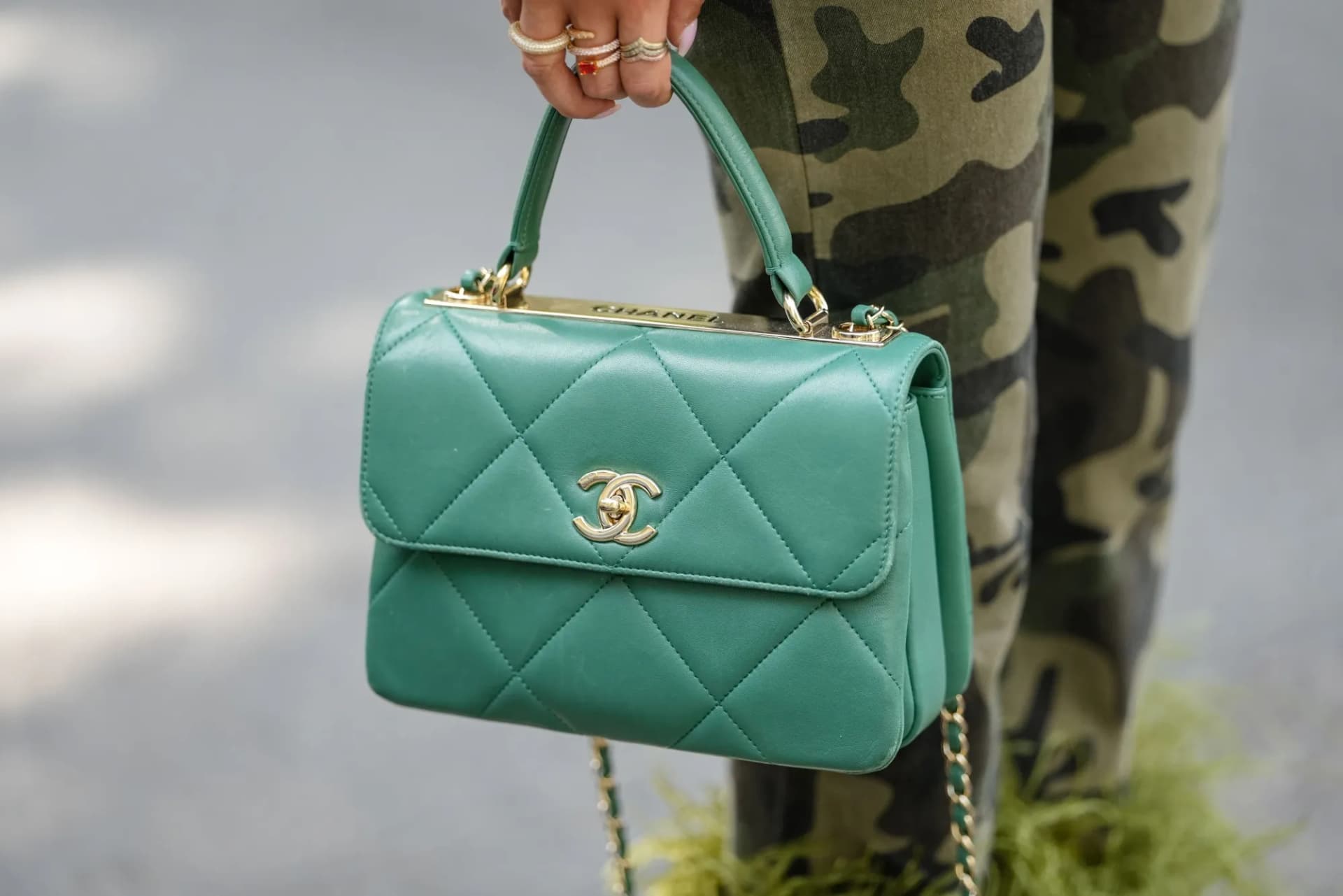
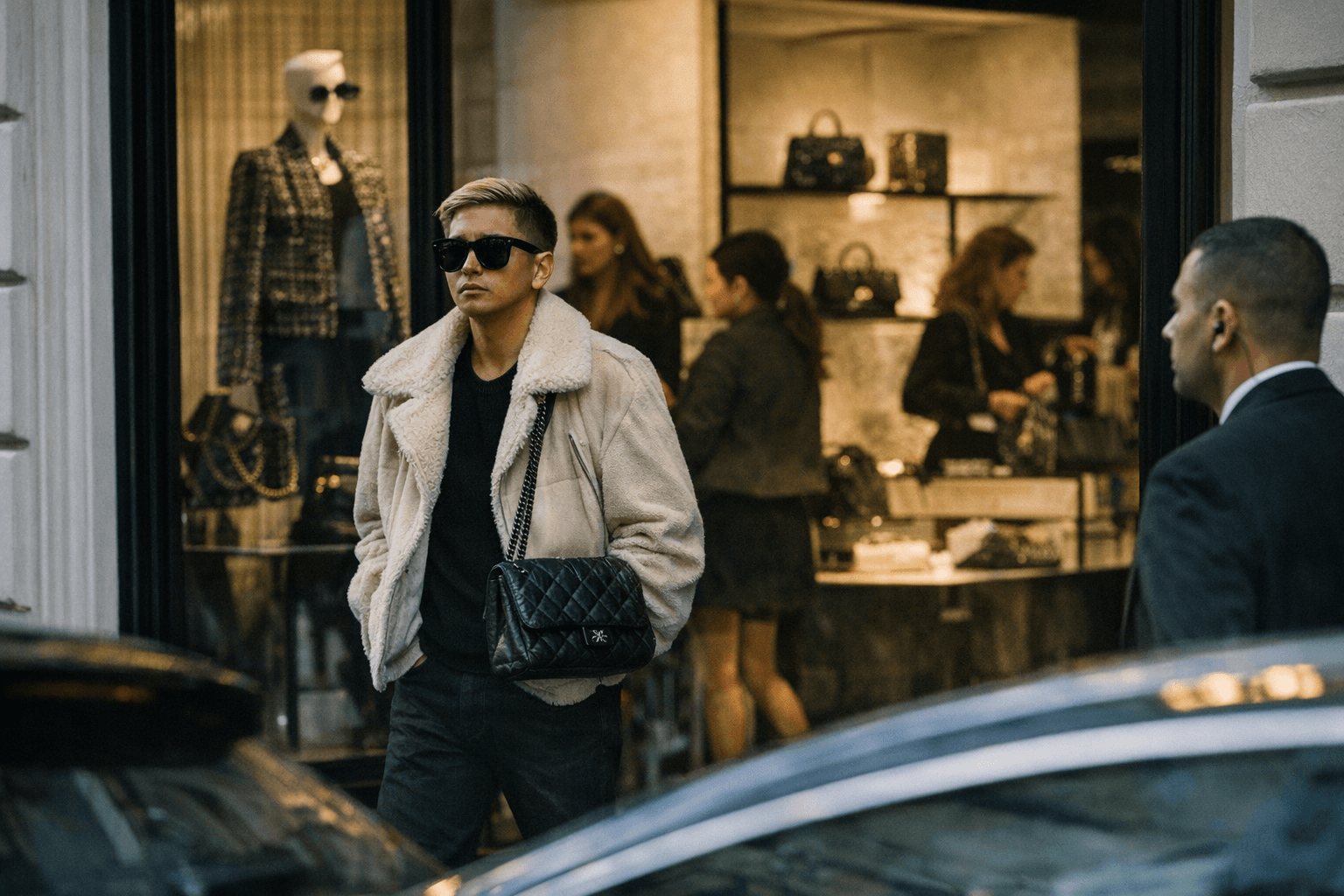
When a 15-year Chanel VIP leaves the Rue Cambon flagship without the bag he came for, the scarcity is no longer marketing spin. Bryanboy, one of the house's most recognizable long-standing clients, was turned away from that Paris address mid-launch without the €9,700 black flap he coveted. Staff told him it was "display only" and suggested he check back in three months. Four hours before closing, a sign appeared in the boutique's window: "We are fully booked for today. We invite you to return tomorrow to join the queue." At Chanel's Bond Street store in London, customers queued for over an hour just to cross the threshold, then waited again inside before they could so much as touch the shoes and bags. Bloomberg Opinion columnist Andrea Felsted, writing about the frenzy, captured the stakes plainly: the luxury industry, "variously described over the past couple of years as suffering from fatigue, 'greedflation' and a vibe shift away from top-end goods," can still ignite excitement and, most importantly, generate sales, particularly of lucrative handbags.
At Chanel's London Bond Street store, shoppers queued for an hour to enter and then endured a further lengthy wait to see the shoes and bags from Matthieu Blazy's first collection. The context for that frenzy matters. After Virginie Viard's unceremonious exit in 2024, the house faced a creativity drought. Sales stagnated amid post-pandemic pullbacks, with LVMH and Hermès reporting double-digit growth while Chanel lagged. Blazy's debut flipped the script. The 51-year-old Italian built Bottega Veneta into a €1.5 billion powerhouse with knotty weaves and tactile clothes that aged gracefully. His arrival at a house valued at around €15 billion under private ownership by the Wertheimer brothers was always going to be scrutinized. What nobody quite anticipated was a sell-through this decisive, this fast.
The question worth asking now is not whether Blazy delivered. He clearly did. The question is what to actually buy, what to avoid, and how to get your hands on any of it.
The Proportions Worth Your Money
The opening look was a classic but not so classic Chanel suit, done in transparent silk mousseline instead of bouclé. This luminous reinterpretation felt like a memory of the house's layered histories. That layered restraint runs through the most durable silhouettes in the collection. The slouchy tweed jacket worn over straight trousers, borrowing from menswear in the way Gabrielle Chanel originally borrowed from Boy Capel, reads as genuinely long-lived precisely because it is rooted in founding-era logic rather than trend-cycle novelty. If you are spending at this level, the boxy unstructured jacket of medium length over clean, straight-cut trousers is the proportion that will look as considered a decade from now as it does today. Avoid the silhouettes that required the runway's celestial set to make sense: anything cropped hard or scaled for maximum visual impact in a photograph rather than for wearing is the version most likely to feel 2026-specific within two seasons.
Three Handbag Signals
Bags focus on reinventing Chanel's most important house codes, first deconstructing then reconstructing, like the classic 2.55, which is given a lived-in, relaxed feel, showcased in crinkled leather. Within that range, three signals stand out for old-money wardrobes.
The first is the stripped-back minimalist flap: smooth leather, a gently curved tab, compact CC hardware, and a chain threaded with leather. No quilting, no overt branding. Without quilting or overt hardware, proportion becomes the message. It is the piece that tells you Blazy trusts line and finish more than logo, an assured bag that reads modern in any decade. This is the version built to last.
The second is the maxi Classic Flap in soft suede: the double-flap logic remains, but the structure loosens just enough to feel sensual rather than prim. It is the Chanel flap you do not have to "handle"; it handles you, collapsing slightly when set down, then regaining shape the moment you lift it again.
The third signal is what to sidestep. The teal colorways, the jumbo carryall scaled for social-media impact, the novelty dipped-toe shoe detail that borrows its edge from the runway's theatrical framing: the dipped-toe shoe trend first caught attention at Matthieu Blazy's debut show during the S/S 26 runway season. The entire collection was a nod to the house's archives, but with Blazy's subtle off-kilter touch. The off-kilter touch is precisely the detail that will date. The classic cap-toe, by contrast, has survived every creative director Chanel has ever employed.
The Scarcity Mechanics and How to Work Them
Industry chatter suggests that key colorways, particularly black and burgundy, have been deliberately held back for up to three months, echoing the playbook long associated with Hermès. This is not supply-chain failure. It is a calculated move: Bryanboy's "display only" rebuff was the point, not the exception. The Chanel 2.55 Handbag in Lambskin and Gold Tone Metal in Dark Burgundy is priced at $13,800. If that or the equivalent in black is the piece you want, it is the one most likely to be formally withheld.
The practical workaround is simple but requires patience. Contact your sales associate before you arrive at the boutique, not after. Ask explicitly to be added to a formal client list for upcoming stock rather than relying on walk-in availability. If you have not yet established a client relationship at your nearest boutique, a smaller initial purchase, fragrance, a pair of costume earrings, a scarf, opens the conversation and signals genuine house loyalty rather than opportunism. For Bond Street specifically, early-morning visits before the floor is fully staffed for the day consistently yield better SA attention than midday arrivals.
If the Waitlist Is Not the Game You Want to Play
Lagerfeld's spectacles defined Chanel for decades, but Viard's run felt stale as shoppers chased quieter labels like The Row. Those labels have not gone anywhere. The Row's structured shoulder bags and its precisely cut trousers occupy the same old-money register as Blazy's quieter pieces, with none of the queue. Loro Piana, meanwhile, offers what is arguably the purest expression of the same anti-logo instinct: Loro Piana's signature style of unstructured car coats and loafers that signal wealth through texture rather than branding is built on cashmere and vicuña credentials that no amount of scarcity strategy can manufacture overnight. Both houses deliver the sensibility Blazy is reaching for without the theater of the drop.
The larger point Felsted makes in her Bloomberg analysis holds regardless of whether you queue, waitlist, or opt out entirely. The frenzy underlines that the luxury industry can still ignite excitement and, most importantly, generate sales, particularly of lucrative handbags. Blazy's debut is the industry's clearest proof in years that creative conviction, paired with deliberate scarcity and price discipline, can reverse a house's momentum with a single collection. For shoppers, the lesson runs in the opposite direction: the surest way to avoid overpaying for a moment is to know exactly which piece within it was designed to endure.
This article was produced by Prism’s automated news system from verified source data, official records, and press releases, then run through automated quality and moderation checks before publishing. The system is built and supervised by the people who set the standards it runs under. Read our full AI policy.
Did this article answer your question?