Boast and J. Press Revive Authentic, Sport-Rooted Prep Against Social Media Trends
Boast, dormant until footwear exec Matthew Feuer bought it in 2024, is back with sport-first prep that TikTok's bow-and-graphic-tee crowd can't fake.
The big bows and cheeky graphic tees that pass for "preppy" on TikTok have almost nothing to do with how that aesthetic was actually born: on clay courts, in clubhouses, in clothes built to perform before they were built to pose. Two New England brands, Boast and the century-old J. Press, are pushing that original, sport-rooted version back into the conversation, and the timing feels pointed.
Boast is the more dramatic comeback story. The tennis brand spent years dormant before footwear executive Matthew Feuer acquired it in 2024, installing a Boston-based leadership team to steer its return. The brand's historical identity was always specific: it replaced stiff country-club whites with polos and warmup suits designed by players, for players, not by marketers reverse-engineering a mood board. Chief brand officer Sunni Fleming, who helms the Boston team, makes that lineage explicit. "Our version of 'preppy' comes from the court, the clubhouse, and the rituals around the sport," she said. "It's always been about performance, personality, and knowing the rules well enough to break them."
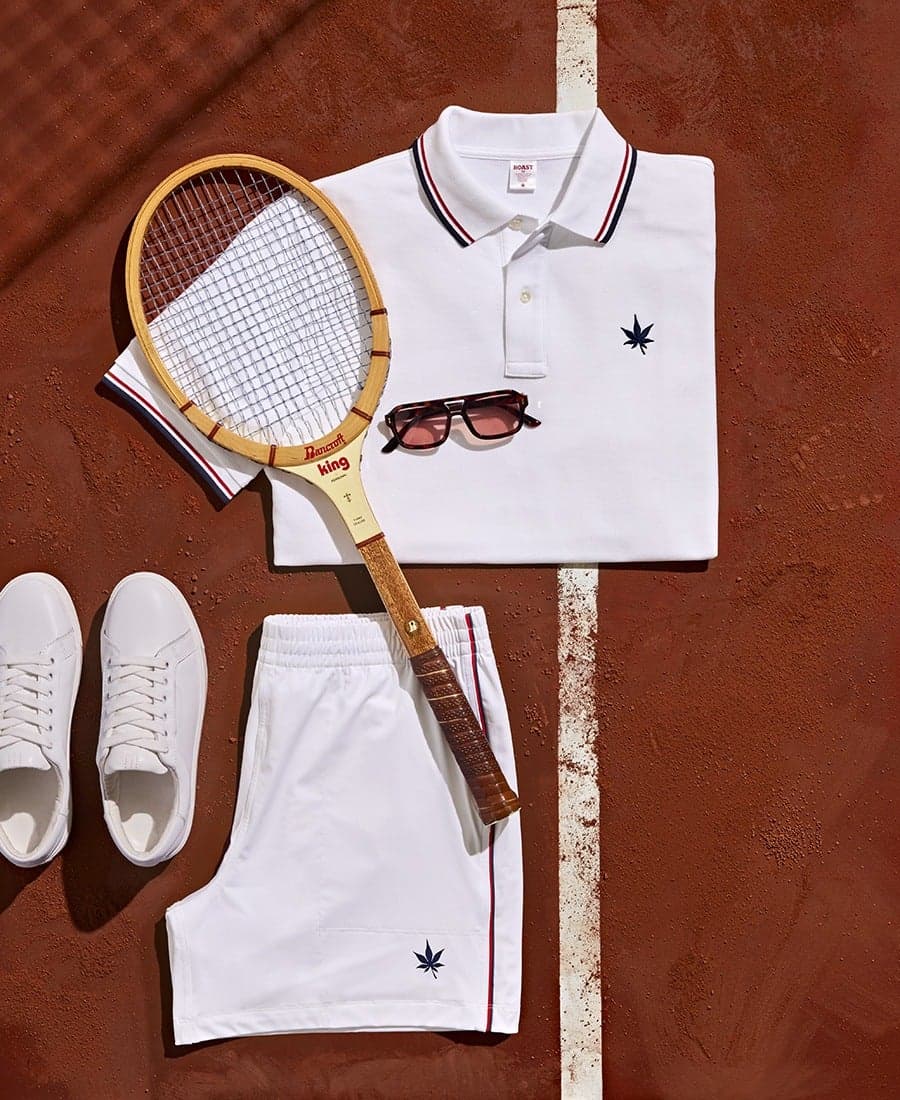
That positioning lands differently when you see the actual product. The Boast "1983" pique polo and performance shorts, photographed by Nina Gallant and styled by Taylor Greeley for Artists with Agency, do the work quietly: white fabric, a small navy blue leaf emblem on both polo and shorts, and a collar trimmed in red and navy stripes. The palette is restrained, the details are specific, and nothing about it reads as costume or irony. Tennis isn't a styling reference for this company, it's the foundation.

J. Press, operating for over a century out of New England, brings different credentials to the same argument. Where Boast is a relaunch built around a clear athletic origin, J. Press carries institutional weight, the kind accumulated across generations of students, athletes, and professionals who bought the clothes because they worked, not because a trend cycle validated them. The two brands together make a coherent case: that authentic prep was never about aesthetics borrowed from a sport, but about the sport itself shaping what you wore.
The irony-inflected, hyper-stylized prep circulating on social media, all bright colors and oversized bows, has its own appeal, but it was always a translation at several removes from the source material. What Boast and J. Press are doing is closer to returning to the original text.
This article was produced by Prism’s automated news system from verified source data, official records, and press releases, then run through automated quality and moderation checks before publishing. The system is built and supervised by the people who set the standards it runs under. Read our full AI policy.
Did this article answer your question?