Build a Minimalist Ring Collection With Heirloom Style That Lasts
A slim band and a signet ring are all the foundation you need; the rest is discipline, not accumulation.
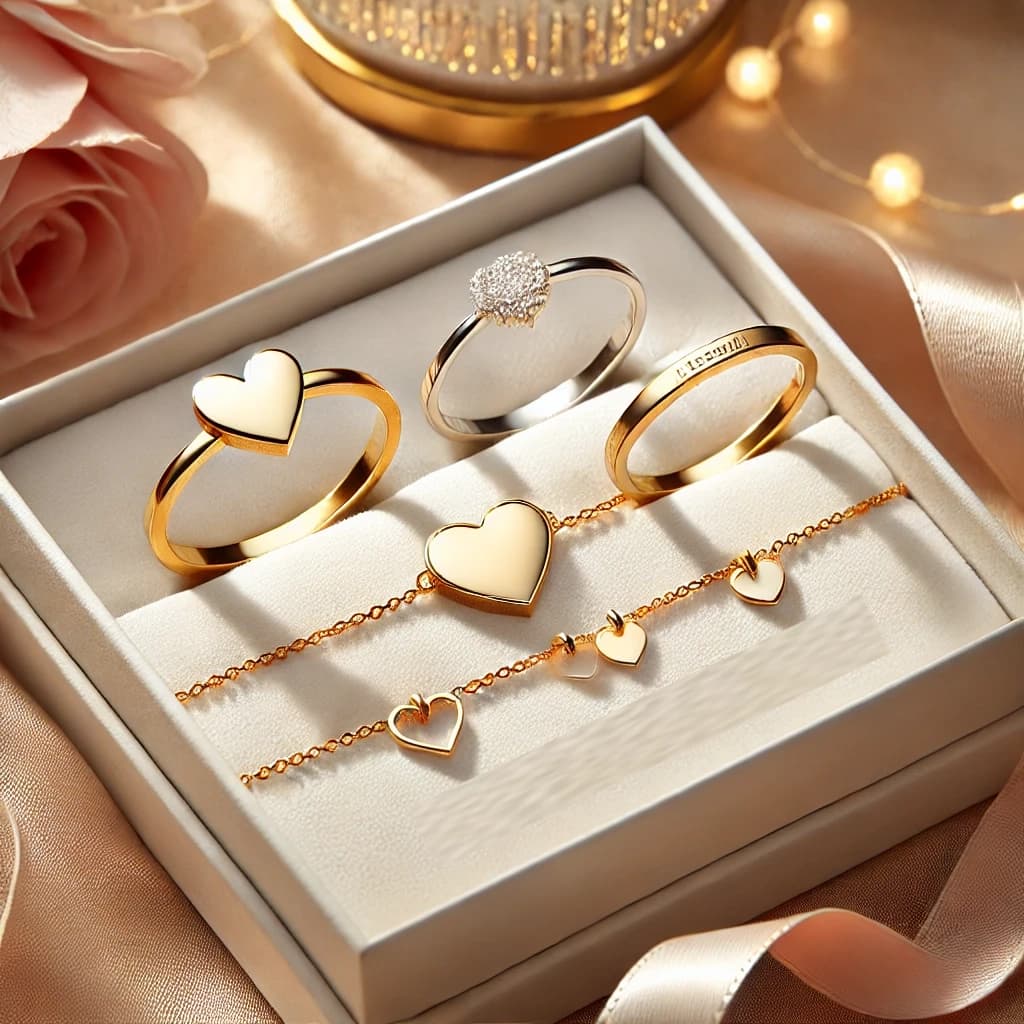
The jewelry box that impresses most is rarely the fullest one. Old money style has always understood this: a single well-chosen signet ring, worn on the correct finger with nothing crowding it, communicates more about taste than a stack of trend-chasing cocktail rings ever could. Building a minimalist ring collection with genuine heirloom potential is less about shopping and more about editing, less about acquiring and more about committing.
The core pieces every minimalist collection needs
Think of your ring collection the way a fashion editor thinks about a capsule wardrobe. Every piece earns its place, or it doesn't get one. The four pieces worth building around are the everyday band, the signet ring, a subtle statement piece, and stacking rings — not all worn simultaneously, but held in rotation with intention.
The everyday band is the non-negotiable anchor. As Fashion Gone Rogue puts it, "a slim gold or platinum band is the white t-shirt of your jewelry box. It's endlessly versatile and quietly powerful. Wear it alone for a clean, intentional look, or layer it alongside one other piece for effortless dimension." The skin-tone guidance matters more than most people acknowledge: warm skin tones tend to shine in yellow gold, while cooler undertones lean beautifully into white gold or silver. Getting this right means the band reads as almost biological, as though it grew there.
The signet ring occupies a different register entirely. Where the band is quiet, the signet carries weight — not visual weight, but historical resonance. Rings of this kind were already highly sought after by many wealthy families in earlier centuries and have long been understood as a symbol of luxury and family dynasty. The modern interpretation stays true to that restraint: a flat or very slightly domed face, minimal engraving or none at all, in gold or silver that coordinates with your band. Sprezzi-fashion's framing holds: Old Money style prefers "simple and classic shapes" that "impress through their design and not through excessive embellishments."
The stacking ring: the piece that demands the most discipline
Ultra-thin bands with subtle texture or delicate detailing are built for layering, but this is where most collections go wrong. Fashion Gone Rogue is precise on this point: "The golden rule here is discipline. In general, you should wear no more than three rings on a single finger. Any more and the whole effect starts to unravel, pulling the look away from minimalist territory entirely."
The companion rule is spatial: let the other fingers breathe. Keep every other finger bare and allow each piece to do exactly what it was designed to do. Crowding is the enemy of the heirloom aesthetic. A single stacking ring worn on a bare hand reads deliberate; five rings across four fingers reads distracted.
How to choose your metals wisely
Metal strategy is where the clearest editorial opinion emerges, and it is worth stating plainly: commit to one primary metal and build around it. Fashion Gone Rogue describes this as "the fastest way to make a minimalist collection look chic," and frames mixing metals indiscriminately as creating "visual noise." The payoff for that commitment is significant: a single-metal collection is "intentional, refined, and completely immune to the kind of trend fatigue that empties your wallet without ever truly upgrading your look."
For the specific metals worth investing in, the guidance from Sprezzi-fashion is usefully concrete: 925 sterling silver and gold vermeil are described as "noble materials" that "radiate value without being intrusive." Fashion Gone Rogue's everyday band sits at the slightly more elevated end: gold or platinum for those who want to invest in pieces that genuinely last decades. The distinction matters because gold vermeil (gold plating over sterling silver) offers the visual warmth of gold at a lower price point, while solid gold and platinum are the true heirloom choices.
There is one legitimate counter-position: designer Julie Garland notes that for necklace layering specifically, she is "a fan of mixing metals" for a striking two-tone contrast. That instinct applies well to necklaces, where the mixing feels exploratory rather than incoherent. For rings, where proximity and visual unity are everything, the single-metal commitment holds.

Materials, craftsmanship, and the case for heirloom quality
The old money aesthetic is fundamentally a craftsmanship argument dressed in aesthetic language. Durability is crucial. Sprezzi-fashion's advice is direct: "Look for robust workmanship and detailed craftsmanship that underline the value of the jewelry piece and could make it an heirloom." This shifts the buying question from "do I love this?" to "will someone else love this in forty years?" The answer almost always points toward simpler forms, better metal, and no embellishment that relies on a trend cycle to feel relevant.
The sustainability dimension follows naturally from this thinking. Being more mindful of how you shop and reducing the amount of unworn and outdated pieces is genuinely friendlier to the environment, and a minimalist approach to rings is one of the most straightforward ways to apply that mindset to jewelry. Fewer pieces, better chosen, worn consistently: this is the opposite of the accumulation model, and it produces a collection that actually coheres.
What to avoid when building your collection
Building a minimalist ring collection is as much about what you don't choose as what you do. Two failure modes come up repeatedly.
The first is chasing trends without a strategy. A ring that feels thrilling in January can feel completely disconnected from the rest of your collection by March. Before purchasing, ask honestly: does this work with what I already own? If the answer requires a mental stretch, the piece probably doesn't belong.
The second is repeating the same silhouette. Three thin bands with no variation in weight or texture flatten the entire collection. Contrast is what creates visual interest, and that's true even within a restrained edit. One smooth band, one subtly textured band, and a signet with a flat face: these three pieces have entirely different visual weights while remaining coherent in metal and spirit.
Extending the aesthetic beyond rings
Rings don't exist in isolation, and the old money minimalist approach extends naturally to the wrist and neckline. Dainty bracelets add quiet dimension without competing with a considered ring edit: delicate chain bracelets, charm bracelets, or pieces with slightly larger links can be stacked in combinations of varying textures and materials. The key, as with rings, is restraint in quantity.
For necklaces, the layering logic favors starting with a chain choker, whether herringbone or a chunky curb chain, and adding a medium-length piece with a simple charm beneath it. The two-tier approach creates depth without noise. Sprezzi-fashion's summary of the old money jewelry aesthetic covers all of this in a single principle: "In the Old Money Style look, a flashy design is frowned upon. Everything appears high-quality and noble but never flashy or boastful."
That sentence is the whole philosophy. A slim band in the right metal for your skin tone, a signet that carries personal history or the suggestion of it, two or three ultra-thin stacking rings worn with enough surrounding space to breathe: this is a collection that will outlast every trend cycle, every panic buy, and every jeweler's January sale. The pieces you choose with this much deliberateness tend to become the ones you never take off.
This article was produced by Prism’s automated news system from verified source data, official records, and press releases, then run through automated quality and moderation checks before publishing. The system is built and supervised by the people who set the standards it runs under. Read our full AI policy.
Did this article answer your question?