Burberry and Quentin Blake add cultured British ease to heritage staples
Burberry turned Quentin Blake’s pen-and-ink whimsy into tropical gabardine trench coats, silk and cashmere, aiming for British polish over loud branding.
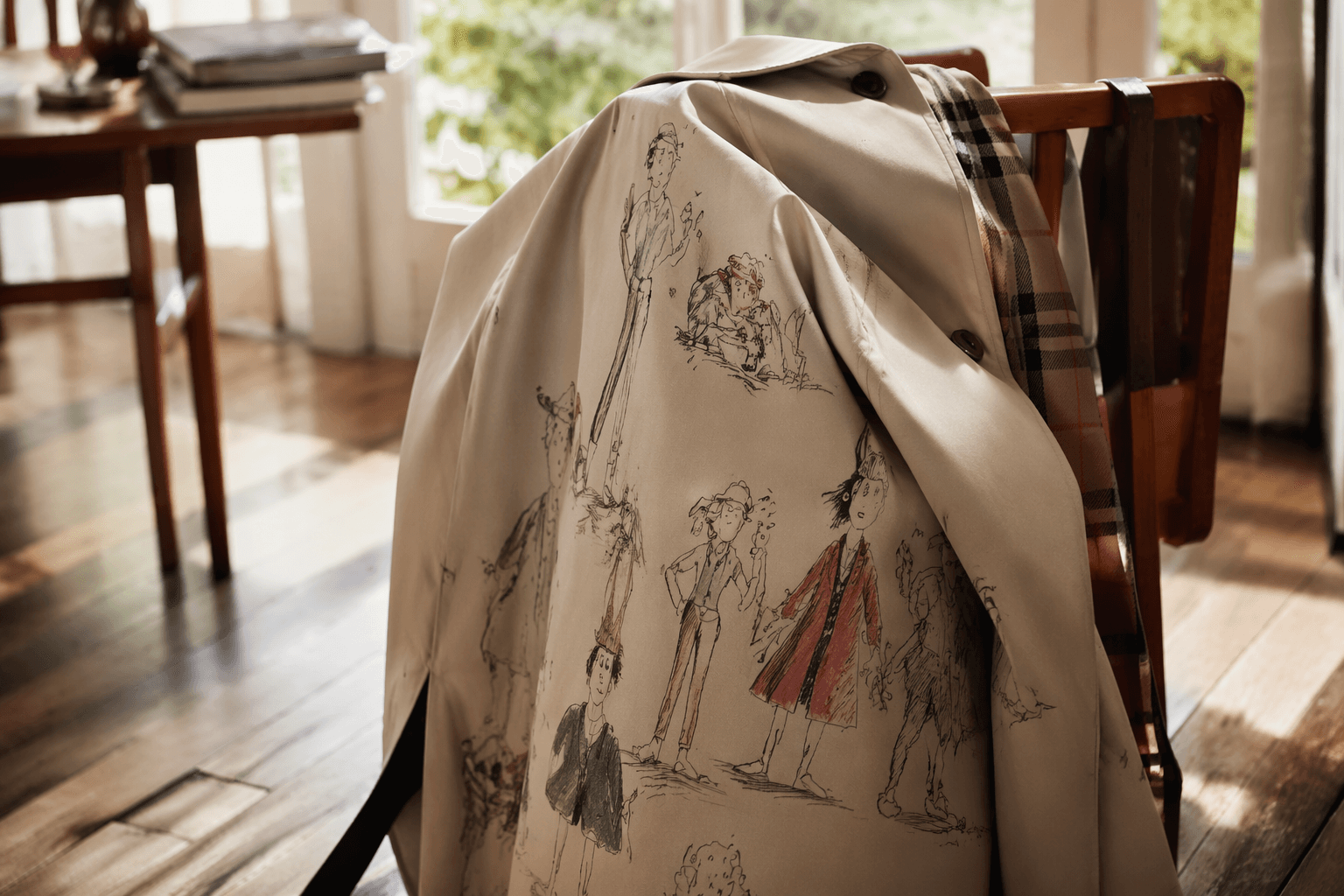
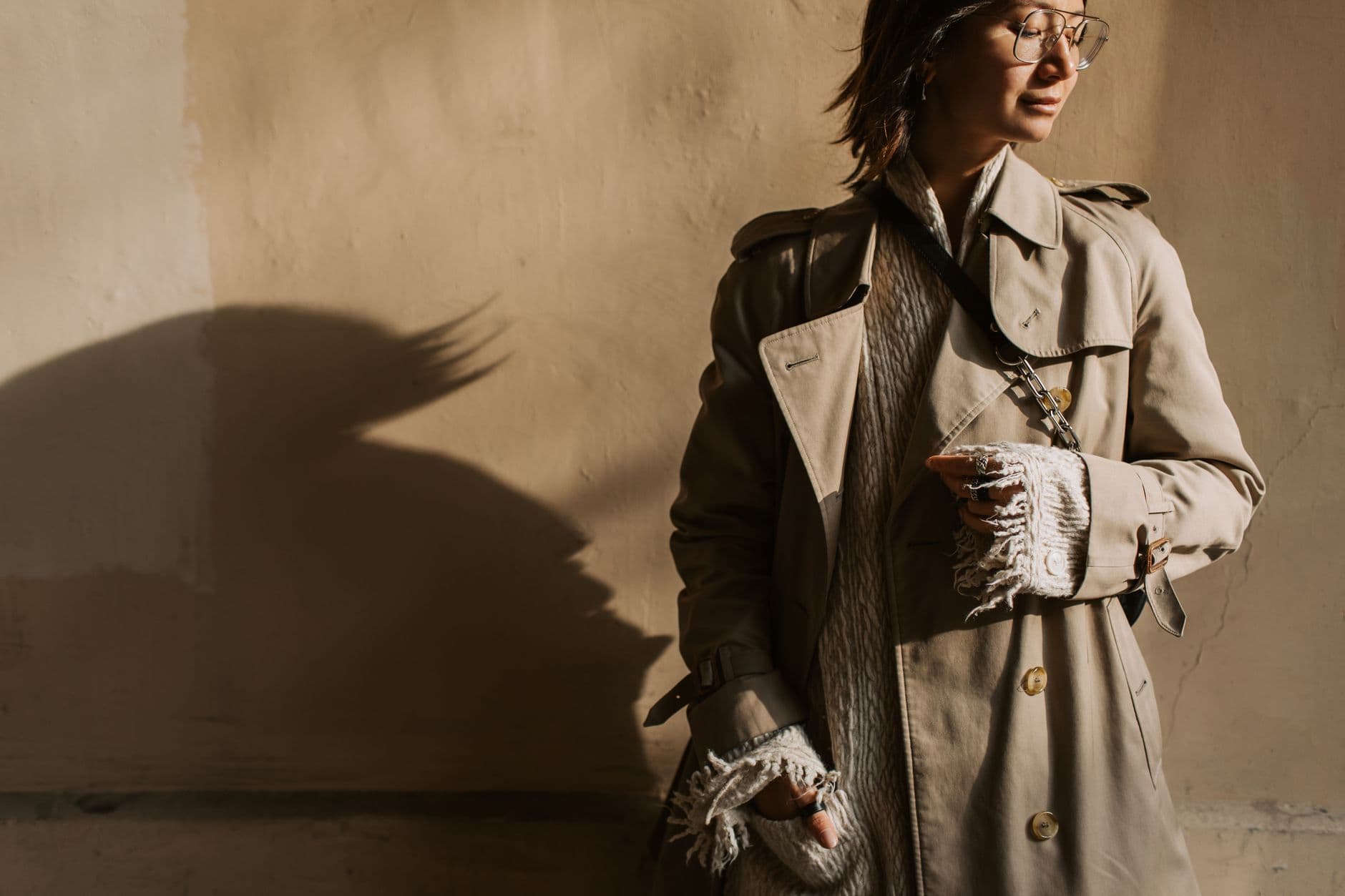
Burberry’s latest cultural gambit asks a sharper question than most fashion collaborations: when does national nostalgia become luxury, and when does it start to look playful? The answer, in this capsule with Sir Quentin Blake, sits somewhere between the two. Daniel Lee has folded the illustrator’s unmistakable line work into Burberry’s trench coats, printed silks, scarves and cashmere, giving the house a more cultivated, preppy ease than a logo-first drop could manage.
The collection, announced on June 2, spans womenswear, menswear and childrenswear, and Burberry says the trench coats are cut from shower-resistant tropical gabardine, the lightest of its signature fabrics. That choice matters. Tropical gabardine carries the brand’s establishment memory in its weave, while Blake’s feather-light drawings soften the discipline of the silhouette. Some pieces use previously unreleased artwork, and select interiors carry the Burberry Knight label finished with Blake’s signature, a detail that reads less like merch than private-school stationery rendered in silk and cotton.
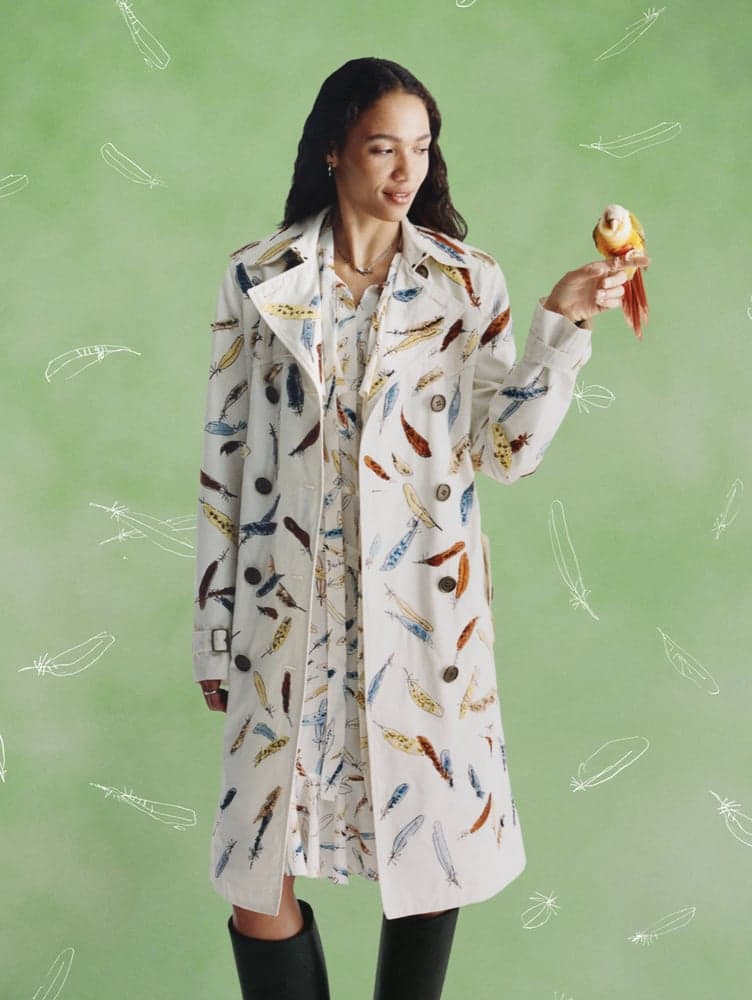
Burberry has also pushed the collaboration beyond outerwear, which is where it starts to feel properly considered. The brand’s product pages show a long-sleeve Brave Little Tree cotton T-shirt and a silk scarf blouse, while the Quentin Blake site identifies the Pembury lined in printed silk and the Foxfield with tactile embroidery. There is also a silk twill blouse printed with a pen-and-ink illustration originally drawn in 1971 for The Birds. That spread from trench to T-shirt to blouse gives the capsule a wider social register, from country-house polish to the kind of off-duty pieces old-money dressers actually wear.
Blake himself brings formidable institutional weight to the exercise. Born in 1932, he was knighted at Buckingham Palace in 2013 for services to illustration, became the first UK Children’s Laureate and has illustrated hundreds of books, including his long, defining collaboration with Roald Dahl. Against that backdrop, the collection feels less like a whimsical detour than a bid to position Burberry as a custodian of British visual culture. With the Quentin Blake Centre for Illustration preparing to open, the timing only sharpens the point: Burberry is not just borrowing heritage, it is trying to absorb it into cloth. For a house selling British ease, that is either a very strong argument for continuity or a warning that the codes of establishment dressing now need drawing in by hand.
This article was produced by Prism’s automated news system from verified source data, official records, and press releases, then run through automated quality and moderation checks before publishing. The system is built and supervised by the people who set the standards it runs under. Read our full AI policy.
Did this article answer your question?