Burgundy, Luxe Leather, and Polished Silhouettes Define Old Money Runways
Burgundy, luxe leather, and polished silhouettes are rewriting Old Money codes on the Paris and Milan runways this season.
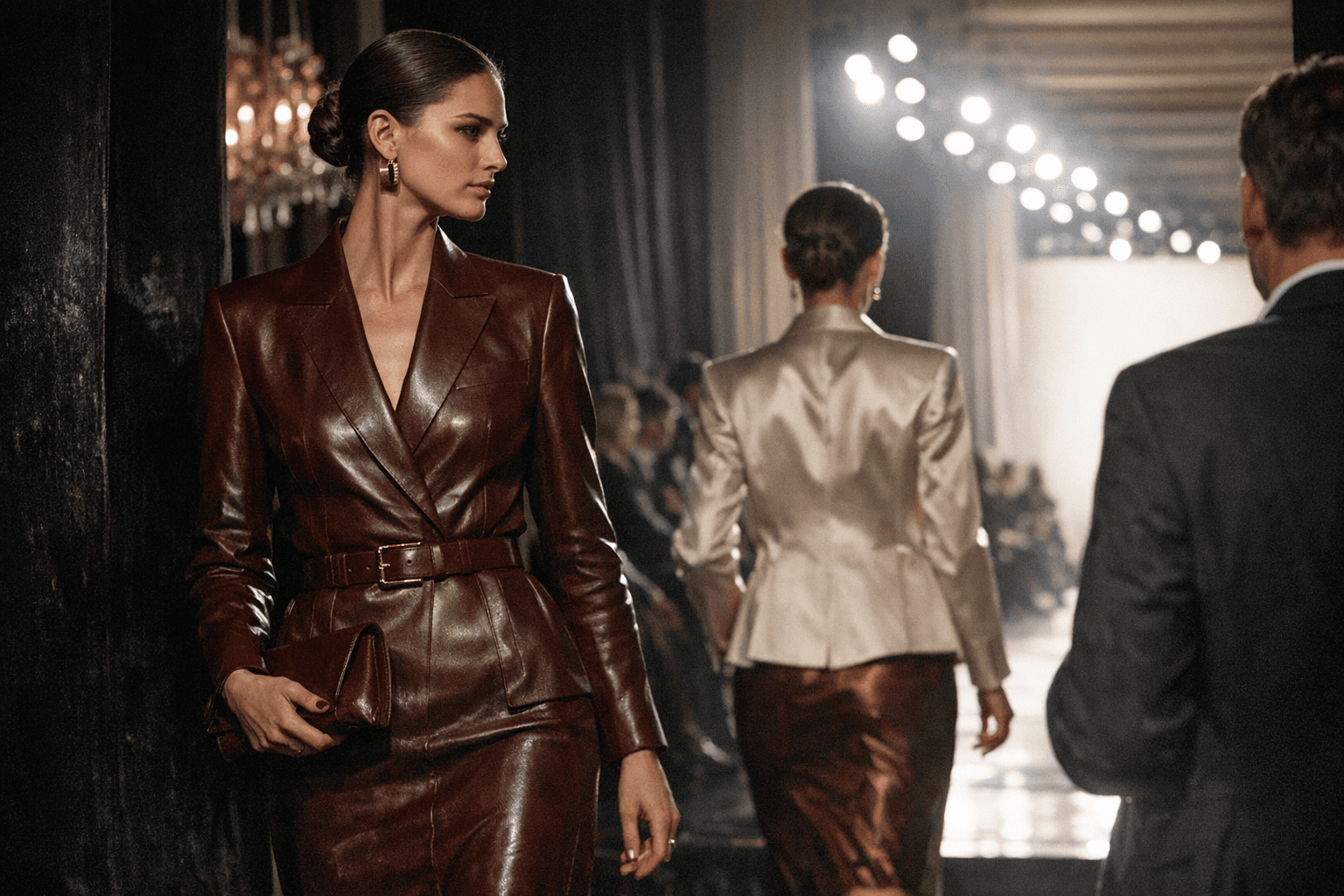
The Paris and Milan runways delivered something the fashion world didn't know it needed this season: a coherent, confident argument for restraint. Not the kind of restraint that reads as laziness or fear, but the considered, deliberate kind that takes money and taste to execute. Three distinct storylines emerged from the recent runway surveys, and together they form a blueprint for what Old Money dressing looks like when it's genuinely current rather than nostalgic cosplay.
Burgundy as the New Neutral
Forget camel. Forget navy. The color story commanding the most attention on the Paris and Milan runways this season is deep burgundy, and it's operating in a register that feels less like a trend and more like a recalibration. Burgundy and rouge in their deepest, most saturated forms are showing up not as accent pieces but as full-look commitments: head-to-toe coordinates, single-color suiting, floor-length column silhouettes that absorb light rather than reflect it.
The genius of burgundy in the Old Money context is its refusal to perform. It doesn't announce itself the way red does, and it doesn't disappear the way blush does. It sits in a chromatic middle distance that reads as knowing. You wear burgundy when you don't need to explain yourself. The runways leaned into this quality hard, presenting the color in fabrics that rewarded proximity: dense wool crepe, brushed cashmere, silk that moves with the weight of something that cost what it cost.
Styling throughout the shows kept the palette disciplined. Shoes, bags, and outerwear pulled from the same burgundy-to-oxblood spectrum, with occasional relief from cognac leather or ivory at the collar. The effect was monastic in the best possible sense, a reminder that commitment to a single color story is its own kind of confidence.
Luxe Leather in Investment-Grade Shapes
The leather moment happening right now is not about edge or provocation. It's about the precise opposite: leather being reclaimed as the ultimate investment fabric, cut into shapes so considered and classic that they communicate financial literacy rather than rebellion. The Paris and Milan shows made this case repeatedly and convincingly.
The silhouettes doing the work here are not new. What's new is the seriousness of execution. Structured leather blazers with a single-button closure and minimal topstitching. Leather trousers cut with the same careful attention to break and drape you'd expect from the best wool flannel. Leather coats in the midi length that reference equestrian dressing without becoming costume. These are pieces built around the idea that the fabric should be working so hard that the design can afford to do almost nothing.
Color plays a significant role in the investment-grade reading. The runways favored tones that age visibly and beautifully: cognac, espresso, a near-black that only reveals its depth in direct light. These are not colors chosen for seasonal relevance; they're chosen for a fifteen-year relationship. The message underneath all of it is durability, not just physical durability but the durability of good judgment.
What separates the pieces that landed from those that felt like trend-chasing was hardware and proportion. The best bags and coats on the runways had hardware so restrained it almost disappeared, turnlock closures in brushed gold, D-rings without ornament, seaming that existed for structural reasons rather than decorative ones. This is leather as architecture, and it's the most compelling argument for the category in recent memory.
The Return to Polished Silhouettes
The third storyline is perhaps the most quietly radical. After several seasons that rewarded the deliberately undone, the runway consensus from Paris and Milan is tilting back toward polish. Not stiffness, not formality for its own sake, but the kind of precise tailoring and considered finishing that signals someone made actual decisions about how a garment should sit on a body.
Shoulders are defined again. Hems are deliberate. Waists are marked, either by cut or by a single well-chosen belt, in a way that demonstrates awareness of proportion. The easy shapelessness that dominated recent cycles hasn't vanished entirely, but it's being counterbalanced by garments that have a point of view about structure. Trousers with a proper crease. Shirts with enough substance to hold a collar. Blazers that close cleanly across the chest without the wearers having to think about it.
This is Old Money dressing at its most functional and most honest. The underlying philosophy is that clothes should solve the problem of getting dressed rather than create new problems. Polished silhouettes do this by doing the heavy lifting before you put them on: the fit is worked out, the proportions are resolved, and you're left with something that simply works. There's no visible effort because all the effort happened earlier, in the atelier, in the fitting room, in someone's serious consideration of how the body moves.
The fabrics supporting these silhouettes matter enormously. Dense wool in charcoal and warm grey. Heavyweight cotton poplin that holds its shape through a full day. Flannel with enough body to drape without collapsing. The materials and the tailoring are making the same argument from different directions: permanence is the point.
Taken together, these three storylines form something more coherent than a seasonal mood board. They represent a shared conviction that has been building across the Paris and Milan shows: that dressing well, in the Old Money sense, is about the compression of good decisions into a single outfit. The right color, the right fabric, the right cut, worn with the confidence that comes from knowing you got all three right. Burgundy gives you the palette. Luxe leather gives you the investment anchor. Polished silhouettes give you the architecture. What you do with the combination is entirely your own.
This article was produced by Prism’s automated news system from verified source data, official records, and press releases, then run through automated quality and moderation checks before publishing. The system is built and supervised by the people who set the standards it runs under. Read our full AI policy.
Did this article answer your question?