Cheltenham Gold Cup Style Captures Classic Tweed, Boots, and Tailored Heritage Dressing
Cheltenham Gold Cup racegoers delivered a masterclass in old money dressing: tweed, riding boots, and tailored hats that never go out of style.
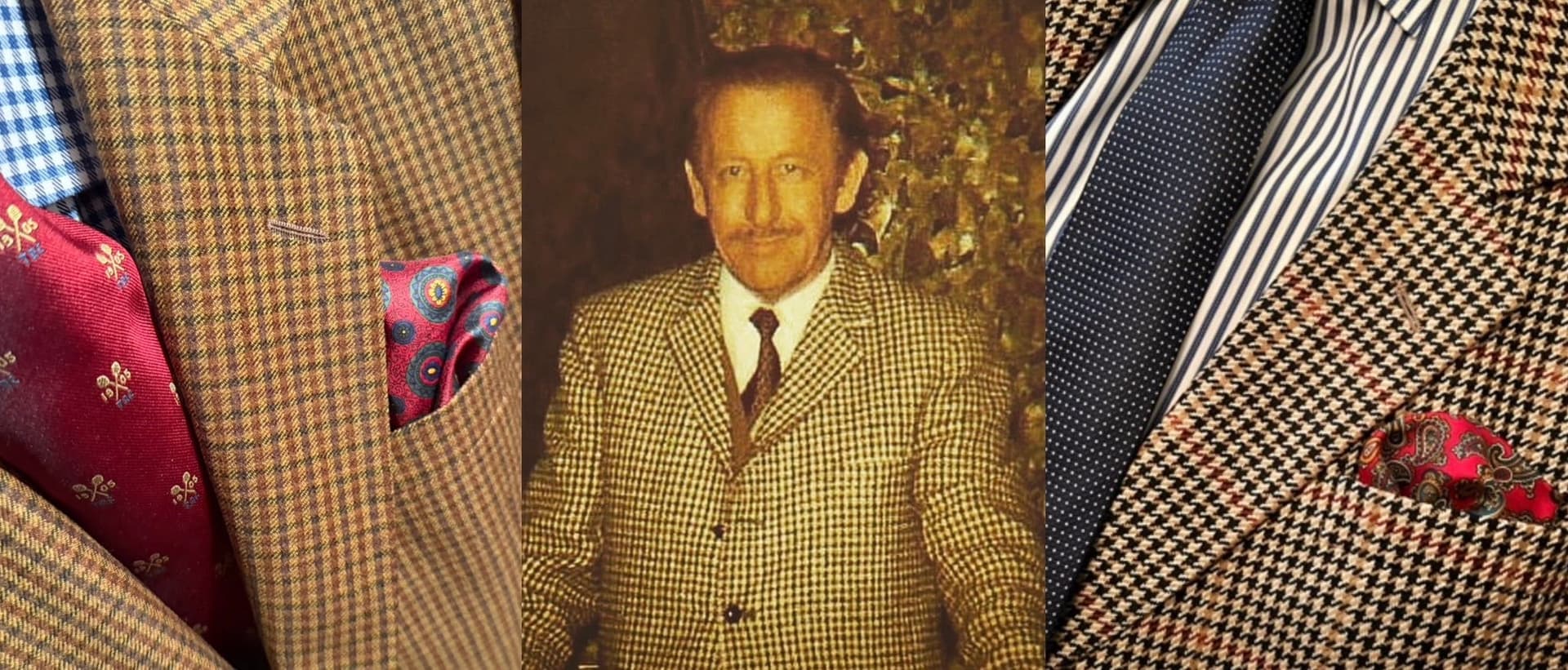
There is a particular kind of dressing that happens at Cheltenham each March, and it has nothing to do with fashion week. No runway trends, no statement logos, no dressing to be photographed by street style accounts. What turns up on Gold Cup day is something older and more considered: the quiet, unhurried confidence of clothes that have been in rotation for decades, pulled together by people who learned to dress from their parents, not from Instagram.
The Telegraph's coverage of Gold Cup day functions as one of the best annual field guides to this aesthetic, spotlighting racegoers in tweed suits, checked coats, riding boots, tailored hats, and layered neutrals. It is the town-and-country wardrobe in full, unselfconscious effect, and it is worth studying carefully.
Why Cheltenham Is the Truest Test of Heritage Dressing
Most race meetings skew theatrical. Hats become sculptures. Colour becomes competitive. Cheltenham resists that impulse almost entirely, because the crowd is not primarily a fashion crowd. It is a country crowd, a racing crowd, a crowd that has been coming to this meeting for generations and dresses accordingly. That social reality produces something rare in public fashion: authenticity. The clothes are worn because they work, not because they signal effort.
Gold Cup day in particular, the pinnacle of the National Hunt calendar, draws the kind of racegoer whose outfit was assembled over years rather than bought for the occasion. A Harris Tweed jacket here does not feel like a costume. It feels like the obvious choice.
The Architecture of the Cheltenham Look
Tweed is the foundation. Not tweed as a trend revival or a heritage nod, but tweed as the literal best fabric for standing in a Gloucestershire field in mid-March, when the temperature sits somewhere between cold and bitterly cold and the wind moves freely across the racecourse. The weave is dense enough to trap heat, textured enough to absorb light rain, and visually substantial enough to read well at distance. It does everything a garment needs to do at an outdoor sporting event in the English countryside.
The suits tend toward earth tones: tobacco, moss, heather, warm grey. Checks are prevalent but not aggressive, staying within the herringbone and windowpane family rather than reaching for anything louder. Fitted but not tight, structured at the shoulder, long enough in the jacket to maintain formality. This is tailoring with purpose rather than tailoring as performance.
Checked coats layer over the suits or over knitwear, usually in a tonal palette that keeps the whole look within the same colour family. Camel and cream, navy and grey, rust and brown. The skill here is in maintaining visual coherence across multiple layers, which requires either a good eye or a long habit of getting dressed this way.
Riding Boots and the Case for Footwear That Means Something
The riding boot remains the defining footwear choice at Cheltenham in a way it simply does not at any other major race meeting. At Ascot, heels dominate. At Cheltenham, boots make sense, and not just practically. The riding boot is the shoe that ties the country aesthetic together; it references the equestrian world directly, it handles uneven ground without complaint, and in tan or dark brown leather it anchors an outfit in the same visual register as the tweeds above it.
Worn pulled over slim trousers or skirts, paired with thick tights and layered knits, the riding boot at Cheltenham is not a concession to comfort. It is the correct choice. The versions that photograph best are those that show real wear, a slight patina, a heel that has been resoled. New boots are fine. Well-kept old ones are better.
Tailored Hats: The One Place Personality Is Permitted
If Cheltenham allows for any departure from restraint, it is in the hat. Not the architectural confections of Ladies Day at Ascot, but structured, tailored pieces that feel like an extension of the outfit rather than a separate statement. Felt fedoras, wide-brimmed wool styles, and classic beret shapes all appear, usually in colours that tie back to the coat or jacket beneath them.
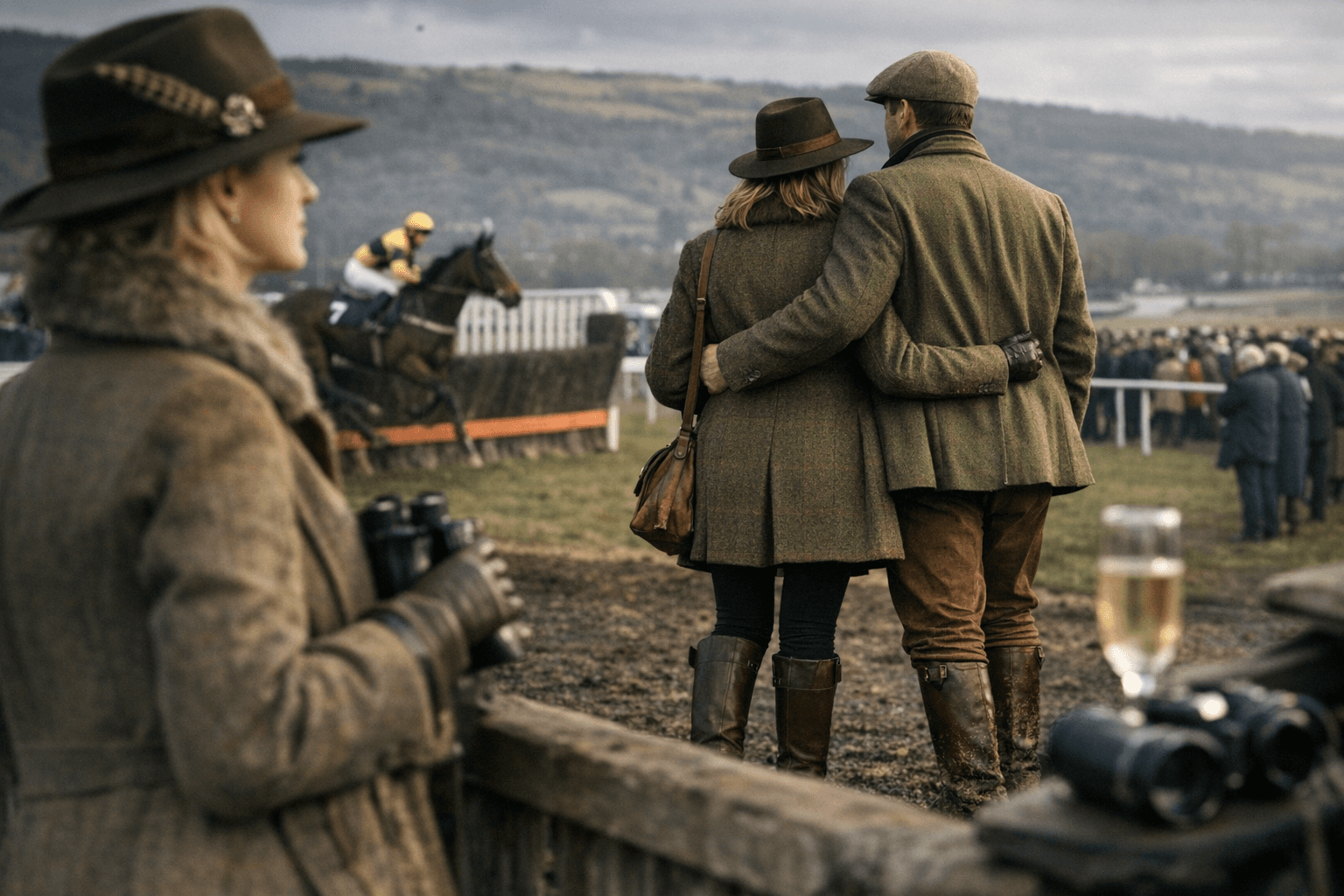
The Telegraph's gallery each year captures this detail well, and it is instructive to notice how rarely the hats overwhelm. They finish an outfit. They do not restart it. The proportion matters: at Cheltenham, a hat that draws all the attention to itself is slightly off-key. The goal is to look as though the whole thing arrived together, which, in the best cases, it did.
Layered Neutrals and the Intelligence of Tonal Dressing
One of the things the Cheltenham crowd understands instinctively is that neutral dressing is not boring dressing. It is disciplined dressing, and discipline is difficult. Layering cream over oatmeal over camel, or moss over olive over tan, requires an understanding of undertone and proportion that most trend-driven wardrobes never develop.
The effect, when it works, is a kind of visual depth that louder outfits cannot achieve. Each layer registers distinctly but sits within the same tonal world, so the eye moves across the figure rather than stopping at any single element. This is the logic of the old money wardrobe applied to real clothes in real conditions: nothing shouts, everything contributes.
The Royal Presence and What It Confirms
The Telegraph's gallery traditionally spotlights royals among the racegoers, and their presence is not incidental to understanding the aesthetic. The royal family, long associated with the Cheltenham Festival, represents the clearest living example of this dressing philosophy in practice. The clothes are invariably well-made, country-appropriate, and structured, without being fashionable in any contemporary sense. They are the baseline against which everything else at the meeting is unconsciously measured.
Seeing those images in context alongside the wider crowd confirms something important: the Cheltenham look is not aspirational in the way that fashion week dressing is aspirational. It is the expression of a specific set of values, ease, quality, suitability, and duration, that transcend any single season.
Building the Cheltenham Wardrobe
The advantage of this aesthetic, beyond its visual authority, is its durability. A well-cut tweed suit bought this year will still be the right thing to wear at Cheltenham in ten years. Riding boots, properly maintained, last for decades. A good felt hat does not go out of style because it was never trying to be in style.
The investment logic is straightforward:
- Prioritise fabric quality over cut fashionability. Tweed and heavy wool that drape and age well will outlast anything cut to a current silhouette.
- Choose riding boots in dark tan or chocolate brown leather, avoiding any sole or hardware detail that reads too contemporary.
- Keep the palette tight and tonal. Select a coat colour first, then build the layers beneath it in related shades rather than contrasting ones.
- Choose a hat that sits at a scale proportionate to the coat, and in a colour that appears somewhere else in the outfit.
The Cheltenham Gold Cup dress code is unwritten, but the crowd enforces it through collective habit. March after March, the same language of tweed and boots and layered wool reappears because it is correct for the place and the occasion. That consistency is not conservatism for its own sake. It is the accumulation of good judgement, and it is one of the most instructive things in British fashion.
This article was produced by Prism’s automated news system from verified source data, official records, and press releases, then run through automated quality and moderation checks before publishing. The system is built and supervised by the people who set the standards it runs under. Read our full AI policy.
Did this article answer your question?