Chrissy Rutherford’s polished airport formula, quiet luxury meets travel ease
Chrissy Rutherford turns airport dressing into a quiet-luxury uniform: better trousers, sharper layers, cleaner shoes, and luggage that looks composed before takeoff.
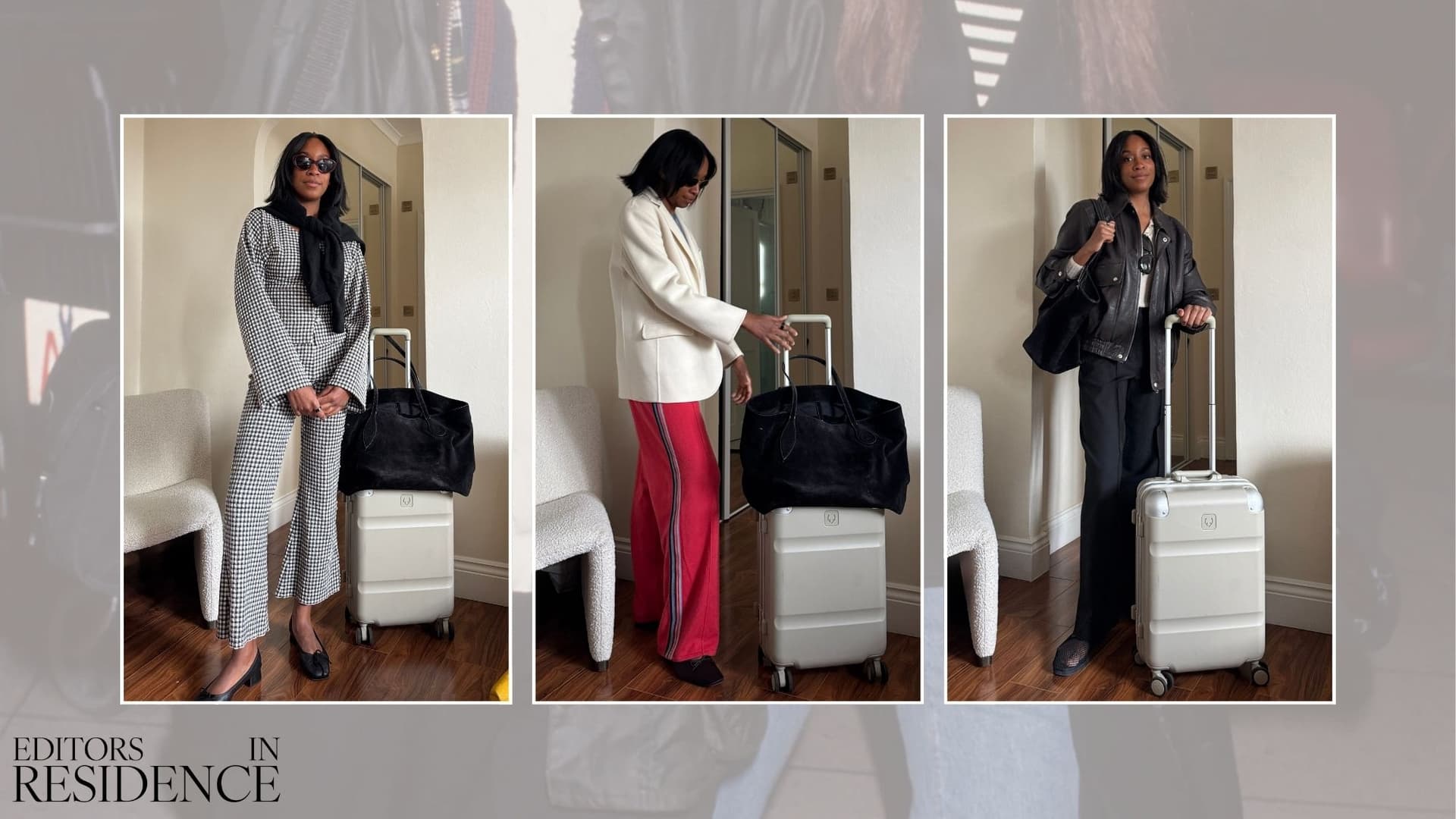
The cheapest way to look old money at the airport is not a monogram. It is restraint. Chrissy Rutherford’s formula takes that idea and makes it useful: easy trousers, smart layering, a more intentional shoe rotation, disciplined luggage, and beauty that looks polished without looking performed.
The Rutherford airport uniform
Rutherford, whom Who What Wear identifies as a UK Editor in Residence, fashion editor, writer, podcaster, content creator, and mental health advocate, treats travel dressing like a system rather than a stunt. That matters because airport style only works when it can survive a delayed boarding call, a long-haul cabin, and a taxi ride on the other side. Her approach is all about looking like the kind of person who has done this before, which is exactly why it reads as old money without trying to.
The appeal is immediate: clean lines, quiet palettes, and pieces that look inherited rather than hyped. This is the same emotional territory that fashion coverage has attached to quiet luxury and the old-money aesthetic, where premium basics do the heavy lifting and logos stay out of the way. Rutherford’s take is less fantasy, more formula, and that is what makes it copyable tomorrow.
Start with easy trousers, not hard outfit logic
The foundation is trousers that do not fight the body. Think relaxed tailoring, smooth drape, and a waistband that can handle a flight without looking wrinkled or precious by the time you land. A good pair of easy trousers does something that jeans rarely manage on a long travel day: it reads polished from a distance while still letting you sit, stretch, and sleep.
That is the quiet-luxury sweet spot. You want fabric that hangs well, seams that stay neat, and a silhouette with enough structure to look considered. The point is not to look dressed up; it is to look like your clothes are doing their job so you can do yours.
Layer like someone who understands aircraft, not a photo op
Smart layering is where airport dressing becomes genuinely useful. A soft knit under a blazer, a fine-gauge sweater over a tee, or a refined overshirt over trousers gives you control when cabin temperatures swing from chilly to stifling. Each layer should earn its place, and each one should disappear cleanly when you need it to.
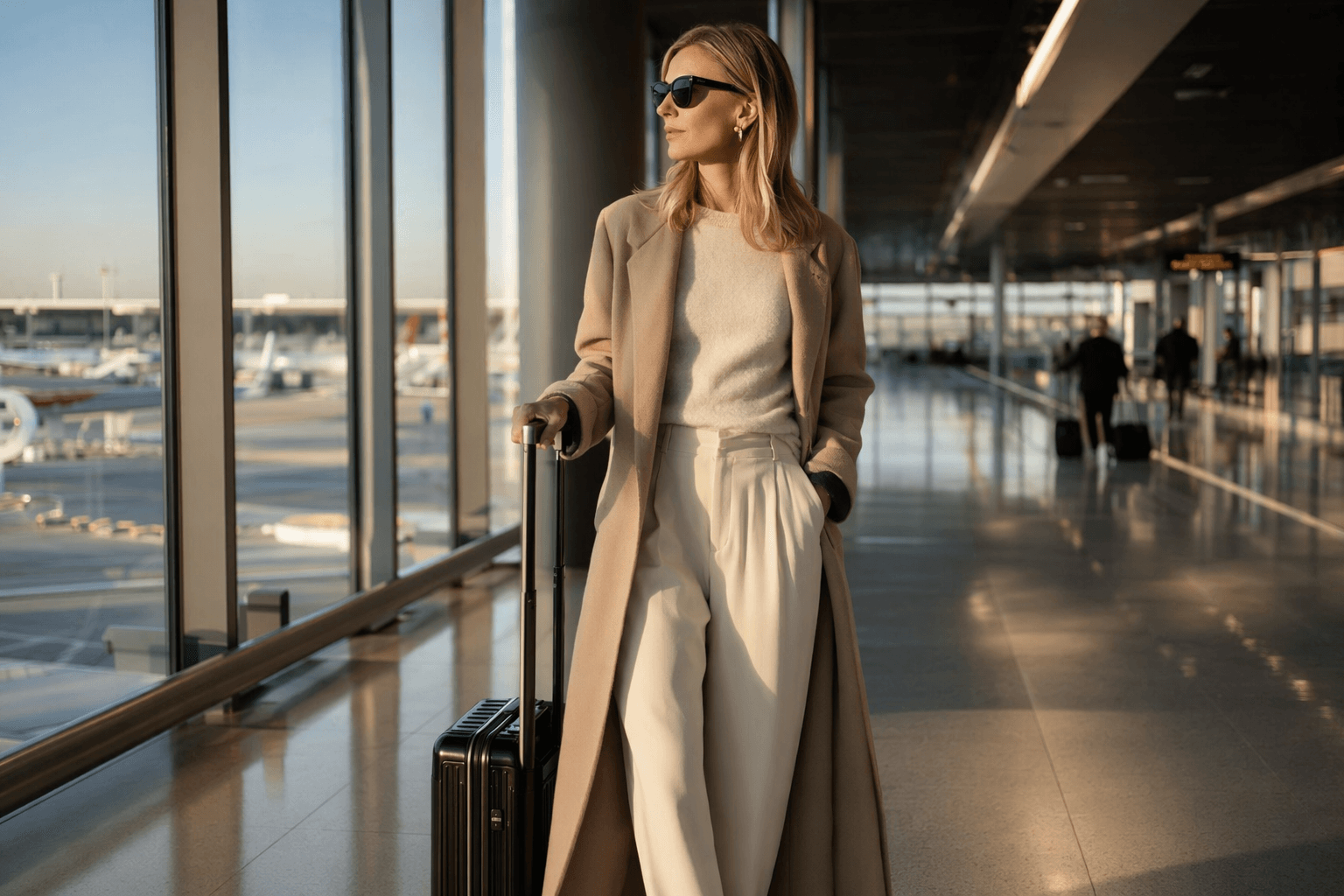
This is also where old-money style becomes more than a moodboard. The best layers are quiet, close-fitting, and disciplined, which means they frame the body instead of announcing themselves. Rutherford’s formula works because it avoids the obvious airport-travel clichés and replaces them with pieces that travel well and photograph even better.
Make the shoes intentional, not complicated
The new airport reality gives this one extra relevance. In July 2025, the Transportation Security Administration announced that passengers traveling through domestic airports can keep their shoes on while passing through TSA checkpoints, a shift announced by Homeland Security Secretary Kristi Noem and intended to make screening more hospitable and efficient. That does not erase the need for smart footwear, but it does change the old ritual of stripping shoes off at security.
Rutherford’s shoe rotation idea fits the moment. Choose shoes that feel polished enough for the rest of the trip and easy enough to move through a terminal in, whether that means sleek loafers, minimal sneakers, or a low-profile flat. The goal is not an “airport look” with a capital A. The goal is a shoe that lets you move through domestic airports without looking like you dressed for the terminal instead of the destination.
Dress for the holiday you want
One of the sharpest ideas in Rutherford’s formula is the simplest: dress for the holiday you want. That means your airport clothes should already belong to the life you are stepping into, whether the trip is a business arrival, a beach check-in, or a city break where you want to look composed the moment you land. It is aspirational, but not in a loud way.
That mindset is what gives the look its old-money energy. You are not dressing to be seen at security. You are dressing to look as though comfort and polish have always coexisted in your wardrobe. The result feels grounded, not precious, which is why it works for real life, not just for a departure lounge photo.
Chic baggage matters more than people admit
If the clothes are restrained, the bag should be, too. Rutherford’s luggage logic favors pieces that look disciplined and expensive without screaming for attention, because a polished carry-on immediately changes the entire silhouette of travel. Even before you say a word, the bag signals whether you are moving through the airport with intention.
This is the sort of detail old-money dressing depends on. A structured tote, a neat weekender, or a carry-on with a clean profile does what a logo-heavy bag cannot: it makes the whole outfit feel considered. In an airport context, where everyone is carrying something, the quietest option often reads as the most expensive.
Keep the beauty routine jet-set, not overworked
The final piece is grooming, and here the formula stays disciplined. Hair should look controlled rather than shellacked, skin should read fresh, and makeup should lean toward polish, not transformation. The effect is the opposite of costume travel beauty: you are not trying to look like an influencer at Gate 22, you are trying to look like yourself on a very good day.
That same clean, professional instinct shows up in American Airlines’ hiring guidance for in-person interviews, which asks candidates to wear clean, pressed, professional clothing and to consider how flight attendants dress. The Federal Aviation Administration’s safety oversight of aviation workers reinforces how much aviation culture still values presentation, order, and competence. In other words, polished travel style has always had a practical edge.
Why this formula keeps winning
Airport dressing has never really been about the airport. It is about the meeting point of comfort, class signaling, celebrity influence, and travel logistics, which is why the category keeps returning in fashion coverage. The reference point still goes back to Cindy Crawford’s 1990s airport style, those streamlined, elegant, comfortable looks that remain easy to translate into 2026 without feeling dated.
That is the real draw of Rutherford’s approach. It borrows the best part of old-money style, the discipline, and applies it to modern travel, where the person who looks most composed is often the one who packed least theatrically. The result is a travel uniform that feels calm, expensive, and completely usable, which is exactly what good airport style should be.
This article was produced by Prism’s automated news system from verified source data, official records, and press releases, then run through automated quality and moderation checks before publishing. The system is built and supervised by the people who set the standards it runs under. Read our full AI policy.
Did this article answer your question?