Dolce & Gabbana celebrates Sicily with airy menswear and ornate details
Dolce & Gabbana turns Sicily into cultural capital, pairing black tailoring, airy resort pieces and ornate craft with a runway that ends in pure white.

Dolce & Gabbana did not treat Sicily as scenery; it treated the island as inheritance. The result was a menswear collection that looked determined to turn regional identity into old-money cultural capital, with black tailoring, decorative flourishes and a final sweep into white that felt more ceremonial than touristy. Shown during Milan Men’s Fashion Week on June 20, 2026, the collection, titled Vacanze Siciliane, moved like a thesis about what luxury looks like when it is rooted in place.
Sicily as status, not postcard
The clearest idea in the collection was the house’s insistence that Sicily is its “starting point” and “source and soul.” That language matters, because it shifts the island away from the role of backdrop and into the role of origin story, the sort of lineage talk that old-money style lives on. Domenico Dolce and Stefano Gabbana used the runway to push that message with unusual directness, setting the show against a backdrop that evoked the coast near Taormina, with shifting shades of light and tall columns that suggested both grandeur and weathered history.
The references were broad, but they were not random. The collection drew on Sicily’s cities, villages, temples, Baroque architecture, mosaics and theatres, with particular echoes of the Val di Noto, Monreale and Taormina. That sweep gave the clothes a sense of layered memory rather than costume-box Sicily, although the line is never far away with this house. The strongest pieces felt like heirlooms in motion, while the most literal prints and appliqués risked leaning into souvenir territory when they were not balanced by sharper tailoring.
Heat, ceremony and the body
The runway itself told a story of progression. It opened in black, moved through lighter and more colorful territory and ended in total white, a sequence that felt like moving from evening formality into coastal brightness and then into a kind of absolution. That arc is a familiar Dolce & Gabbana code, but it is also the right one for old-money fashion in 2026, when status is less about restraint than about knowing exactly how much ornament a silhouette can hold before it slips into excess.
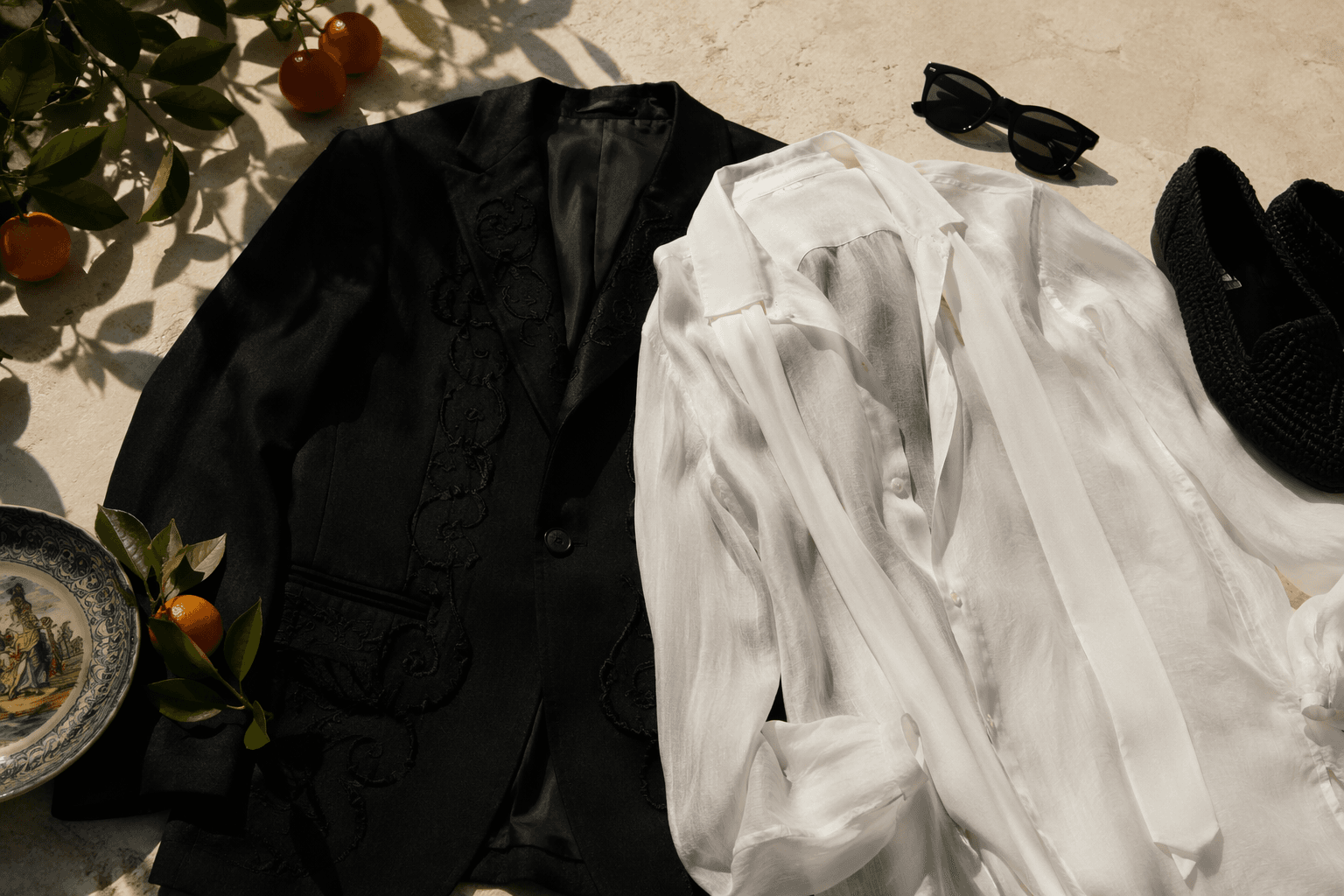
The clothes were built for air. Lightweight suits appeared alongside perforated floral embroidery, denim pieces decorated with jewel-like appliqués and shirts printed with postcard-style images and lemons. The house’s signature decorative instinct was everywhere, but so was a practical intelligence about summer dressing, especially in looks that had to survive both Milan’s heatwave and a Sicilian escape. Short shorts showed off the leg, loose-knit tops exposed the torso without feeling flimsy, and suit jackets came with back panels that could unbutton for added ventilation.
That tension between ceremony and comfort is what makes the collection more interesting than a simple resort exercise. It suggests a man who wants polish without suffocation, who understands that wealth now often announces itself through ease, touch and construction rather than obvious logo display. In that sense, Dolce & Gabbana is not chasing quiet luxury so much as rewriting it with embroidery, tailoring and sunlight.
The details that made it feel expensive
Accessories carried real weight here. Large leather bags, a wide range of shoes and woven leather details gave the collection the kind of tactile finish that can make even the lightest look feel rooted and considered. When the clothes were at their best, the accessories did not merely decorate them; they completed the argument that Sicily can be rendered as cultivation, not cliché.
Color did a great deal of the emotional work. Rich black anchored the opening, then came blue, pistachio and sand tones, before the closing white looks stripped everything back to brightness. That palette reads less like a postcard and more like a translation of landscape into wardrobe, which is where the collection found its most persuasive old-money rhythm. It was decorative, yes, but in a way that suggested inherited taste rather than flash.
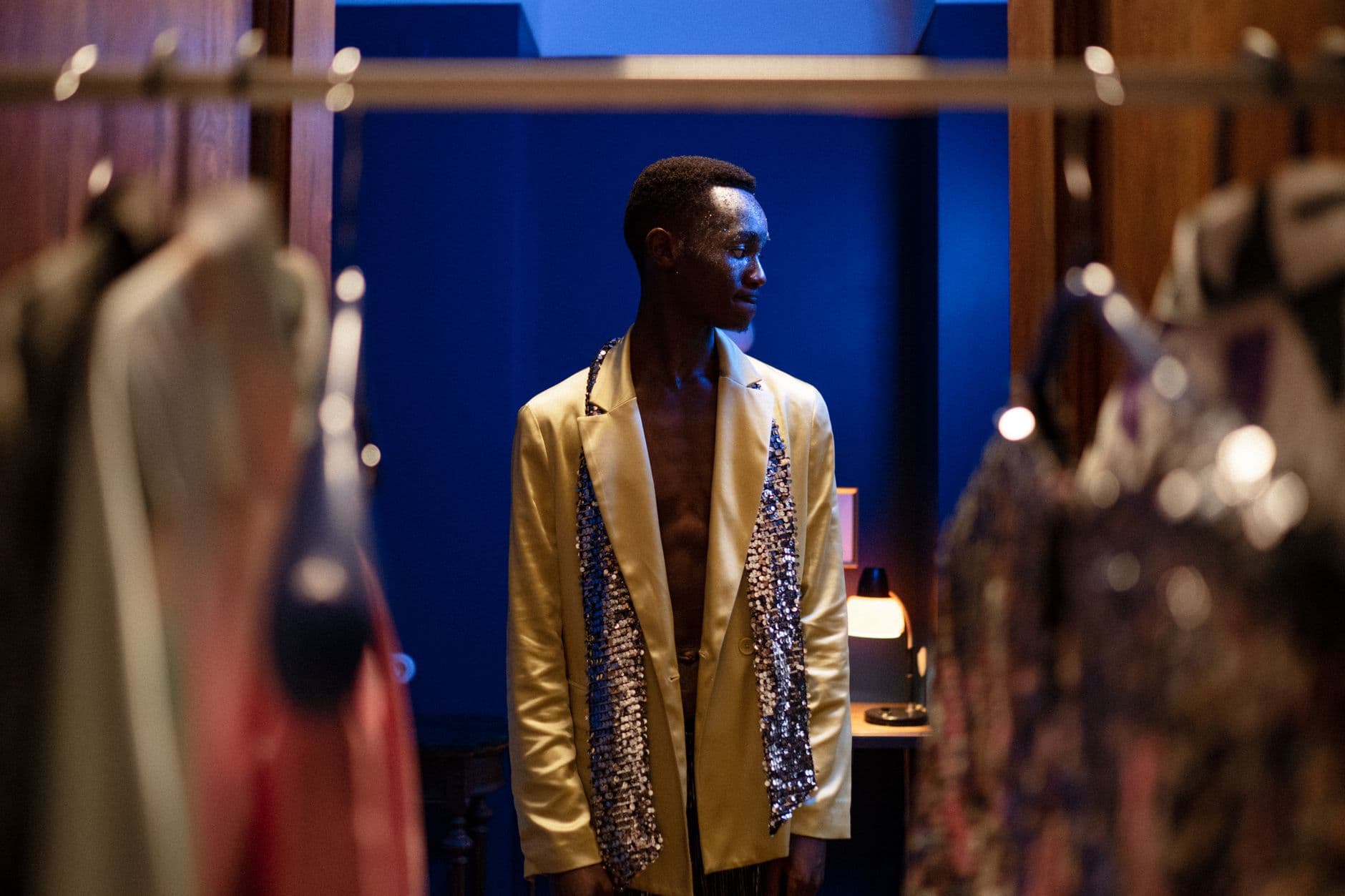
There is also an unmistakable house continuity running through it. Black tailoring, Mediterranean ornament and a blend of formality and sensuality have long been tied to Dolce & Gabbana’s Sicilian identity, and this collection returned to those codes with confidence. The difference this time is the emphasis on breathability and travel, as if the label wants its heritage to feel mobile enough for modern luxury life.
Why this collection matters now
The show landed at a telling moment for the company. Dolce & Gabbana is carrying out a debt renegotiation with banks, and Stefano Cantino was appointed co-CEO in April 2026 alongside Alfonso Dolce. In that context, the collection looked like more than a seasonal statement, it looked like a reaffirmation of the brand’s most bankable mythology: Sicily as both emotional core and commercial engine.
That is why the collection’s best moments felt less like Mediterranean spectacle and more like cultural positioning. The 1950s and early 1960s references, when modern tourists first began discovering Sicily, brought in a discreet resort nostalgia, with silk swimwear, chevron-striped knits, linen tailoring and polished holiday pieces suggesting the dawn of jet-age leisure. But the clothes stopped short of slipping into theatrical retro pastiche, because the tailoring and construction kept pulling the eye back to present-day wear.
Dolce & Gabbana understands something that old-money fashion keeps relearning: heritage only feels valuable when it is made wearable. Vacanze Siciliane was at its most convincing when it allowed craft, lineage and ritual to outweigh the obvious postcard imagery. That is how Sicily stops reading as a destination and starts reading as a dynasty.
This article was produced by Prism’s automated news system from verified source data, official records, and press releases, then run through automated quality and moderation checks before publishing. The system is built and supervised by the people who set the standards it runs under. Read our full AI policy.
Did this article answer your question?