Dunhill channels English old-money elegance with refined tailoring
Dunhill is betting that aristocratic codes still move product, turning Snowdon, Moore and Freud into a sharper, more wearable menswear language.
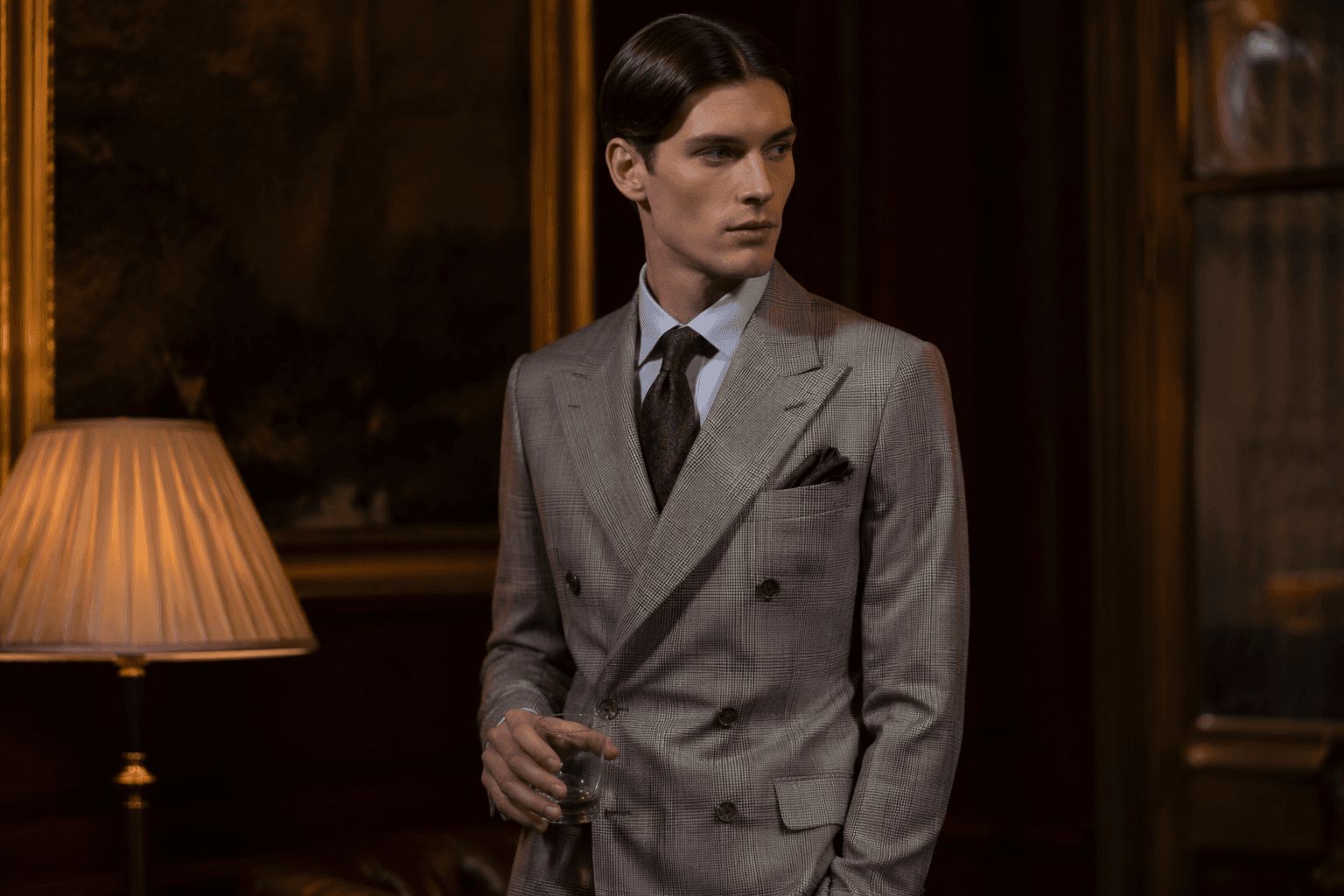
Lord Snowdon, Roger Moore and Lucian Freud are not museum pieces here. Dunhill is using them as living references, and Simon Holloway is making a very specific argument: English masculine codes still have commercial force when they are cut with discipline, not nostalgia. The result is a collection that feels less like costume and more like a case for why patrician dress is back in play, especially when so many luxury brands are still hiding behind softness.
A sharper kind of old money
Holloway describes Spring Summer 2027 as a continuation of his “character study of British masculine identity,” and that framing matters because it keeps the clothes from flattening into cliché. Roger Moore brings the easy poise, Lucian Freud brings the painterly intensity, and Lord Snowdon gives Dunhill its aristocratic edge. Together, they create a wardrobe built around men who know how to move through London, and beyond it, without looking like they are trying.
That is the real pitch here. Dunhill is not selling a fantasy of wealth that sits still; it is selling a system of codes that can survive yacht decks, summer opera and late dinners. The brand’s old-money mood is not pinned to beige understatement or the current obsession with washed-out stealth wealth. It is more precise than that, more tailored, and frankly more interesting.
The blazer still runs the room
The collection is anchored by the blazer, and that feels right. If you are building a modern English wardrobe, the blazer is the piece that carries the whole attitude: formal enough to signal intent, relaxed enough to avoid stiffness. Dunhill doubles down on that idea with a navy double-face reefer coat in rare Escorial wool, which gives the line a crisp, maritime authority without sliding into costume drama.
From there, Holloway pulls the tailoring into finer, more tactile territory. There is superfine kid mohair and linen tailoring in grey, the kind of cloth that catches light instead of swallowing it, and then the palette shifts into turquoise, ivory and red for evening and warmer-weather pieces. That move matters because it keeps the collection from becoming a monotone exercise in restraint. It still looks disciplined, but now the discipline has range.
The textures are doing a lot of the talking. Silk dupioni, woven on antique looms dating to the 1960s, gives the evening pieces a dry, almost glancing shimmer. That is the kind of detail that separates serious tailoring from heritage wallpaper: it feels expensive because it is constructed with memory, not because it is shouting.
Why these references keep landing
WWD made the point that this was the second season in a row Holloway had name-checked Lord Snowdon, and that continuity is the story, not the repetition itself. Dunhill is building a recognizable worldview season after season, which is exactly how a house turns taste into brand equity. A one-off reference is decoration; a repeated one becomes a code.

That code was already visible in Spring 2026, when Dunhill showed in the private garden of the Museo Poldi Pezzoli in Milan and pulled from the Duke of Windsor, King Charles III, Bryan Ferry and Charlie Watts. Even before that, Holloway’s Spring 2025 sophomore outing leaned into a quintessentially British wardrobe built from tailoring, knitwear, rich leathers, soft suedes and English wool. You can see the progression: first establish the wardrobe, then tighten the silhouette, then sharpen the references until they read as an argument rather than a mood board.
Autumn Winter 2026 pushed that argument further with Lord Snowdon as the model for aristocratic composure mixed with creative edge. Grey and midnight blue set the tone, while driving gloves, silk ties and cashmere scarves brought back the vocabulary of proper dressing. Heritage techniques like jacquard weaving and bespoke tailoring kept it grounded, and the fact that the line was shot in London by Ethan James Green as a 22-image series gave it a polished, editorial weight. Dunhill has been constructing a whole visual universe here, not just a season.
The cast, the camera, the lifestyle
Spring Summer 2027 extends that universe with Ethan James Green behind the camera again, this time with Parker Van Noord in the catalogue raisonné. That pairing matters because it makes the clothes look less like product and more like a finished editorial world, the sort of thing that can carry a house from runway to campaign to retail floor without losing tension.
The lifestyle framing is just as important as the fabrics. Yacht decks, summer opera and late dinners are not throwaway atmospherics; they are the environments where these clothes make sense. Dunhill is saying the English old-money wardrobe is not a relic of country-house fantasy, it is a uniform for a very specific kind of modern movement, between city, coast and night.
The brand also folds in seasonal expressions of the Alfred, Century and Duke leather-goods collections, which keeps the tailoring from floating away from the rest of the business. That is classic Dunhill thinking: the suit, the scarf, the leather goods and the evening pieces all belong to the same grammar. Nothing is random, and nothing looks overworked.
What this says about men’s dress right now
This collection lands because it pushes against the current drift toward softer luxury. Plenty of brands are selling ease, slouch and neutral comfort, but Dunhill is making the sharper commercial case: structure still reads as status, and restraint still reads as taste when the craft is good enough to hold it up. The old-money impulse here is not about pretending the world has not changed. It is about proving that disciplined dress still has appetite, especially when it is filtered through rare cloth, controlled color and a very clear point of view.
That is why Holloway’s Dunhill feels so persuasive right now. It is not chasing relevance by loosening the rules. It is reminding the market that in menswear, the most powerful luxury signal can still be a blazer cut properly, a scarf worn with intent, and a double-breasted suit that knows exactly what kind of man it is dressing.
This article was produced by Prism’s automated news system from verified source data, official records, and press releases, then run through automated quality and moderation checks before publishing. The system is built and supervised by the people who set the standards it runs under. Read our full AI policy.
Did this article answer your question?