Eight Emerging Menswear Brands Combining Tailoring, Quality, and Classic Style
FT's style insiders name eight menswear brands worth knowing, from accessible tailoring to craft-forward east-meets-west dressing.
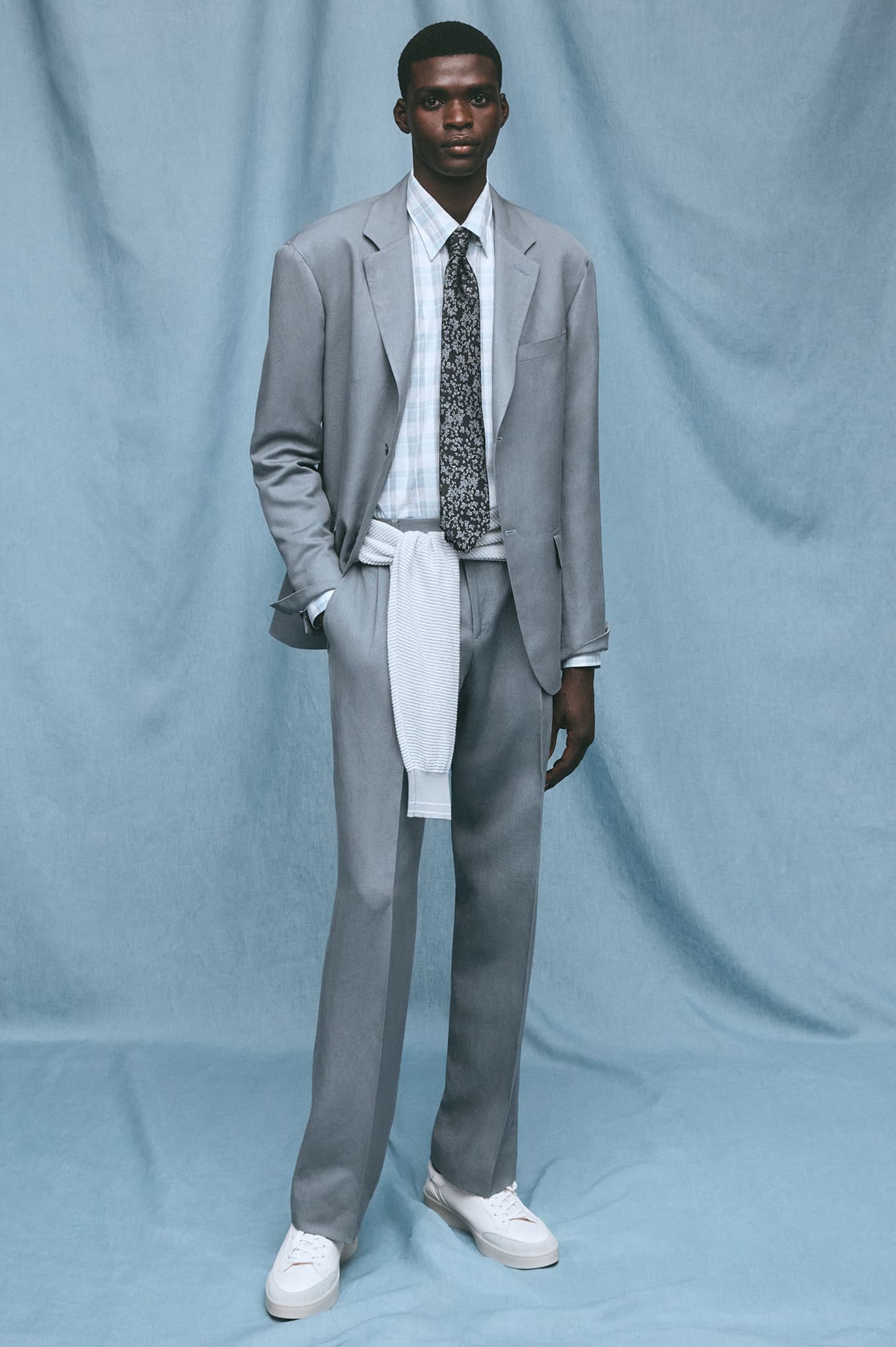
The FT's How to Spend It style desk does not hand out recommendations lightly. When Sara Semic, Louis Cheslaw, Louis Wise, and Isaac Zamet pool their collective eye for a menswear round-up, the resulting list carries genuine weight. Their latest edit, which appeared in the Financial Times' HTSI section and was selected by FT editor Roula Khalaf for the paper's weekly newsletter, identifies eight emerging menswear brands worth watching. The throughline connecting them: solid tailoring, high-quality materials, and classic silhouettes executed with a fresh perspective.
What follows is a close look at the brands the research notes illuminate in detail, each representing a distinct approach to the question of what considered menswear looks like right now.
Another Aspect
The entry point on the list, and arguably the most democratic, Another Aspect has built its reputation around what the HTSI editors summarise as "sleek, affordable everyday staples." In a landscape where even a mid-range suit jacket can tip into four figures, the label's pricing lands with refreshing clarity: the wool Another 2.0 suit jacket is priced at £475, with matching trousers at £240. That puts a complete tailored look within reach at just over £700, a figure that sits comfortably below most comparable European tailoring houses. The name of the jacket itself, the Another 2.0, suggests a label that treats its own output as iterative, a brand in active conversation with its own evolution.
Salon C Lundman
If Another Aspect represents accessibility, Salon C Lundman occupies the opposite end of the investment spectrum, and makes a compelling case for every pound spent. Writing with his characteristic precision, Louis Cheslaw frames the label's philosophy with economy: for Lundman, menswear's shapes "don't need reinvention, just a new interpretation."
That philosophy is worn quietly but legibly in the construction details. The clothes are rooted in the established codes of tailoring — wool overcoats, cotton shirts, pleated trousers — but reworked to restore what Lundman considers lost ground. He believes that "tenderness, softness, and sexiness" have disappeared from men's fashion, and his response is architectural rather than decorative: sleeves cut with natural curves, subtle notches on sweater cuffs, and double-collared shirts engineered to draw the eye toward the neckline. The sourcing reflects the same ambition. Sumptuous Italian fabrics and advanced pattern-cutting push prices into premium territory, with a wool-cashmere overcoat retailing at £2,050 and a wool double-breasted jacket listed at £2,412. A cotton inside-out shirt at £520 demonstrates that even the separates demand serious consideration. As Cheslaw puts it: it's worth it.
Camisas Manolo
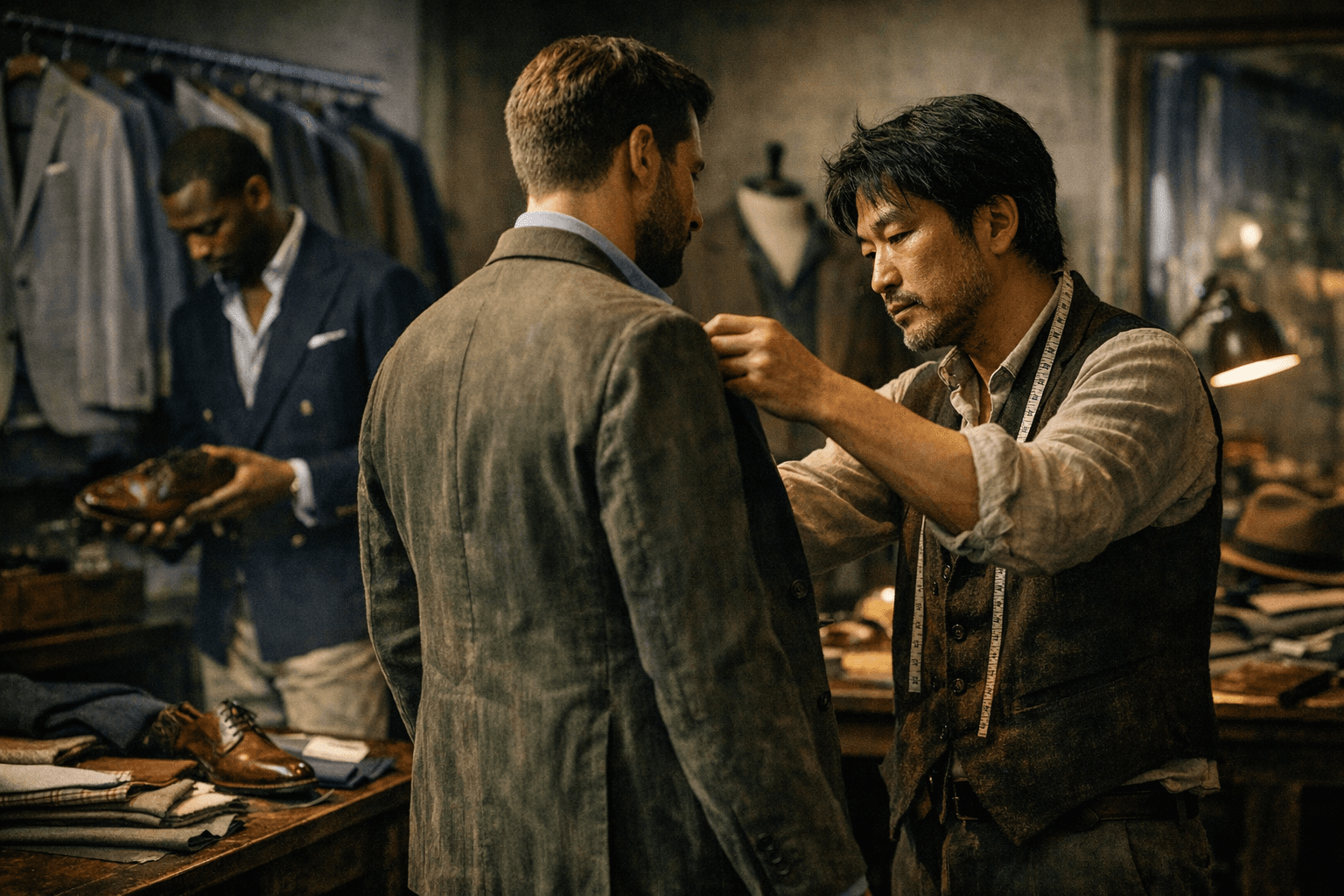
The research notes flag Camisas Manolo with a degree of productive ambiguity. What is clear is the label's presence on the HTSI list and its apparent connection to a practice described by Louis Cheslaw that centres on the intelligent reworking of iconic garments. The designer identified as Shigematsu takes reference pieces with deep cultural weight — a Levi's Type 1 jacket, M51 field trousers — and subjects them to a dual interrogation: where can subtle pattern adjustments improve comfort, and how should the finished garment be processed and washed to arrive at an authentic vintage feel? The result is not pastiche but something more rigorous, a method-driven label that understands the difference between looking old and feeling worn-in. The brand has also confirmed plans to launch a women's line next year, a move that signals genuine growth ambition rather than a label content to remain a specialists' secret.
A Presse
A Presse appears in the HTSI round-up with two products that sketch the label's range efficiently. A leather sports jacket at £3,350 anchors the upper tier, a price point that places it in conversation with established European luxury sportswear. A cotton cardigan at £570 offers a lower threshold into the brand's aesthetic. The label sits within the same editorial neighbourhood as the Shigematsu-led reworking practice described above, though the precise relationship between the two is worth treating as distinct until confirmed. What the price architecture suggests is a label with a clear sense of its own positioning: not entry-level, not gratuitously expensive, but committed to materials and construction that justify the ask.
Kartik Research
Kartik Research arrives on the list with perhaps the most distinctive USP of the eight: "craft-forward, east-meets-west style." The label's product range makes that descriptor feel earned rather than promotional. The linen/wool Kantha overcoat at £640 references the Kantha textile tradition, a hand-stitching technique associated with South Asian artisanship, while the materials speak to a considered blending of fabric traditions. The cotton shirt at £410 and wool trousers at £435 build out a complete look at prices that feel proportionate given the craft investment implied. The silk scarf blazer at £825 is the standout conceptual piece, a garment in which an accessory is embedded directly into tailoring's most foundational form. Linen trousers at £440 round out the offer. Across the range, Kartik Research occupies a space that few brands attempt seriously: the intersection of artisanal textile heritage and structured Western tailoring, executed with enough precision to earn a place among HTSI's insider picks.
The Remaining Three
The FT HTSI piece covers eight brands in total, and the research materials available in detail account for five of them. The three additional labels highlighted by Sara Semic, Louis Cheslaw, Louis Wise, and Isaac Zamet complete a round-up that, taken together, maps a confident moment in emerging menswear. The unifying argument across all eight selections is consistent: that the most interesting new work in men's dress is happening not through disruption but through deep familiarity with classic forms, followed by the confidence to adjust them with intention.
The breadth of price points across the confirmed five brands alone tells its own story. From Another Aspect's £715 two-piece to A Presse's £3,350 leather jacket, the HTSI editors are not prescribing a single entry point into quality menswear. What they are prescribing is an attention to craft, construction, and the quiet intelligence of a well-made garment. In an era of accelerated trend cycles and fast-fashion adjacency even at the premium tier, that prescription feels overdue.
This article was produced by Prism’s automated news system from verified source data, official records, and press releases, then run through automated quality and moderation checks before publishing. The system is built and supervised by the people who set the standards it runs under. Read our full AI policy.
Did this article answer your question?