Eileen Fisher channels The Row minimalism with affordable quiet-luxury basics
Eileen Fisher’s calm linen, clean tailoring, and low-key accessories echo The Row, but the whole wardrobe lands under $300.
The quiet-luxury code, translated
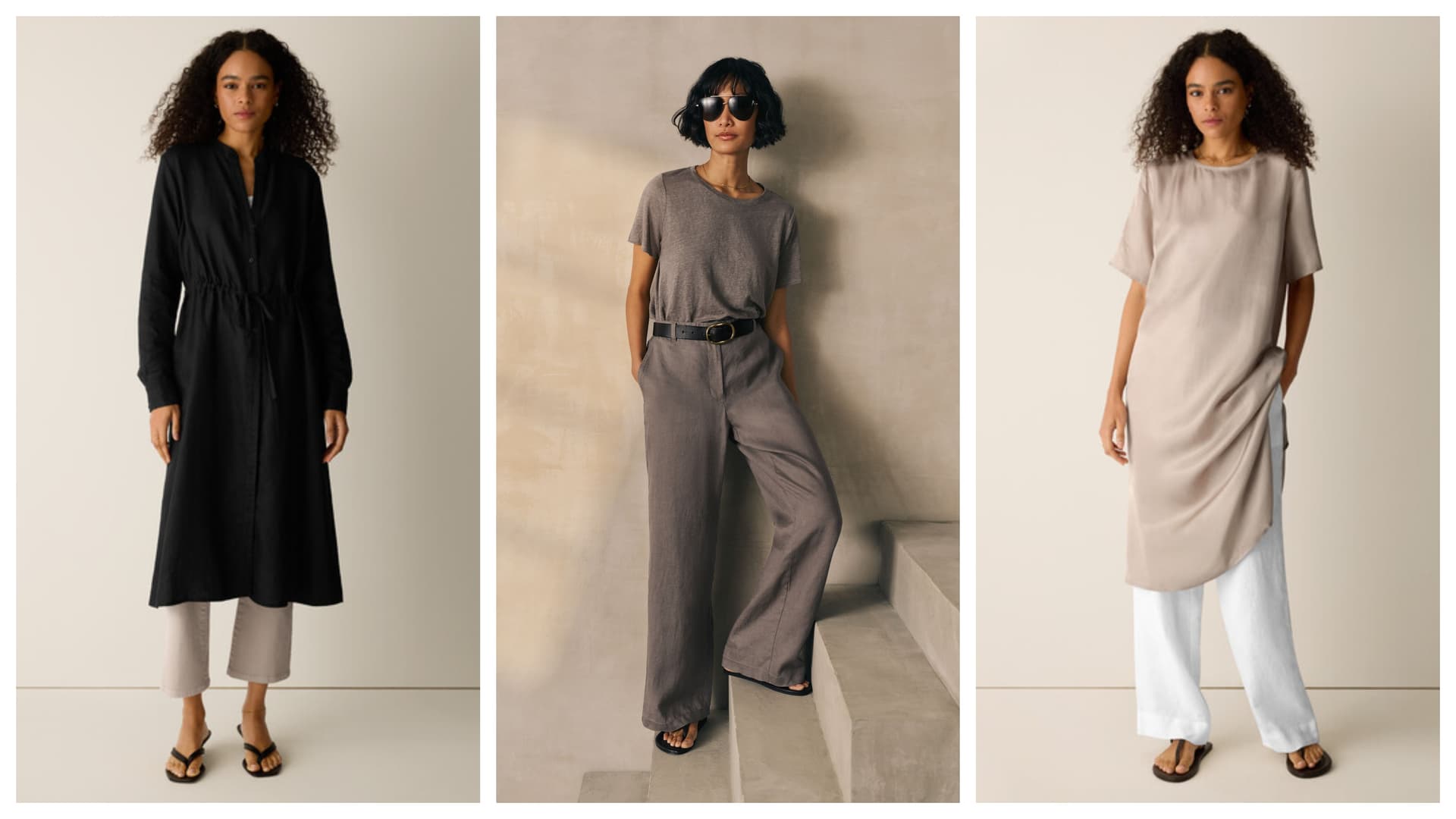
Eileen Fisher has always understood the power of restraint. The current spring edit leans into that instinct with breezy linen pants, lightweight jackets, and accessories that feel tailored without trying too hard, which is exactly why the clothes read as a softer, more attainable version of The Row. The appeal is not excess, but precision: clean lines, fluid shapes, and a polished ease that looks expensive without screaming for attention.
What makes this moment matter is how clearly the pieces communicate the old-money formula readers keep chasing. The palette stays calm, the silhouettes stay spare, and the whole wardrobe sits at a more accessible price point, with the most compelling pieces landing under $300. That is the real trick here: the clothes do not imitate The Row item for item, but they capture the same visual temperature.
Why The Row is the reference point
The Row is the obvious benchmark because it was established in 2005 by Ashley Olsen and Mary-Kate Olsen, and it has become fashion’s most familiar shorthand for high-end understatement. Its signature is not ornament, but proportion: long lines, quiet fabrics, draped trousers, and an almost private kind of luxury that announces itself only to people who already know what they are looking at.
Eileen Fisher speaks the same language in a different accent. Instead of leaning on rarity or extreme polish, the brand offers relaxed tailoring, linen with real movement, and accessories that finish an outfit instead of dominating it. That similarity is why the comparison lands so naturally, and why the current edit feels especially relevant for anyone trying to build a minimalist wardrobe that still looks deliberate.
The brand story behind the clothes
The credibility here is not accidental. Eileen Fisher says the company started in 1984 with just $350 in the bank, launching four simple linen shapes, a box-top, crop pant, shell, and vest, at the Boutique Show in New York City. The first orders totaled $3,000, and the next season the line expanded to eight shapes in French terry, bringing in $40,000 in orders. That origin story matters because the brand’s identity has never been about reinvention for its own sake, but about refining a small set of useful forms.
The company says those early shapes still anchor the line today, with seasonal updates in new fabrics, longer proportions, and new necklines. That is the reason Eileen Fisher can feel contemporary without feeling trend-driven. The clothes are built like a system, then adjusted just enough to stay fresh.
There is also a quieter design intelligence running through the brand’s DNA. Eileen Fisher says the founder was inspired by traditional Japanese dress, especially the kimono, which helps explain the drape, the ease, and the absence of fuss. You can see that influence in the way the garments move around the body instead of pinning it down.
How to wear the look without looking dressed up
The easiest way to make this aesthetic work is to treat it as a wardrobe formula, not a theme. The goal is not to look costume-old-money; it is to look edited, calm, and unfailingly put together. Start with one soft statement piece, then keep everything else disciplined.
- The linen column: Pair Eileen Fisher linen pants with a matching shell or sleeveless top, then add a lightweight jacket in the same family of neutrals. This gives you the long, uninterrupted line that makes The Row so persuasive, but the linen keeps it approachable for daytime.
- The city-soft suit: Wear a lightweight spring jacket over a simple top and straight or draped trousers. Keep accessories quiet and streamlined so the silhouette does the talking. This is the look that works for lunches, gallery afternoons, and anywhere you want polish without stiffness.
- The vest-and-trouser balance: Use the vest as the sharpest piece in the outfit, then soften it with relaxed pants and minimal shoes. Because Eileen Fisher’s shapes are rooted in those original four forms, the proportions feel intentional rather than fussy. It is a good formula when you want structure but do not want the severe edge of a true suit.
- The travel uniform: Choose breathable linen, lightweight layers, and one low-key accessory that can move from day to evening. Eileen Fisher describes its linen pants as lightweight, breathable, and made with organic fiber, which makes them especially useful for warm-weather dressing. This is the kind of outfit that looks equally right on a plane, at a terrace lunch, or walking into a dinner reservation.
For the old-money effect, keep the styling disciplined. Stick to monochrome or nearly monochrome combinations, avoid anything overly glossy, and let texture do the work. Linen should look crisp but not starched, jackets should skim rather than cling, and accessories should feel like finishing notes rather than focal points.
Why the price point changes the equation
The appeal of this edit is not just that it borrows The Row’s visual codes. It is that it makes those codes usable. When a clean pant, a spring jacket, or a refined accessory stays under $300, the look stops being an aspiration and becomes a realistic wardrobe strategy.
That matters because quiet luxury has often been presented as a lifestyle reserved for the wealthy. Eileen Fisher turns it into something more practical and more modern: a way to buy fewer things, wear them more often, and still look considered. The clothes deliver the same visual calm as the luxury reference point, but they do it with less drama and less financial friction.
The sustainability angle that gives the brand staying power
Eileen Fisher’s relevance extends beyond style. The company says its Renew take-back program reached 2 million garments in 2023, and it describes Renew as a costly, time-consuming passion project that resells, remakes, donates, or downcycles returned clothes. In a fashion market crowded with green language and light commitment, that kind of infrastructure gives the brand substance.
The company also describes itself as a benefit corporation committed to people, planet, and profits, with headquarters in Irvington, New York. That structure has helped protect its mission through leadership changes and industry shifts, which is part of why the brand still feels coherent after decades of growth. It is not only selling restraint; it has built an operating model around it.
Eileen Fisher also frames its clothing as timeless, elegant, and eco-friendly, and the current linen pieces support that promise in the most useful way possible. They are not chasing a mood so much as offering a dependable uniform for women who want quiet luxury to look lived-in, not staged.
This article was produced by Prism’s automated news system from verified source data, official records, and press releases, then run through automated quality and moderation checks before publishing. The system is built and supervised by the people who set the standards it runs under. Read our full AI policy.
Did this article answer your question?