Eleven Brands Defining the Old Money Aesthetic in 2026
Quiet Luxury 2.0 has arrived, and these 11 brands prove old money never needed a logo to make a statement.
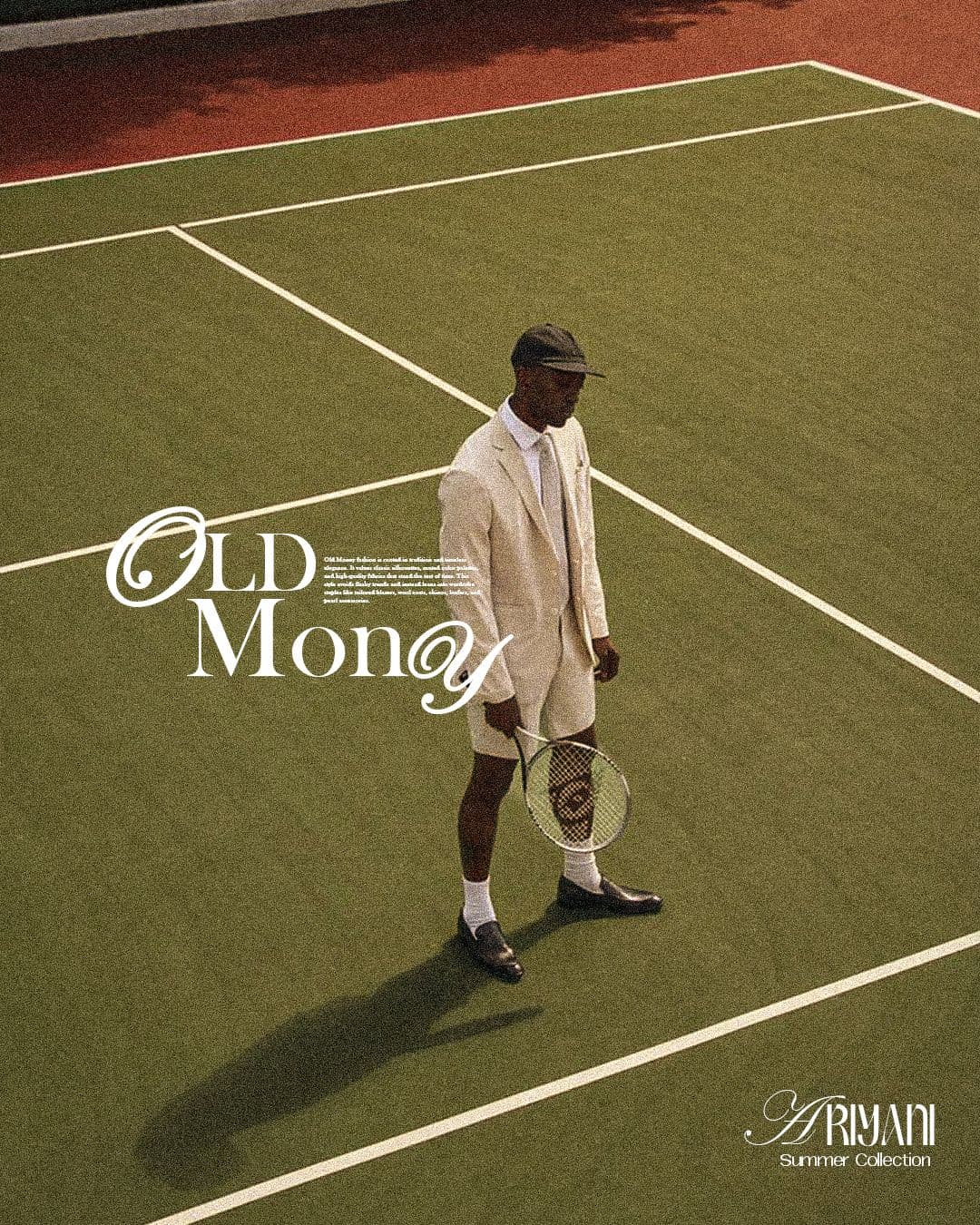
The previous decade's "stealth wealth" was merely a prologue. In 2026, the old money aesthetic has matured into what's being called Quiet Luxury 2.0: a movement that emphasizes emotional utility and material science over the simple absence of branding. High-net-worth individuals are moving toward houses that offer Digital Product Passports to prove authenticity and ethical sourcing without the need for a loud monogram. The rejection of visible logos remains, but the reasoning has deepened. These brands aren't quiet because they're shy. They're quiet because they have nothing to prove.
Loro Piana
Loro Piana remains the undisputed foundation of the Old Money wardrobe, and in 2026 the Italian house is leaning into something unexpected: color. The "Mastery of Colors" collection uses natural dyes to create vibrant yet grounded hues within their signature cashmere and vicuña weaves, proving that restraint and richness are not opposites. Entry points begin at $1,200 for footwear, though the real investment is in the textile itself: vicuña, the rarest commercially available animal fiber in the world, woven with a lightness that makes you understand immediately why this house is treated as a benchmark.
Brunello Cucinelli
Brunello Cucinelli built his empire on what he calls "humanistic capitalism," a philosophy that places craftsmanship, dignity, and beauty above all else. The brand is rooted in Solomeo, a medieval hamlet in Umbria that Cucinelli has painstakingly restored at his own expense, and every piece carries something of that considered slowness. The house is best known for cashmere knitwear in muted, earthy tones, and the pricing reflects the conviction behind it: as Vogue Business has noted, a simple Cucinelli cashmere jumper runs between Rs 1.5 lakh and Rs 4 lakh, and "it will look exactly the same in ten years as it does today. That is entirely the idea." Entry-level pieces such as the signature polo begin around $800, but the jumpers are where the philosophy becomes tactile.
Hermès
No conversation about old money dressing is complete without Hermès, and the Paris house's grip on the leather goods category remains absolute. The signature materials are Epsom and Togo leathers: both chosen for their resistance to scratching and their ability to hold structure over decades of use. A small bag enters at $3,000, which, measured against its likely lifespan, is a different kind of arithmetic than fast fashion ever offers. The house's core focus in 2026 is leather heritage, and nothing about that positioning has shifted. Hermès does not chase; it waits for the world to remember what quality feels like.
Patek Philippe
If Hermès represents the apex of leather goods, Patek Philippe occupies the same position in horology. Founded in Switzerland and working primarily in platinum and titanium, the manufacture produces watches with entry points above $35,000 that are regularly described not as purchases but as acts of custodianship: you don't own a Patek Philippe, the familiar saying goes, you keep it for the next generation. That framing is precisely the old money ethos made mechanical. The watch does not shout. It simply endures.
The Row
Mary-Kate and Ashley Olsen's The Row is the American house that has most successfully translated old money codes into a contemporary wardrobe. Its core focus is modern minimalism, and its signature material is high-ply wool, used in structured coats and shirts that begin at $1,500. The silhouettes are deliberately unexciting in the best possible sense: nothing dates, nothing trends, nothing needs to be explained. The Row has built an audience that treats fashion noise as interference rather than signal, and the brand has been remarkably disciplined about staying out of that noise.
Goyard
Goyard's power is almost paradoxical: a brand defined by its Goyardine canvas pattern, instantly recognizable to those who know it and illegible to everyone else. That selective visibility is the entire point. The Paris house describes its 2026 focus as secretive exclusivity, and with totes entering at $1,800, it continues to occupy the space between heritage luggage and daily practicality. Goyard does not have an e-commerce site. It does not run conventional advertising campaigns. The bag finds you, or it doesn't.

Delvaux
Belgium's Delvaux holds a claim that few houses can match: it is widely considered the oldest fine leather goods maison still in operation. Its signature material is box calfskin, a leather that develops a deep patina with age and requires a specific kind of maintenance commitment that filters out casual buyers. The Brillant bag remains the house's icon, but entry-level pieces such as the pouch begin at $2,500. The 2026 focus is artistic leather, and Delvaux's seasonal work tends toward sculptural restraint, shapes that read as architectural rather than decorative.
Canali
Italian tailoring house Canali occupies a quieter corner of this conversation, but its 2026 focus on what it calls tech-tailoring places it at an interesting intersection. The signature material is Nuvola suede, extraordinarily lightweight despite its substantial appearance, and blazers begin at $1,100. Canali has long been the choice of men who want Italian construction without the visible branding of louder Milanese houses. The suits travel well, drape with authority, and ask nothing of the room.
Valextra
Milan's Valextra makes bags for people who find most bags insufficiently serious. The house's signature Millepunte leather, named for the thousands of tiny perforations that give it a soft, almost matte finish, is used across a range of structured totes, briefcases, and handbags that begin at $2,200. The 2026 focus is urban portability: functional shapes with zero decorative noise. No hardware embellishment, no logo stamps, no seasonal color drama. The bag is purely about the leather and the geometry of the object.
Charvet
Paris's Charvet, the oldest shirtmaker in the world and a fixture of the Place Vendôme since 1838, is the brand on this list that requires the least explanation to those who already know it and the most to those who don't. Charvet shirts, made to measure in the upstairs ateliers or selected from the extraordinary wall of shirting fabrics on the ground floor, represent the old money wardrobe at its most personal. The house appears in the Vertu roundup of the ten brands defining old money in 2026, and its inclusion is a reminder that the aesthetic was never solely about outerwear or accessories: the shirt underneath, the one nobody else can see clearly, is where the real commitment lives.
Max Mara
Max Mara occupies a unique position in the quiet luxury landscape: well known enough to be recognized, refined enough to never feel obvious. Founded in Reggio Emilia in 1951, the Italian house built its entire identity around a single garment done to an unreachable standard. The camel coat has been in continuous production for decades and remains, as the house's own record shows, one of the most copied and never bettered garments in fashion history. The Guardian has noted that the brand's "commitment to exceptional Italian manufacturing and its refusal to chase trends have made it the wardrobe staple of women who care only about what is good." That framing captures something essential: Max Mara is not interested in novelty. It is interested in getting one thing exactly right, season after season.
Across all eleven of these houses, the throughline is not price, geography, or even category. It is the conviction that a well-made object does not require an argument. In a market increasingly saturated with digital spectacle and logo-driven validation, the brands that have refused to participate in that conversation are the ones whose authority has only grown. Quiet Luxury 2.0 is not a trend forecast. It is an outcome.
This article was produced by Prism’s automated news system from verified source data, official records, and press releases, then run through automated quality and moderation checks before publishing. The system is built and supervised by the people who set the standards it runs under. Read our full AI policy.
Did this article answer your question?