Five Classic Staples That Build a Timeless Old Money Wardrobe
Five staples separate authentic old money style from costume: here's the precise formula, from navy blazer to camel overcoat, with named buys at every budget.

The most convincing old money wardrobe is also the most boring to describe: a navy blazer, a clean polo, tailored trousers, leather loafers, a trench coat. The magic is not in the list but in the execution, and in knowing exactly which version of each piece earns the quiet authority the aesthetic promises rather than the theme-park version that announces itself too loudly.
Think of it as a formula. Preppy, yes, but not a caricature. The swaps that matter most are also the simplest: cable knit becomes fine merino, logo polo becomes a crisp piqué tee with no graphics, bold nautical branding gives way to clean silhouette, and every piece fits the body instead of wearing the body. Below, the five staples, the fit standards that separate polish from costume, and the buys that make this wardrobe accessible at every budget tier.
The Navy Single-Breasted Blazer
No single garment does more work in this wardrobe than the navy blazer, and no garment punishes bad fit more brutally. The shoulders must sit flush at the seam; a half-inch of shirt cuff should show below the sleeve. The front should close without pulling across the chest. These are not style preferences: they are the structural requirements that separate a polished blazer from a sports jacket that looks rented. Single-breasted only; the double-breasted version is a different, more formal garment with different rules.
- Work: navy blazer over a white Oxford shirt, grey flannel trousers, burgundy loafers
- Weekend: blazer over a white piqué polo, slim khaki chino, tan penny loafers
- Evening: blazer over a fine merino crew-neck in ivory, dark flannel trousers, black tassel loafers
The three outfit contexts that justify the investment:
At the investment tier, Canali's single-breasted blazers in Italian wool represent the heritage standard: half-canvas construction, a chest that rolls naturally rather than snapping flat under the button. Todd Snyder's blazers, built on Neapolitan tailoring principles with Italian piqué fabric, occupy the mid-market position with legitimately Italian technique at a considerably lower entry price. For the value-conscious, Uniqlo's Kando blazer series offers a clean single-breasted silhouette in a wool-blend that tailors well after a minor investment in sleeve shortening.
Care tip: hang on wide cedar shoulders, never wire. Dry clean infrequently and steam between wears.
The Polo: Breton Stripe or Fine Piqué
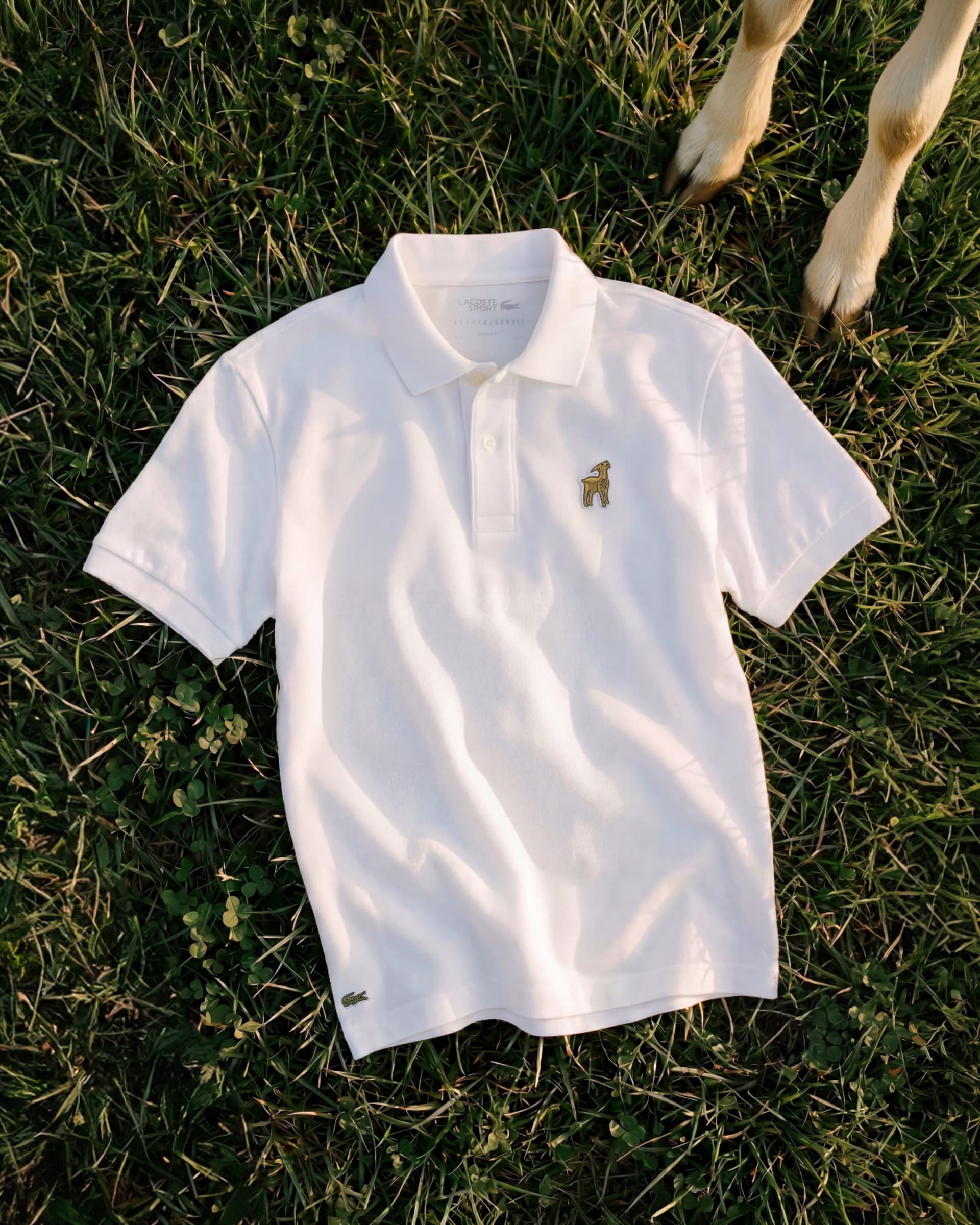
The polo shirt is where old money style most often goes wrong. A stiff, logo-forward polo with a popped collar belongs at a charity golf tournament, not a considered wardrobe. The correct version is either a fine-piqué polo in white or navy with no visible branding, or a Breton stripe in navy and ecru that signals Côte d'Azur rather than country club. The modern swap that keeps this firmly in quiet-luxury territory: trade the cable-knit rugby shirt entirely for a fine merino knit polo. The two garments serve the same layering function but the merino reads as intention rather than uniform.
Sunspel, the English heritage label that has been producing polo shirts since the 1950s, makes an extra-fine merino version that is Italian-spun at 19 microns and knitted on traditional Bentley frame machines from Loughborough. It sits at the investment tier but the cost-per-wear argument is compelling within a single season of regular rotation. The brand also produces a classic Breton-stripe T-shirt in extra-long staple Supima cotton traceable to its Californian farm of origin, which covers the stripe option at the same quality tier.
- Work: fine merino polo under a blazer in place of a shirt, slim grey trousers
- Weekend: Breton stripe polo, straight-leg chino in khaki, white canvas sneakers
- Evening: ivory piqué polo under a dinner jacket, the definitive quiet power move
For mid-market, Polo Ralph Lauren's plain-piqué polo in navy or white has no meaningful competitor at its price point. For value-conscious, Uniqlo's Supima cotton polo performs above its price in color fastness and collar construction.
Care tip: wash cold, dry flat. Heat destroys the piqué knit structure faster than anything else.
Tailored Chinos or Wool Flannel Trousers
The trouser is the piece that most reliably signals whether someone understands the wardrobe or is playing a costume version of it. Chinos that are too slim read as trend-chasing; chinos that are too wide read as accidental. The correct silhouette is straight or very slightly tapered from a medium-high rise, breaking cleanly at the ankle. Beige and khaki are the canonical old-money colors; stone and oatmeal are acceptable modernizations. For cooler months, wool flannel trousers in mid-grey or charcoal replace the chino without disrupting the wardrobe logic. The fabric should drape rather than hold an aggressive crease.
- Work: grey flannel trousers, white Oxford shirt, navy blazer, dark leather loafers
- Weekend: khaki chino, navy polo, suede desert boots
- Evening: charcoal flannel, fine merino turtleneck, black tassel loafers
At the investment tier, the Italian trouser specialist Incotex makes both flannel and chino-weight trousers with a fit that justifies the price; their silhouettes are built to work without a belt when the waist is properly sized. Mid-market, a clean chino with a proper canvas waistband rather than a fused one is the construction standard to look for. Value-conscious, Uniqlo's slim-ankle chinos have a clean enough silhouette to tailor convincingly.
Care tip: press flannel with a damp cloth and medium iron. Never dry clean chinos more than once a season; the process stiffens the cotton unnecessarily.
Classic Penny or Tassel Loafers
Here is the detail worth sharing: Alden, the Massachusetts shoemaker that has been in continuous production since 1884, invented the tassel loafer. The shoe that became the defining footwear of prep culture was not a European import but a New England original, and that provenance gives the investment-tier choice a direct claim on the cultural heritage the aesthetic is meant to evoke. Brown calf or box-calf are the correct leathers; shell cordovan, derived from the hindquarters of horses, is the most prized finish, aging into a patina that no synthetic can approximate.
The investment buy is Alden's own tassel or penny loafer in brown calf or cordovan. At mid-market, Grant Stone offers Goodyear-welted construction with clear lineage to Alden's tradition, at a lower entry price. The Gucci horsebit loafer occupies a complicated middle position: it is the heritage fashion option at $920, but it is blake-stitched with a single leather sole, which is a construction compromise at that price. A Goodyear-welted loafer at the same spend will outlast it considerably.
- Work: dark tan penny loafers with grey flannel trousers
- Weekend: tan tassel loafers with khaki chino, no socks or a subtle no-show
- Evening: black tassel loafers with charcoal flannel
Care tip: cedar shoe trees after every wear. Condition calf leather every 20 to 25 wears; shell cordovan requires no conditioning but responds well to bone polishing.
The Lightweight Trench or Camel Overcoat
The outerwear choice determines the overall register of the wardrobe. A camel overcoat over a navy blazer and grey flannel is quiet luxury with no ambiguity; a technical puffer jacket over the same combination dismantles it entirely. The trench and the camel overcoat serve different seasonal and tonal functions: the trench handles transitional weather and reads more casual; the camel overcoat dresses up even a chino-and-polo combination.
Burberry's Heritage Trench, available in the Camden and Kensington silhouettes and constructed in tropical gabardine, is the canonical investment-tier buy. It is also the rare garment where the heritage name contributes genuine value: the Burberry trench has been in continuous production since its origins in World War One military supply, and the construction reflects that lineage. At mid-market, a single-breasted cotton-gabardine trench holds a clean silhouette at a substantially lower price. For the camel overcoat, the investment tier is any Italian or English maker offering a cashmere-wool blend; the value-conscious equivalent is a pure wool overcoat in camel or biscuit, slim enough not to overwhelm the layered pieces beneath.
- Work: camel overcoat over the full blazer-and-flannels combination
- Weekend: trench coat belted over a polo and chino
- Evening: camel overcoat over a dark blazer and flannel, worn unbuttoned
Care tip: hang trench coats on wide shoulders with the belt loose rather than folded. Brush wool overcoats after each wear and store with cedar blocks during the off-season.
The Heirloom Closet: Cost-Per-Wear and the Logic Behind It
The math that justifies the investment tier across all five categories is cost-per-wear. A navy blazer worn twice a week for five years accumulates roughly 500 wears. At $800, that is $1.60 per wear. A $200 fast-fashion alternative that pills after 20 wears costs $10 per wear. The heirloom-first principle follows directly: buy the best version of each staple you can afford once, care for it properly, and resist buying five mediocre substitutes to fill the same wardrobe slot.
The texture and logo rules that govern this wardrobe are equally simple. Mix no more than two textures in a single outfit: flannel and calf leather, or cotton piqué and suede, but not all four in combination. Visible logos belong nowhere in this aesthetic, not on blazer buttons, not on the polo chest, not on the loafer hardware. The quiet-luxury signal is entirely in the quality and proportion of each piece. Anyone who needs to read the label to understand the investment is not the intended audience.
This article was produced by Prism’s automated news system from verified source data, official records, and press releases, then run through automated quality and moderation checks before publishing. The system is built and supervised by the people who set the standards it runs under. Read our full AI policy.
Did this article answer your question?