Five Essential Shoes That Define Old Money Style for Every Occasion
The five shoes that quietly signal old money aren't about logos — they're about knowing which silhouettes have dressed JFK, Queen Victoria, and the Ivy League set for generations.
Less a trend than an attitude, old money dressing has always lived from the ankles down. The right shoe does something that no amount of fine suiting can achieve on its own: it signals that you belong somewhere specific, that you've always belonged there, and that you've never needed a logo to prove it. Build a five-shoe rotation around these silhouettes and the rest of your wardrobe will snap into focus.
The Penny Loafer
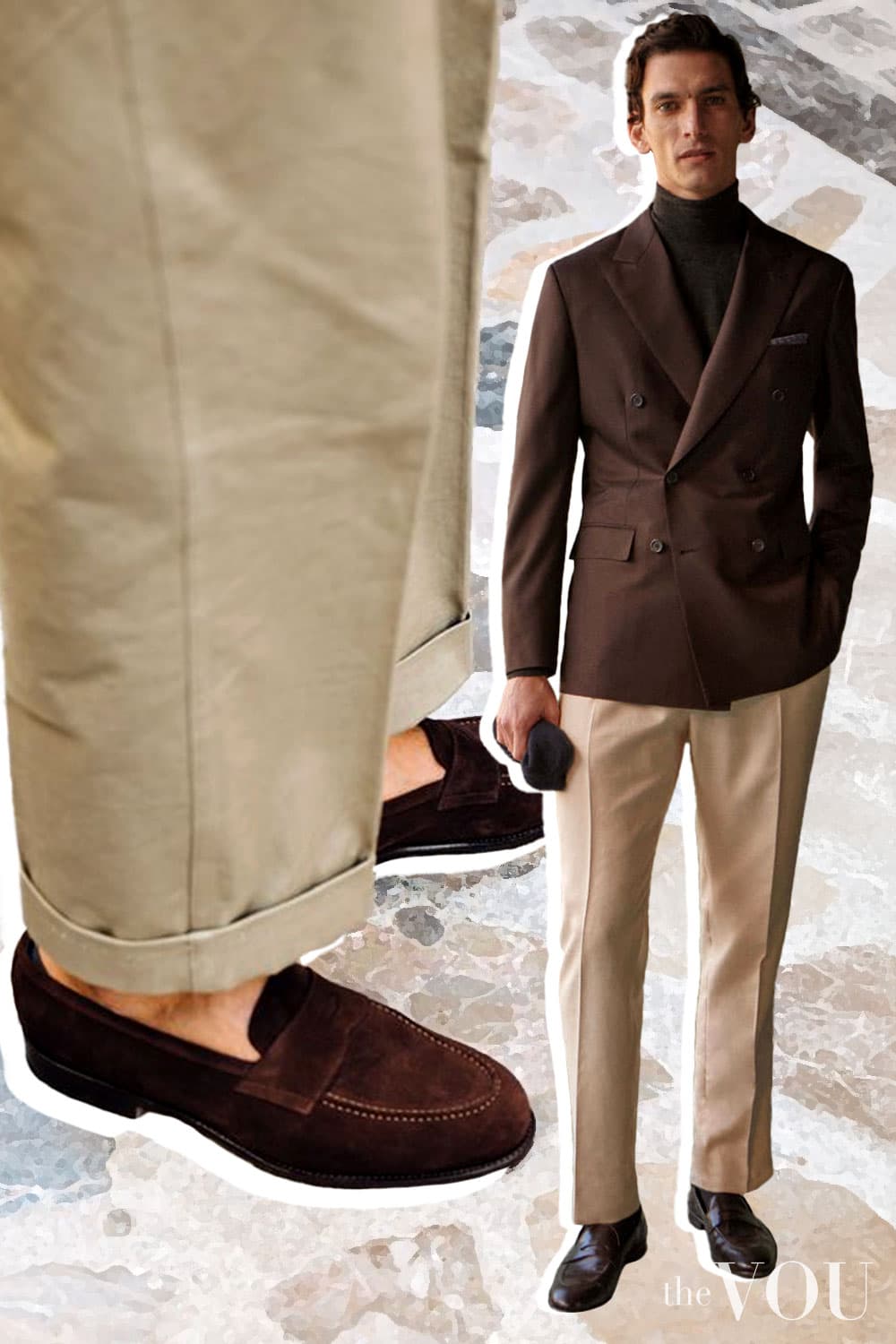
In the 1940s and 1950s, American college students adopted the style and began tucking pennies into the cut-out on the vamp, partly to stand out and partly so they had change for phone calls home. That origin story — practical, collegiate, quietly self-possessed — is exactly why the penny loafer remains the cornerstone of any old money shoe rotation. G.H. Bass is closely linked to the style, having popularized it when the brand brought it to America in 1936. American college students continued wearing penny loafers throughout the 1950s and 1960s, and the style was further bolstered by a devoted fan in President John F. Kennedy, who wore them throughout his presidency.
What makes a penny loafer feel genuinely old money rather than merely collegiate is material and construction. Reach for smooth calfskin in cognac or dark chestnut, or consider shell cordovan if you're building a rotation meant to last decades rather than seasons. The shoe works beautifully as a capsule wardrobe cornerstone: wear it instead of sneakers with jeans or chinos, or instead of dress shoes with summer-weight suits. The formality sweet spot sits at business casual and below, making it the most versatile entry point in the rotation.
The Tassel Loafer
The tassel loafer emerged in the 1950s and, though casual by origin, its gradual acceptance among American East Coast prep school culture led to it being worn with suits, where it gained a firm association with business and legal circles. That courtroom connotation is part of what makes the tassel loafer feel so aristocratically earned — it is, functionally, the dressiest slip-on available, the one you reach for when a penny loafer would read too casual but a full Oxford too stiff.
Tassel loafers are a slightly more advanced move than their penny counterparts; the tassels are an acquired taste, and the old-school lawyer connotations aren't always an easy sell at first. But lean into that history rather than away from it. A dark burgundy calf or chocolate suede tassel loafer worn with grey flannel trousers and a navy blazer is one of the most quietly authoritative combinations in the old money playbook. Just like penny loafers, tassels pair naturally with Ivy style staples like chinos, Oxford cloth shirts, and Shetland sweaters, but they also dress up jeans or carry tailored trousers and sportcoats with equal ease.
The Oxford Shoe
Oxford shoes are the epitome of formal elegance, and with their closed lacing system and sleek design, they are ideal for formal occasions such as weddings, business meetings, and gala events. Oxford shoes take their name from Oxford University, where they became popular among students in the 19th century, initially designed as a more comfortable alternative to high boots before quickly gaining popularity in aristocratic circles.
Characterised by a closed lacing system, where the eyelet tabs are sewn underneath the vamp, Oxfords are versatile and can be worn with double-breasted suits or dressed down with chinos. For old money purposes, keep the palette narrow: black calfskin for evening and formal occasions, dark brown or oxblood for business. The cap-toe Oxford, stripped of broguing, is the most powerful version — nothing telegraphs considered restraint quite like a shoe with no decoration whatsoever. Invest in a pair made on a Goodyear-welted construction, where a cobbler can replace the sole every few years. Old money is, at its core, a repair-first philosophy.
The Chelsea Boot
The Chelsea boot originated in the mid-19th century during the Victorian era, invented by J. Sparkes-Hall, Queen Victoria's bootmaker. In 1851, he designed a boot featuring elastic gussets on the sides, made possible by Charles Goodyear's recent invention of vulcanized rubber, which allowed for a stretchy, durable elastic that made the boot easy to slip on and off. From being high fashion in the early 1900s, the Chelsea boot was adopted by equestrians worldwide and became known as the paddock boot, gaining status in the countryside scene and remaining firmly in agricultural fashion ever since.
That equestrian lineage is what places the Chelsea boot squarely in old money territory. Chelsea boots come in countless colors and styles, but for a true old money feel, go for a sleek style with minimal detailing. Dark brown or black calfskin, a fine elastic panel, and a modest block or stacked leather heel: nothing more is needed. It pairs easily with slim-fit suits, chinos, jeans, or, for the more daring, even a pair of shorts — proof that a shoe with Victorian royal credentials can carry a thoroughly modern wardrobe. This is the boot you reach for when loafers feel too casual and Oxfords feel too rigid, which, in a well-managed week, is often.
The Boat Shoe
In 1935, Paul Sperry introduced the Top-Sider with mid-to-dark brown leather uppers and a white rubber sole, with the bottoms cut in a trademark herringbone pattern. In the 1960s, John F. Kennedy popularized the preppy summer style, and different brands are still reimagining his New England-inspired wardrobe to this day. JFK was also one of the first public figures to wear Sperry's shoes in public. By 1980, "The Official Preppy Handbook" by Lisa Birnbach had named Sperry's boat shoes an "icon of preppy style."
The waterside heritage and association with those wealthy enough to afford yachting holidays have created a persistent desire for the understated luxury look at many price points. The boat shoe is the rotation's summer and coastal workhorse, worn without socks over bare, tanned ankles with faded chinos or a pair of well-cut shorts — and absolutely no irony. Recent Circana research showed that overall boat shoe dollar sales were up 28 percent in the first half of last year compared to the same period prior, suggesting the broader culture is catching up to what the old money set has always understood: that a shoe born for the deck of a sailboat has nowhere to go but further into the mainstream.
For classic brown leather or dark tan nubuck, look at Sperry's Authentic Original or Sebago's Docksides as the two most historically grounded options. Wear them hard, let the leather crease and darken, and resist any urge to keep them pristine. A boat shoe that looks too new announces itself as costume. One that has been lived in announces, quietly, that this is simply how you dress.
Five shoes, five distinct registers of the old money vocabulary: the penny loafer for everyday authority, the tassel loafer for the office and cocktail hour, the Oxford for every occasion that demands you be taken seriously, the Chelsea boot for country weekends and sharp autumn dressing, and the boat shoe for summer and the coast. The rotation functions not because each shoe is expensive, but because each one carries a history longer than any single season. That, ultimately, is the point.
This article was produced by Prism’s automated news system from verified source data, official records, and press releases, then run through automated quality and moderation checks before publishing. The system is built and supervised by the people who set the standards it runs under. Read our full AI policy.
Did this article answer your question?