Five Linen Trends Defining Old Money Summer Style
Linen works best when it looks inherited, not beachy. These five directions bring restraint, polish, and a richer read for summer.
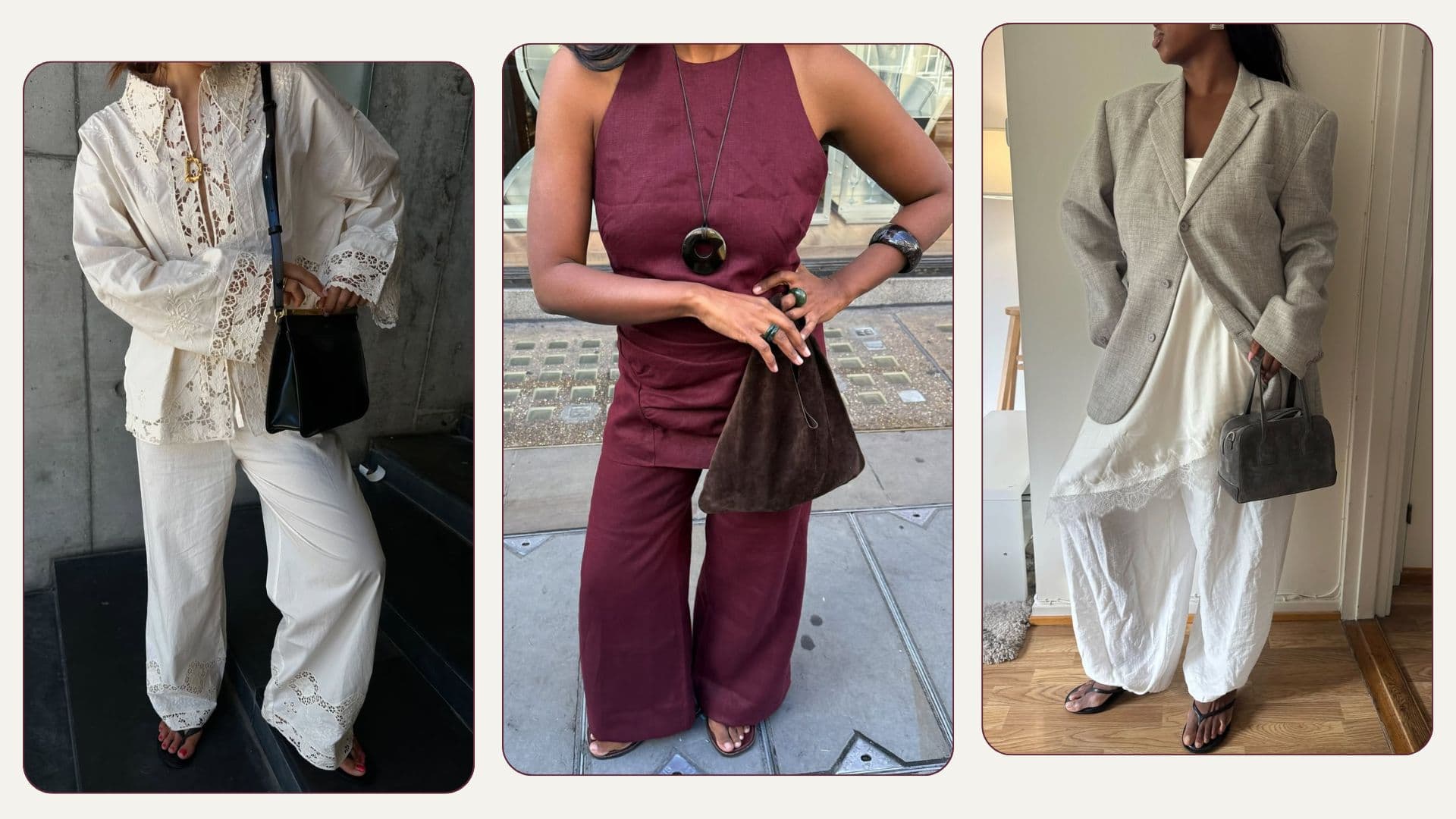
The easiest way to make linen look expensive is to stop treating it like a vacation fabric. Old-money linen is about restraint, rewears, and cuts that hold their shape, not pieces that flop around like hotel gift-shop souvenirs. That is why this summer’s linen conversation feels sharper than usual: the season is leaning polished and elegant, while flax carries real pedigree, from prehistoric Swiss lake dwellings and ancient Egyptian tombs to museum collections that treat linen like a luxury object, not a warm-weather compromise. The sustainability case is strong too. Flax can grow without irrigation, fertilizers, herbicides, or pesticides, and it can retain 3.7 tons of CO2 per hectare per year, which is a pretty persuasive argument for a fabric that already photographs beautifully.
Tailored linen
If you want the most country-club version of linen, start here. Tailored linen has the cleanest old-money logic because it gives the fabric a spine: think sharp jackets, straight trousers, neat waistcoats, and skirts that skim rather than swish. In a 2026 mood shaped by polished dressing, balloon silhouettes, and refined tailoring, this is the linen that looks like it belongs at lunch, not just on a lounger.
The key is structure without stiffness. You want seams that show, lapels that sit flat, and trousers with enough weight to fall instead of cling. Cream, stone, navy, and tobacco are the smartest colors because they make the cloth look matte and expensive, while too-soft neutrals can read washed out. Skip anything too slouchy or drawstring-heavy if the goal is polish, not poolside ease.
Linen blouses
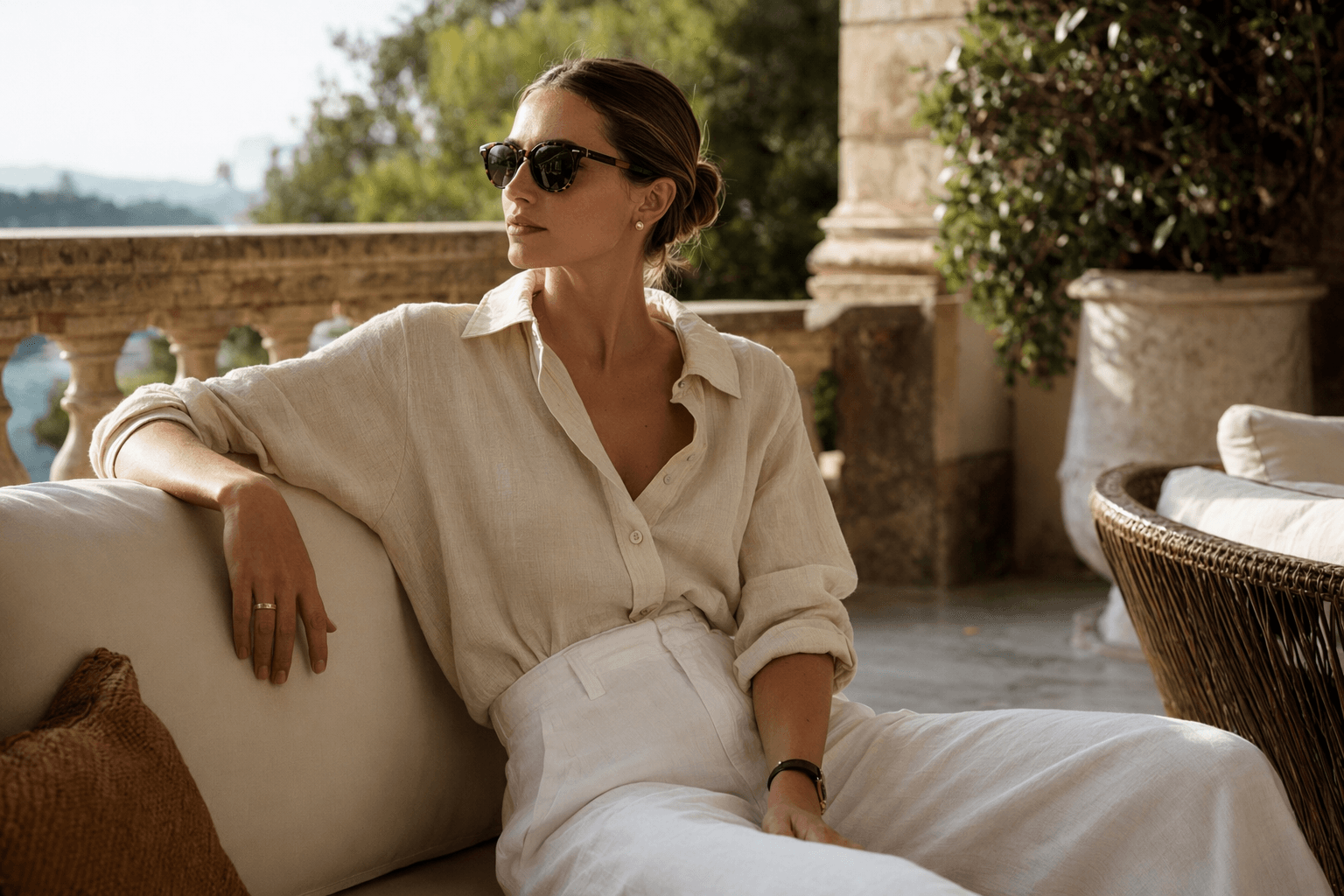
The blouse is one of the year’s biggest fashion moves, and linen makes it feel especially useful. The best versions work with jeans, trousers, leggings, and skirts, which is exactly why they belong in an old-money wardrobe: they do not just look pretty, they actually earn their keep. A good linen blouse gives you that crisp, lived-in softness without looking delicate or fussy.
Look for a collar that lies flat, shell buttons, longer cuffs, and enough density in the weave that the shirt does not go limp by noon. The chicest versions are the ones you can half-tuck into a trouser and wear again three different ways before anyone notices. Skip peasant sleeves, overblown ruffles, and giant bows if you want refinement, not trend participation. This is about a blouse that feels heirloom-adjacent, not costume-y.
Burgundy linen
Burgundy is the color that makes linen stop looking sunny and start looking serious. It has that deep, club-chair richness that instantly feels more generational than beige, especially when the fabric is cut clean and the finish stays matte. In summer, that darkness is a feature, not a drawback, because it gives linen weight and depth without making it heavy.
This is the strongest shade for anyone who wants linen to photograph expensively. Burgundy has more presence than sand, more polish than pale blush, and more authority than the usual beachy white. It works beautifully in a column dress, a sharp shirt, or wide-leg trousers, where the color can do the work of luxury without extra decoration. Skip bright cherry or anything too red-red, which can push the whole look away from composed and toward novelty.
Embroidered linen dresses
Embroidered linen dresses can be beautiful, but only when they know when to stop. The best ones feel almost inherited, like something found in the back of a family wardrobe and still perfect, with small tonal stitching, a restrained border at the hem, or a tiny motif at the neckline. That kind of embroidery adds texture without turning the dress into beachwear.
The silhouette matters just as much as the thread. A clean midi with a neat neckline will always read richer than a fluttery dress overloaded with eyelet, flounce, and scalloped edges. White, ecru, and navy are the most polished options because they let the embroidery read as detail rather than decoration. If you want country-club polish, keep the shape simple and let the craftsmanship do the talking.
Linen balloon trousers
Balloon trousers are the most fashion-forward of the five, which also makes them the riskiest. They are part of the broader 2026 trouser conversation, and the runway appetite for balloon shapes has clearly spilled into everyday dressing. The shape can look expensive when it is controlled, but it can also tip fast into too much volume if the proportions are off.
The version that works keeps the waist high, the curve soft, and the leg tapered back toward the hem. That makes the shape feel intentional instead of saggy, especially when paired with a tucked blouse or a close-fitting knit. The fabric should have enough body to hold the silhouette without collapsing. Skip anything overly slouchy, cargo-coded, or exaggerated if your aim is country-club polish rather than a runway read. The best balloon trouser is the one that looks like it was edited, not styled within an inch of its life.
What makes all five of these directions click is the same thing: restraint. Linen looks most expensive when it is cut with discipline, worn with ease, and chosen for texture and color that feel refined rather than obvious. That is the real old-money trick this summer, and it has less to do with trend-chasing than with knowing exactly how little you need.
This article was produced by Prism’s automated news system from verified source data, official records, and press releases, then run through automated quality and moderation checks before publishing. The system is built and supervised by the people who set the standards it runs under. Read our full AI policy.
Know something we missed? Have a correction or additional information?
Submit a Tip