From Jeanne Lanvin to Lilly Pulitzer, mother-daughter style endures
Mother-daughter dressing is the real old-money trick: one lineage, repeated with polish. From Lanvin’s couture to Lilly’s Palm Beach prints, the codes still read rich.

The smartest old-money dressing has always been a family business
The real trick is not looking inherited. It is looking like style has been lived in, repeated, and quietly edited across generations. Jeanne Lanvin understood that first, and Lilly Pulitzer turned it into sunshine, print, and Palm Beach ease. The look that lasts is never loud for the sake of it; it is polished, useful, and just specific enough to read as authority.
What endures across both women’s worlds is the same set of signals: occasion dressing, matching or coordinated looks, a strong silhouette, and the kind of finish that makes a room assume you know where you are going. That is old money fashion at its best, not as costume, but as strategy.
Lanvin made mother-daughter dressing look like social power
Jeanne Lanvin’s story starts with Marguerite di Pietro, born in 1897, and it never really leaves her. The Met traces Lanvin’s move into dressmaking to the ensembles she created for her daughter, which clients began asking to have for themselves. That is the beginning of the Lanvin code: if people want what your family is wearing, you are not just making clothes, you are making a standard.
The house opened a children’s clothing department in 1908 and a young ladies’ and women’s department in 1909, which tells you everything about the logic of the brand. It was not about a single dress or a one-off trend. It was about building a wardrobe across ages, so the mother, daughter, and later the grown woman could all belong to the same visual universe.
The signature Robe de Style in the 1920s is the clearest proof. It is one of those shapes that reads as refined without ever going stiff, and it came out of that original response to Marguerite’s clothes. Lanvin’s logo also came from family image, inspired by a 1907 photograph of Jeanne and Marguerite in matching outfits, later drawn by Paul Iribe. Even the fragrance Arpège, launched in 1927 as a birthday present for her daughter Marie-Blanche de Polignac, kept the same emotional logic: style as inheritance, style as devotion.
Palm Beach took the code and made it bright
Lilly Pulitzer came at the idea from the opposite direction. Where Lanvin is Parisian polish, Lilly is resort brightness with a practical streak underneath. The brand officially launched in 1959, and Lilly started making her famous dresses in 1960 from a cotton print shift designed to hide juice stains from her fruit-stand work in Palm Beach, Florida. That origin story matters because it explains why the clothes feel casual and chic at the same time. They were built to survive life, then made pretty enough to become a uniform.
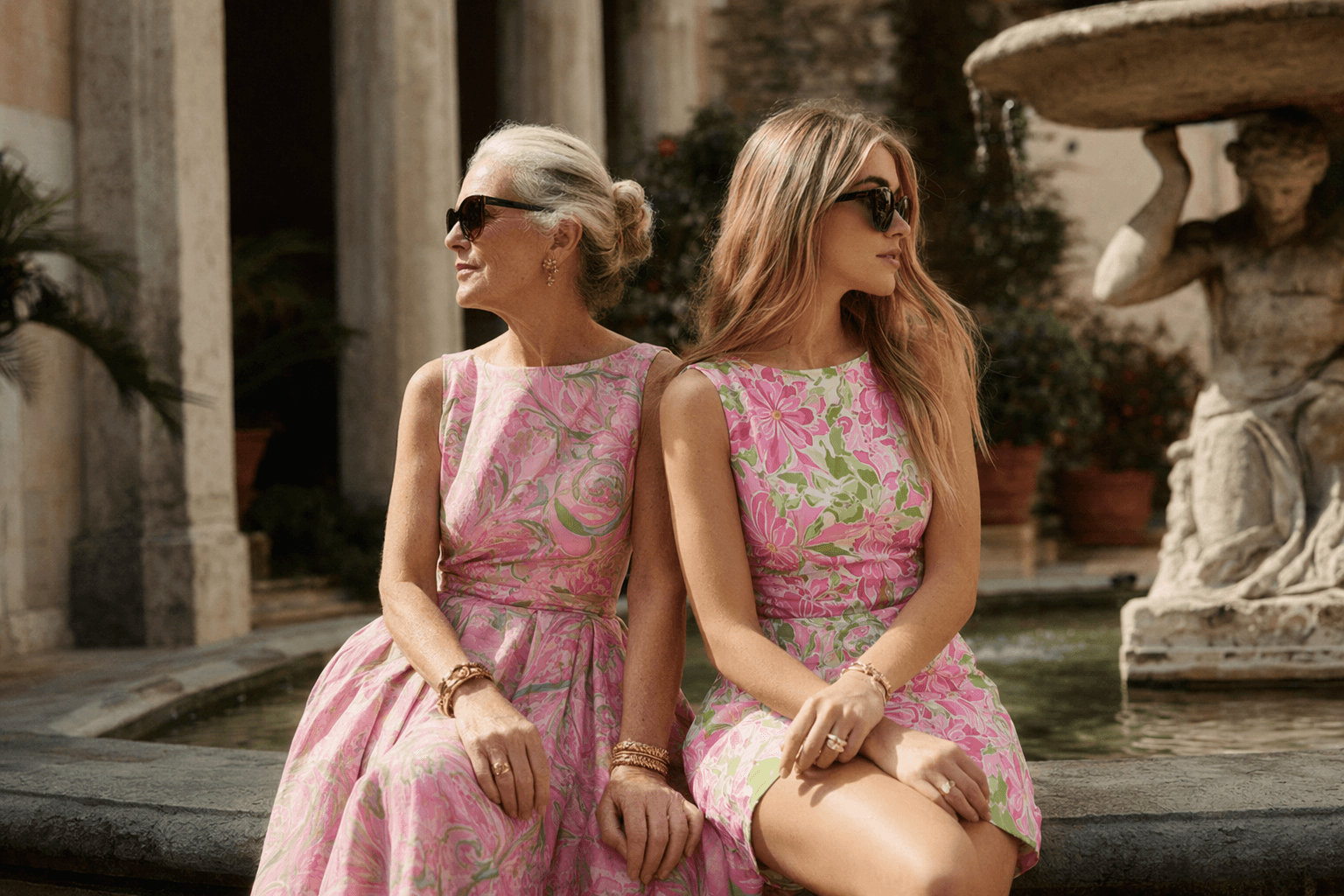
By 1962, Key West Hand Print Fabrics had become part of the story, and the partnership ran through 1985. That long run gave the brand its visual muscle: bold, sunlit prints that still look like they belong at a lunch on the terrace, not in a themed party. Jackie Kennedy wearing a Lilly Pulitzer dress on the cover of Life in 1962 did what good old-money style always does when it crosses into public view: it made the look feel aspirational, but not try-hard.
There is a reason the Palm Beach formula still holds. The best Lilly pieces are not just colorful; they are structured enough to look pulled together. That balance is why the brand’s description of the look as "casual, comfortable, chic, and pulled together" still lands. It is the exact sentence old-money dressing keeps trying to write about itself.
What actually lasts is the code, not the costume
The mistake people make with old-money style is treating it like a mood board instead of a wardrobe system. The enduring pieces are the ones that can move from mother to daughter, or from one social setting to another, without losing authority. That means polished resort prints, matching sets, and accessories that feel archived rather than disposable.
The current Lilly Pulitzer x Janie and Jack collaboration proves the point in a very literal way. It offers matching family looks for babies, children, women, and men, which is exactly how multigenerational style survives in the wild. The move is not new. It is just the modern retail version of the same instinct Lanvin had a century ago: dress the whole family so the style reads as a line, not a trend spike.
What gives these clothes staying power is the social signal underneath the prettiness. Matching looks communicate continuity. Tailoring communicates control. A strong print, when it is cut well, communicates that you know when to show up and how to hold a room. That is why these codes keep resurfacing whenever fashion gets tired of irony and starts craving order again.
How to wear the mood now without looking like a character
The easiest way to borrow this look is to edit, not imitate. You want the effect of inheritance, not the impression that you raided a costume trunk. Think in terms of one polished gesture at a time, and let the rest stay clean.

- Choose one strong family-resemblance piece, not a full match. A coordinating blouse and skirt, or a mother-daughter print in different cuts, feels sophisticated. Head-to-toe sameness can go childish fast.
- Keep the silhouette crisp. Lanvin’s genius was in shape as much as ornament, and even Lilly’s prints work best when the lines are clean. A nipped waist, a neat hem, and a sleeve with intention will do more than extra ruffles ever could.
- Use print the Palm Beach way: bright, but not chaotic. Lilly’s heritage works because the color is paired with structure. Anchor a vivid print with white sandals, a sharp belt, or a simple leather bag so the outfit reads expensive, not loud.
- Let accessories carry the history. A vintage-inspired brooch, a woven clutch, a silk scarf, or a polished flat gives the outfit that archived feel without tipping into theme dressing. Think heirloom energy, not novelty.
- Save the matching-set instinct for occasions that call for it. Lanvin built around children, young ladies, and women because event dressing mattered. A luncheon, a garden party, a holiday dinner, or a resort weekend is exactly where a coordinated look still feels right.
The old-money lesson that keeps winning
The reason Jeanne Lanvin and Lilly Pulitzer still matter is not nostalgia. It is that both women understood style as a family language, one that could be repeated, adapted, and recognized instantly. Lanvin made it couture; Lilly made it sun-faded and social, but the instinct is the same.
Legacy still matters because it gives clothes a point of view. When a look reads as quiet wealth and authority, it is usually because someone, somewhere, thought carefully about who would wear it next.
This article was produced by Prism’s automated news system from verified source data, official records, and press releases, then run through automated quality and moderation checks before publishing. The system is built and supervised by the people who set the standards it runs under. Read our full AI policy.
Did this article answer your question?