Hotel Balzac Embodies Quiet Luxury, Where Heritage and Discretion Meet
Hotel Balzac's burl-wood-and-camel interiors are the quiet luxury style brief you didn't know you needed. Five wardrobe translations for a Paris weekend.
A camel topcoat, a cream poplin shirt, a gold signet ring: these are not items from a new collection. They are what Hotel Balzac's interior looks like when translated into wardrobe.
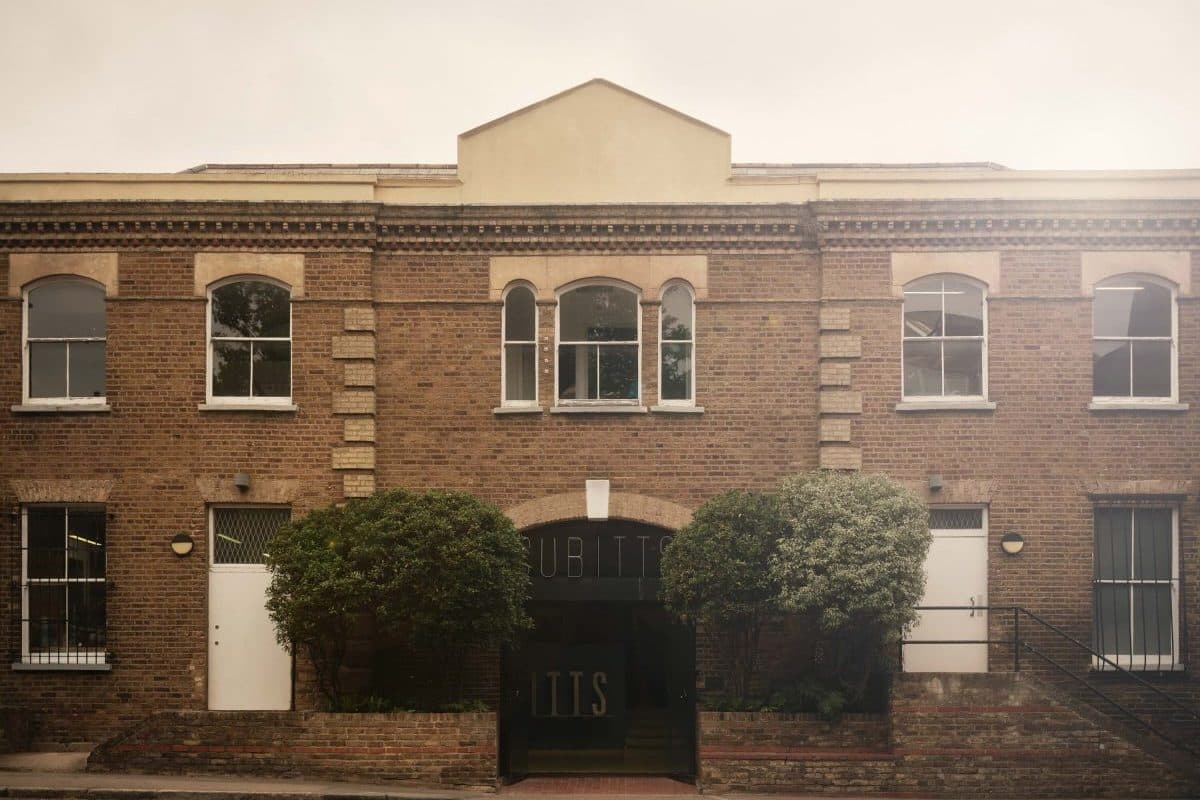
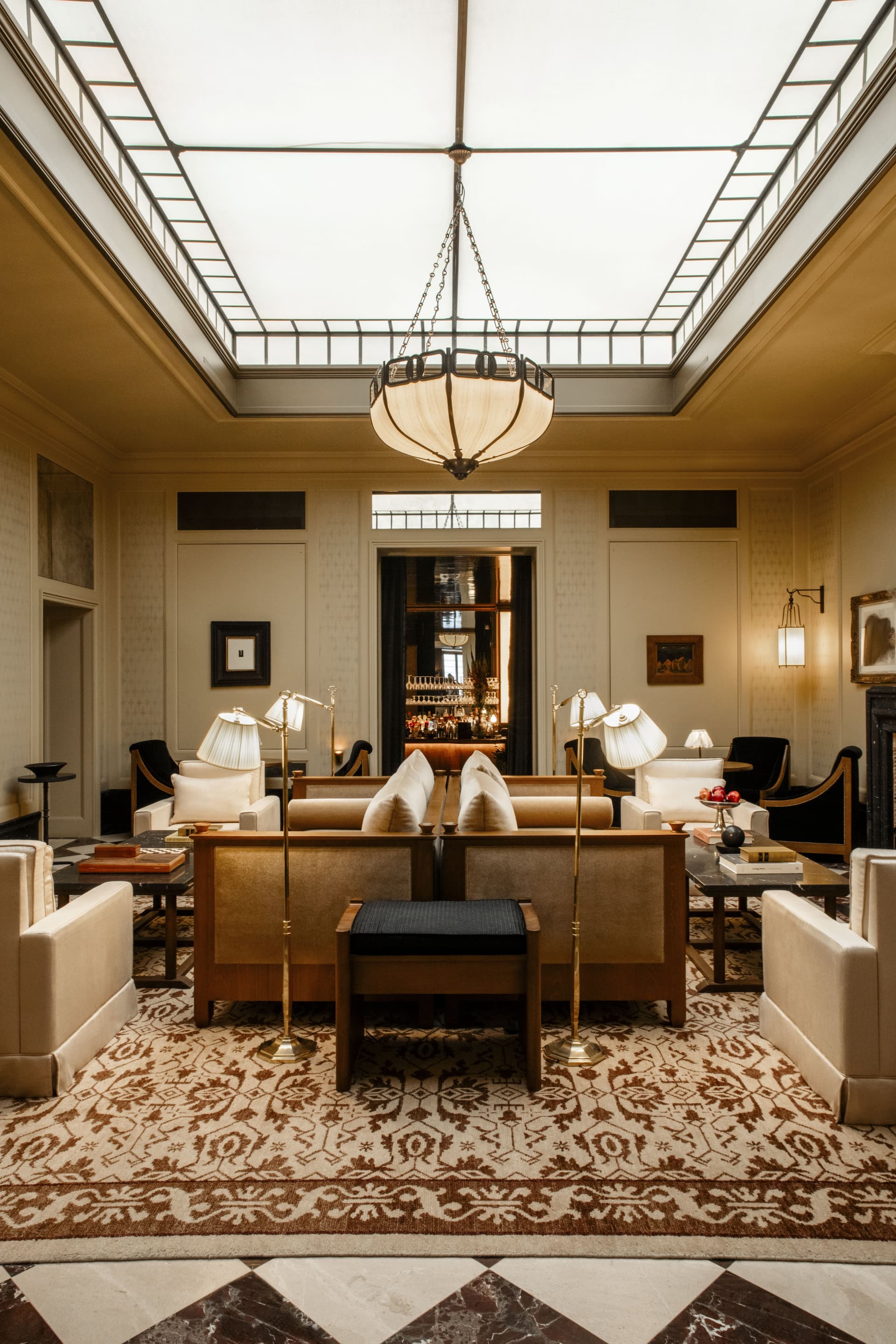
The hotel sits on Rue Balzac, just off the top of the Champs-Élysées in Paris's 8th arrondissement, on the precise site where Honoré de Balzac spent the final years of his life. It reopened in June 2024 after a complete overhaul by Festen Architecture, the Paris duo Charlotte de Tonnac and Hugo Sauzay, who rebuilt the interior around a single thesis: restraint, applied to exceptional materials, produces something more compelling than anything louder could. Burl wood, solid oak, moiré fabric, velvet, natural stone, and marble mosaics, all held in a palette of cognac, tawny, and camel. Nicolas Egloff, Director of Sales and Marketing at Vivre – Les Maisons Bertrand, the group that owns and operates the property, describes the result as "quiet luxury with soul," built on "authenticity and timeless elegance" rather than ostentation.
That phrase describes old money dressing with equal precision. Both the interior and the clothing it suggests operate on the same principle: the best materials, the most considered construction, and zero effort to explain themselves. Here is how the hotel's five dominant design moments map directly to something you can wear this week.
Stone: The Camel Topcoat
The Balzac's limestone facade sets the tone before you step inside. Natural stone surfaces and marble mosaic bathrooms carry that same cool, structural neutrality throughout all 58 rooms and suites. In wardrobe terms, this reads as the camel topcoat. It sits above everything else in the outfit, it doesn't compete with what's beneath it, and it holds the weight of something built rather than simply purchased. A double-faced wool or cashmere-blend camel coat from Max Mara, Loewe, or Loro Piana reads exactly as the Balzac lobby feels: controlled warmth, no excess, authority that doesn't need to announce itself. Cut matters more than label here. Look for a clean notched lapel, a straight single-breasted front, and a length that reaches the knee. Anything oversized or exaggerated works directly against the precision that gives this piece its staying power.
Ecru Textiles: The Cream Poplin Shirt
Festen layered ecru and off-white linens throughout the Balzac's rooms in bedding, curtains, and soft furnishings that produce warmth without brightness. Full white would have flattened the effect; the warmth of ecru is what makes the palette feel inhabited rather than staged. The wardrobe equivalent is the cream poplin shirt, and specifically cream rather than white. That shift in colorway is small and matters enormously. Worn open-collared under the camel coat or tucked into a dark trouser, it introduces the same quiet warmth the hotel's linens achieve against burl wood paneling. Charvet on Rue de la Paix has been producing the benchmark version for Parisian wardrobes across generations. Any shirt cut from long-staple Thomas Mason cotton in this colorway achieves the same effect at a more accessible entry point.
Dark Woods: The Chocolate Cashmere
The Balzac's woodwork is the most layered element in the interior: burl for depth and figure, solid oak for structural warmth, lacquered panels for reflective contrast. The color runs from deep amber to rich brown throughout the building. The wardrobe translation is a cashmere crewneck in chocolate or dark tobacco. This is emphatically not black, which reads as contemporary and urban, and which terminates visual interest rather than deepening it. The brown end of the spectrum reads inherited, deliberate, lived-in. Malo, Johnstons of Elgin, and N.Peal all produce versions of this at fine-gauge weights that layer cleanly under a topcoat. The rule is simple: the drape should be relaxed without being slack, and the color should absorb light rather than reflect it.
Brass: The Gold Signet Ring
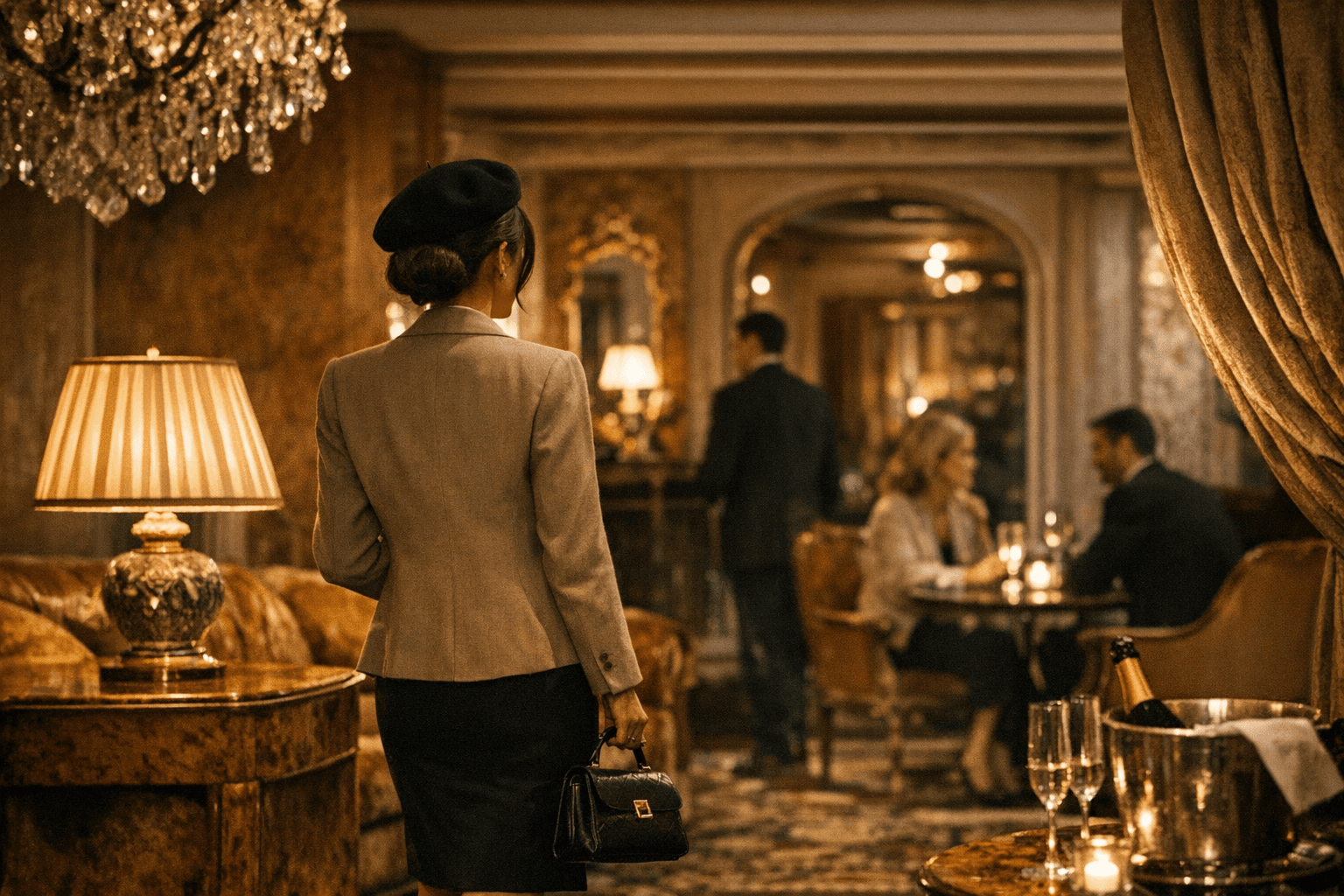
Every hotel designed with this level of material literacy has a metallic register, and the Balzac's is warm gold: brass fittings, gilded light fixtures, the amber quality of carefully controlled evening light. Festen treated light as what the studio calls "a true element of decoration," choreographing it to shift across the day and change the mood of the spaces rather than simply illuminate them. The gold signet ring is the direct wardrobe equivalent of that warmth. It should be yellow gold, not rose and not white. It should be plain or simply engraved, never set with stones. The signet ring carries one of the most legible heritage codes in jewelry: it implies a family, a history, a context that predates whatever you're wearing it with. Deakin and Francis in Birmingham and Repossi in Paris both make rings that hold that historical weight without becoming theatrical about it.
Velvet and Moiré: The Burgundy Loafer
The Balzac's soft furnishings push to the richest end of the cognac palette. Velvet sofas and moiré upholstery fill the glass-roofed lounge and bar, the space Egloff describes as "a homey refuge from the hustle and bustle, equally beloved by hotel guests and Parisians looking for a discreet place to meet." The burgundy penny loafer translates this into footwear: the single accent note against the neutrals above it, unexpected without being loud, the piece that stops an outfit from reading like a uniform. Edward Green's Piccadilly loafer in burgundy museum calf is the reference for how this should look and, crucially, how it should age. The suede alternative from Grenson or Church's brings the formality down one level for a weekend Paris context without losing the color's impact.
The Paris Weekend Packing List
If the Balzac is your base, the suitcase should mirror the lobby. Tight palette, deliberate materials, no filler:
- Camel topcoat (the anchor; everything supports it)
- Chocolate cashmere crewneck (alone at the bar or layered under the coat at night)
- Cream poplin shirt (collar open; the softening note)
- Dark navy or charcoal tailored trouser (Festen's 1930s references demand a proper trouser line)
- Burgundy penny loafer (the one contrast piece; let it carry the work)
- Gold signet ring (one piece of jewelry, nothing more)
- Ecru or stone linen scarf (mirrors the hotel's textile warmth; folds into a breast pocket when needed)
The Balzac sits two minutes from the Champs-Élysées but its mood belongs to the Paris around it: side streets at eight in the morning, the subterranean calm of Spa Ikoï below the lobby, the glass-roofed lounge where the light shifts slowly from noon gold to amber dusk. The wardrobe that fits those spaces applies Festen's precise logic to the body: materials that announce nothing and, precisely because of that, mean everything.
This article was produced by Prism’s automated news system from verified source data, official records, and press releases, then run through automated quality and moderation checks before publishing. The system is built and supervised by the people who set the standards it runs under. Read our full AI policy.
Did this article answer your question?