How to build a quiet luxury summer wardrobe on a budget
Quiet luxury survives summer when you strip it down to eight disciplined pieces that look inherited, not assembled. The trick is texture, not logos.
Quiet luxury’s warm-weather reset
Old-money dressing has always understood the power of subtraction. In summer, that instinct sharpens: the clothes get lighter, the lines get cleaner, and the signal gets stronger. The point is not to look expensive in an obvious way, but to look as if your wardrobe already knew exactly where it belonged, from the first linen shirt to the last silk dress.
That is why the smartest warm-weather capsule leans on restraint rather than spectacle. The current version of quiet luxury, sometimes called old-money style, has staying power because it reads as a response to the moment as much as a style choice. CNBC linked the look to the post-pandemic K-shaped recovery and a widening wealth divide, while fashion commentary has described its rise as a move toward logo-light, high-quality basics. The aesthetic may feel modern on social media, but its visual language has deeper roots in Ivy League dressing, preppy uniforms, and the kind of polished ease associated with Princess Diana’s enduring 1980s style.
Build around the shirt, not the slogan
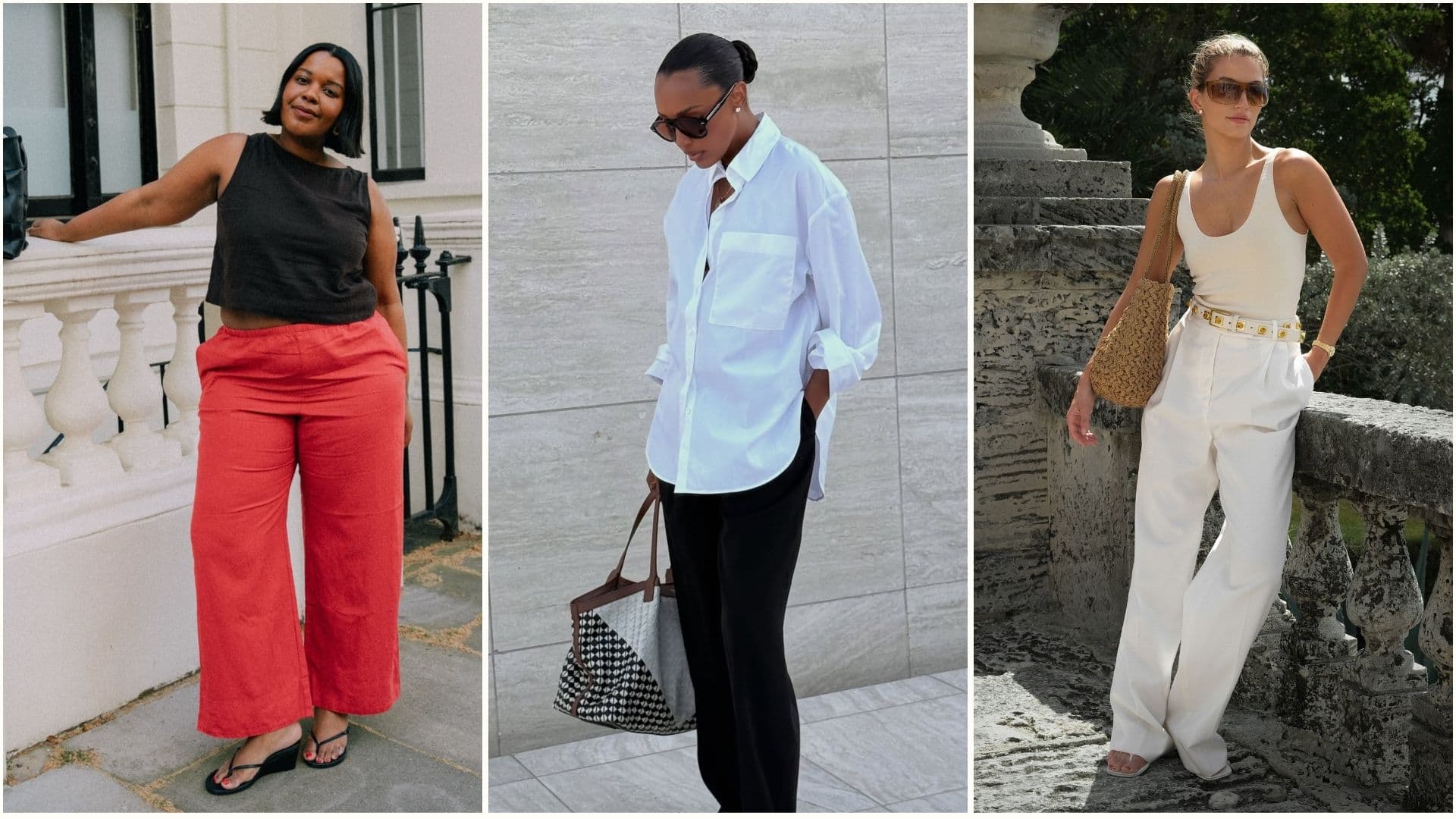
If there is one piece that gives the whole wardrobe its backbone, it is the relaxed shirt. Who What Wear UK calls relaxed-fit shirts one of the most versatile classic summer tops, and that is exactly the point: they work open over swimwear, half-tucked into a skirt, or buttoned to the top with sleeves rolled and collar loose. The shape matters more than the label. It should skim the body, not cling to it, and the fabric should have enough substance to hold a clean line after a day in the heat.
This is where heritage matters. Brooks Brothers says its women’s Oxford shirt is made from high-quality cotton with a classic button-down collar, and its casual Oxford cloth shirt traces the silhouette back to 1900. That kind of construction gives a shirt authority. It is plain in the best sense, the way a good tailored jacket is plain, because the details have already done the work.
For budget dressing, this is where to spend carefully. A crisp white or pale blue cotton shirt will do more than a trend-driven top ever could. Keep the fit easy, the collar neat, and the finish matte. The entire outfit immediately looks more assured.
Let texture carry the status code
The old-money summer wardrobe lives or dies by texture. A basket bag signals ease because it feels practical and inherited from holidays, not engineered for the feed. A cotton skirt brings that same effect in clothing form: breathable, unforced, and soft enough to move with the body rather than against it. A striped knit adds just enough pattern to keep things interesting without tipping into novelty, while a silk dress gives the wardrobe evening gravity without resorting to embellishment.
What makes these pieces feel rich is not flash but tactility. Cotton should look crisp, not papery. Knitwear should feel substantial, even when it is light. Silk should drape rather than glitter. That distinction matters, because quiet luxury is built on materials that hold their shape and age well. It is why the look survives season after season: the eye trusts the fabric before it notices anything else.
If silk feels out of reach, the principle still holds. Look for fabrics that fall cleanly and avoid shine that reads synthetic. A dress that moves with the body and catches light softly will always look more convincing than one that shouts luxury through gloss alone.
Why preppy never really left
The old-money summer wardrobe is often described as new, but its codes are old. Fashion-history sources trace preppy style to Ivy League and old Northeastern school dress, with a major revival in 1980 through Lisa Birnbach’s The Official Preppy Handbook. FIT’s Fashion History Timeline places Princess Diana inside that lineage too, noting her status as an enduring style icon and her association with the UK’s Sloane Ranger look, the British cousin of American preppy dressing.
That heritage explains why the capsule feels so legible. A clean shirt, a striped knit, a simple skirt, a basket bag: none of it is flashy, but all of it comes preloaded with cultural memory. It suggests weekend houses, sailing clubs, campus lawns, and the kind of generational polish that does not need to announce itself. This is not nostalgia for its own sake. It is style shorthand that still works because the references are deeply embedded.
The brands that prove the formula still sells
There is also a commercial reason the look refuses to disappear. Ralph Lauren, founded in 1967 with ties and menswear, built an entire empire around this specific idea of polished American ease. Hermès continues to reinforce the same message through bag collections that emphasize artisanal craftsmanship and timeless silhouettes in leather, silk, or canvas. These brands endure because they sell more than products. They sell continuity, and continuity is the real luxury being borrowed by the budget-minded version of the trend.
That is why the smartest interpretation of the look does not depend on head-to-toe designer labels. You do not need the logo to borrow the language. What you need is discipline: choose pieces with restraint, favor shapes that have existed long enough to feel inevitable, and keep the palette quiet enough that texture can do the talking.
How to wear the capsule without looking costume-y
The easiest way to make the wardrobe feel generational rather than try-hard is to keep every combination slightly relaxed.
- Pair a relaxed shirt with a cotton skirt and a basket bag for daytime.
- Layer a striped knit over the shoulders so it reads as useful, not decorative.
- Let a silk dress stand almost alone, with only a simple bag and minimal jewelry.
- Keep colors within a narrow range of white, cream, navy, sand, and pale blue so the pieces look collected over time.
What you are after is not perfection but coherence. The shirt should look like it has been worn before. The bag should feel like a summer habit. The dress should move easily, without asking for attention. When those cues line up, the wardrobe stops reading as a budget exercise and starts reading as something much more convincing: taste with a sense of history.
Quiet luxury is not dead; it has simply become more exacting. In summer, that means fewer declarations, better cloth, and the kind of polish that looks inherited because it understands when to step back.
This article was produced by Prism’s automated news system from verified source data, official records, and press releases, then run through automated quality and moderation checks before publishing. The system is built and supervised by the people who set the standards it runs under. Read our full AI policy.
Did this article answer your question?