Jonathan Anderson’s Dior Cruise debut channels old-Hollywood glamour
Jonathan Anderson turned Dior’s first Cruise show under his watch into a lesson in old-Hollywood authority. At LACMA, he swapped runway spectacle for a sharper house code: polished, cinematic, and quietly powerful.

A reset, not a costume party
Jonathan Anderson did not walk into Dior and simply add a little movie-star gloss. His first Cruise show for the house, staged at LACMA’s new David Geffen Galleries, felt like a deliberate reset of the brand’s prestige language. The clothes reached for old-Hollywood glamour, but the real move was subtler: Anderson used California fantasy, restraint, and precision to ask what Dior looks like when it stops trying so hard and starts sounding expensive again.
That distinction matters. Old-money style is never just about looking rich. It is about looking as if wealth has already been inherited, already proven, already understood. Anderson’s Cruise debut leaned hard into that idea, trading obvious flash for a more controlled, more cinematic kind of authority. The result was less vacation dressing than a soft recalibration of Dior’s place in the luxury hierarchy.
Why LACMA was the right stage
The setting was doing serious work here. Dior showed the collection on May 13, 2026, at the Los Angeles County Museum of Art’s new David Geffen Galleries, in the museum’s newly opened Peter Zumthor-designed building. That building officially opened to the public on April 19, 2026, so the show landed inside a fresh cultural landmark, not a tired backdrop. Dior had announced the Los Angeles location the previous month, and the choice tied Anderson’s first Cruise outing for the house to Dior’s long-standing relationship with the United States and with Hollywood.
That context sharpened the whole presentation. LACMA is not just a venue, it is a signal. Anderson was not dropping Dior into a generic resort fantasy; he was placing it inside a museum wing designed to feel architectural, serious, and future-facing. That tension is exactly what gave the collection its charge. Old-money dressing always knows when to borrow from culture and when to let culture frame it.
Old Hollywood, filtered through California
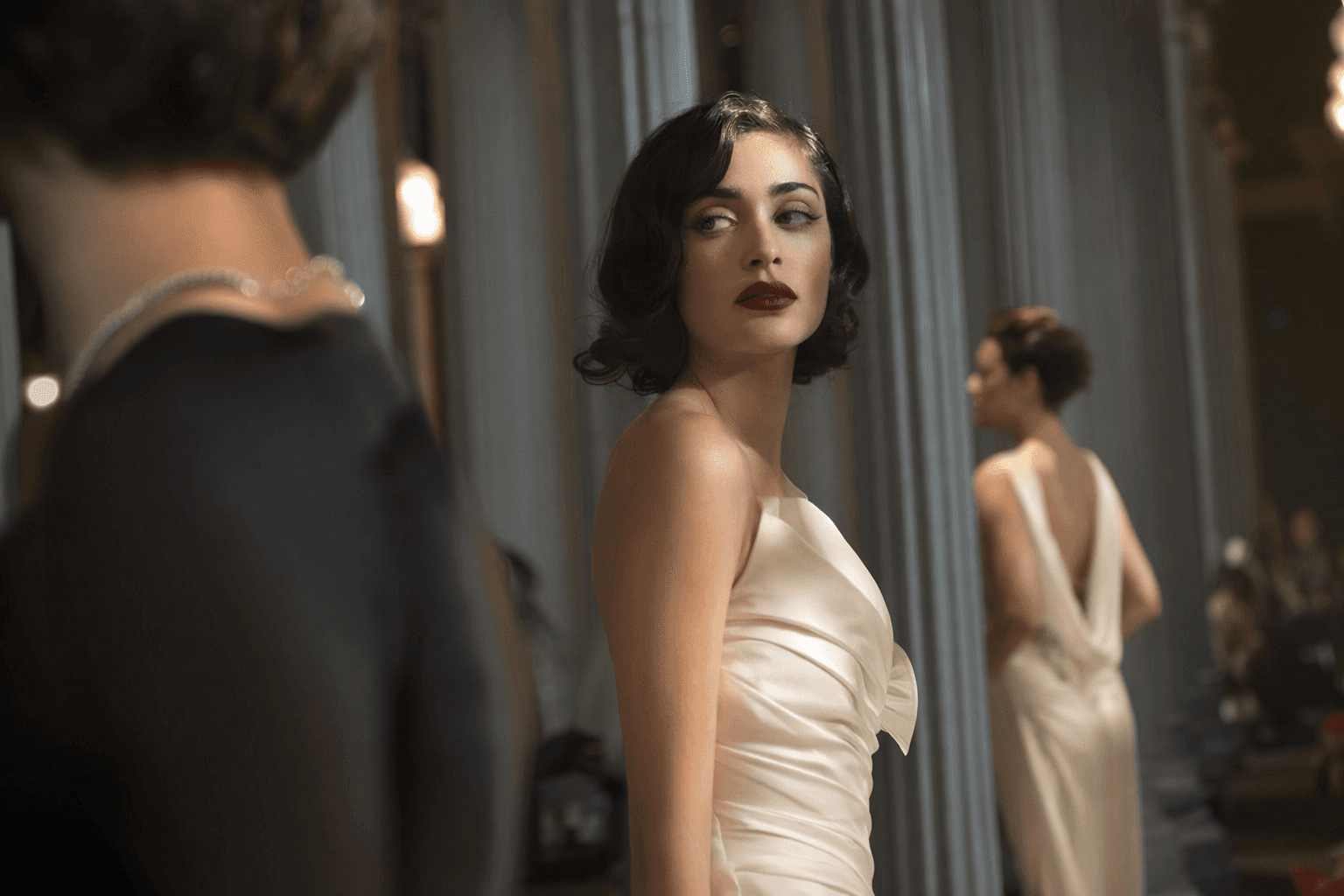
The collection’s references were unmistakable: old Hollywood, Hitchcock, California iconography, and the hazy glamour of a place that has spent a century selling itself as myth. Some reports pointed to Marlene Dietrich as a starting point, and that tracks. Dietrich is the right kind of reference for this house reset: severe, feminine, intelligent, a little dangerous, never cheap. She is not costume glamour. She is control.
California mythology also mattered. The California poppy, that bright native flower, became part of the visual shorthand around the show, and it fit the mood perfectly. The poppy is not a jewel tone flex or a logo play. It is a regional symbol, a flash of color with an almost pastoral authority. In Dior’s hands, that kind of reference reads less like souvenir dressing and more like cultural translation. Anderson was not just borrowing from Los Angeles; he was trying to rewrite it into the Dior vocabulary.
The new house language is all about restraint
What makes this debut interesting for old-money fashion is what Anderson did not do. He did not flood the room with trends, slogans, or overworked novelty. Instead, he aimed for polish, silhouette, and atmosphere. That is the harder sell in luxury right now, because restraint has to earn its confidence. If it is done badly, it looks like a theme party. If it is done well, it looks like authority.
Anderson’s Dior seemed to be chasing the second outcome. The collection read like a strategic move toward timelessness without defaulting to nostalgia. That is the narrow path old-money style always walks: familiar enough to feel inherited, fresh enough to feel current, and specific enough to feel intentional. Dior’s heritage gives Anderson a lot to work with, but the challenge is whether he can turn those codes into a lasting house language rather than a one-night mood.
The cinematic gimmick actually made sense
The most telling detail may have been the show handout. Instead of standard show notes, guests received a movie-script-style handout. That could have felt like a gimmick in lesser hands, but here it was the cleanest possible extension of the concept. If the collection is about film culture, dream states, and the construction of prestige, then a script format turns the runway into narrative instead of mere presentation.
That matters because Dior under Anderson is not just selling clothes, it is selling authorship. Old-money dressing is always a story about who wrote the rules and who gets to inherit them. By turning the show into a cinematic scene, Anderson made Dior feel less like a label chasing relevance and more like a house reclaiming its own mythology. The difference is subtle, but in luxury it is everything.
Who was in the room says plenty
The audience added to the message. Coverage of the event described a heavy Hollywood turnout, and Dior’s broader moment around the show included brand ambassadors Jennifer Lawrence, Mikey Madison, and Michelle Yeoh. That mix is telling. Lawrence brings polished American star power, Mikey Madison brings a sharper, younger edge, and Michelle Yeoh carries a rare kind of global elegance that never feels forced. Together, they sketch the exact kind of prestige Dior wants to own: not loud celebrity, but cultural credibility with real range.
That is where the old-money angle gets interesting. This is not stealth wealth in the minimalist, anonymous sense. It is something more legible and more strategic: quiet wealth with a cinematic spine. Anderson seems to understand that the new Dior audience does not only want discretion. It wants authority that can be read instantly by people who know the codes.
What this means for old-money fashion now
If you are reading this as a wardrobe question, the lesson is clear. Anderson’s Dior points toward a version of luxury that favors polish over excess, silhouette over noise, and references that feel cultured rather than try-hard. The old-money signal here is not beige sameness. It is confidence in a jacket shoulder, a clean line, a controlled palette, and a narrative strong enough to survive close inspection.
The bigger question is whether Anderson is building a house language that old-money consumers will read as timeless or as cinematic costume. Right now, the answer looks promising because he is not leaning on nostalgia alone. He is translating heritage through a contemporary lens, and that is exactly how a legacy house stays legible without turning museum-still. Dior’s Cruise debut at LACMA did not just look expensive. It looked like a brand trying to remember that true prestige is never loud first. It is recognized first.
Know something we missed? Have a correction or additional information?
Submit a Tip