Khaki returns as summer's quietly powerful old-money neutral
Khaki is replacing beige-on-beige as the summer neutral with real status. Here is how to wear it so it reads controlled, equestrian, and quietly expensive.
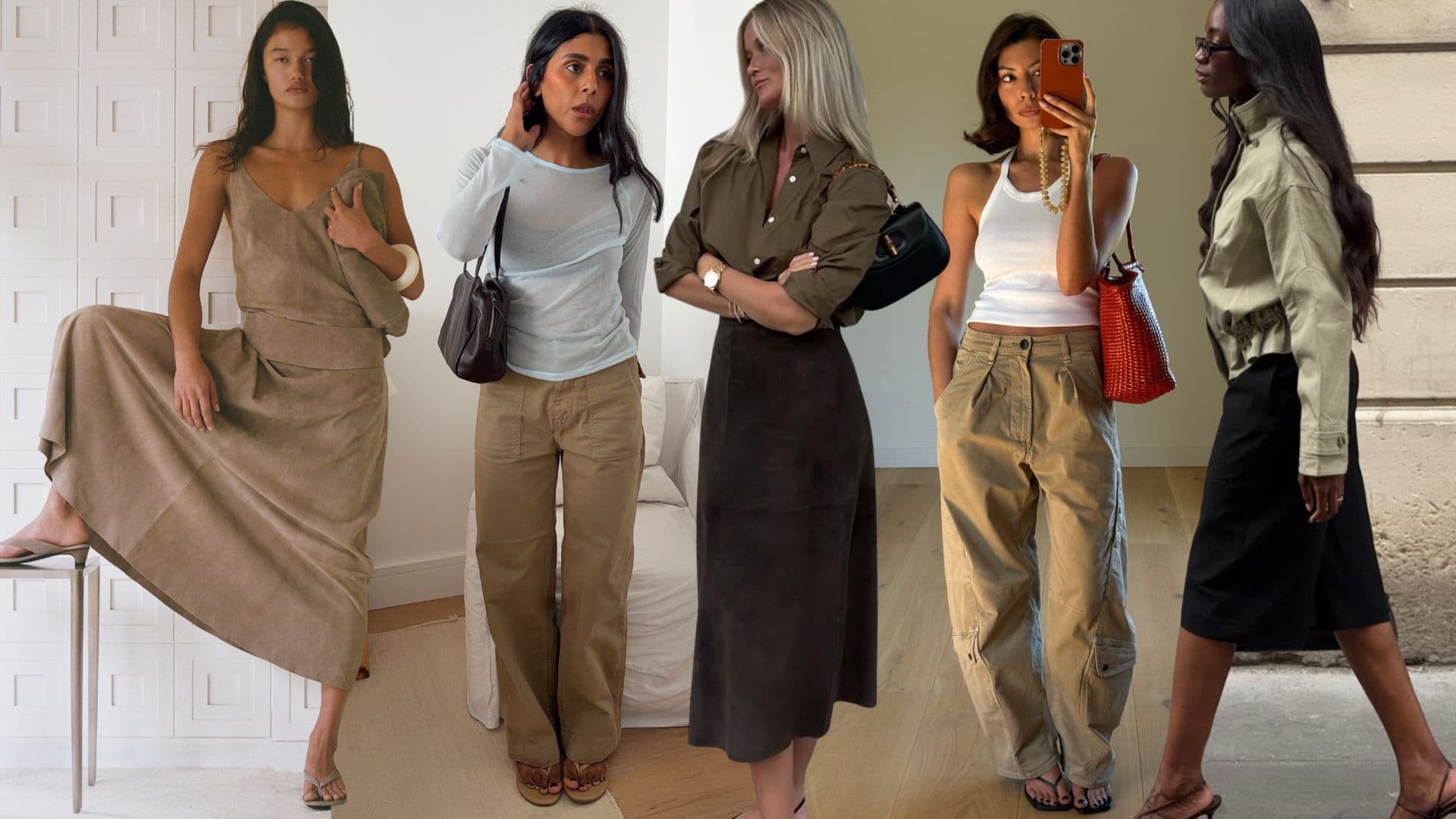
Khaki is having the kind of comeback that says less about trend churn than about power. Beige has spent years posing as the language of quiet luxury, but khaki feels sharper, flatter, more disciplined, the color of someone who prefers a field jacket to a logo and knows that restraint can look far more expensive than display.
What makes the shade compelling now is that it is not trying to be pretty in the soft, syrupy way of so many so-called neutrals. Who What Wear makes the strongest case for it by showing khaki in cropped trenches, tailored trousers, suede accessories, and clean, architectural separates that feel controlled rather than decorative. There is no unanimous ruling on what khaki even is, only a broad family of muted tones pulled from arid landscapes, and that ambiguity is part of its appeal: it can look urban, equestrian, military, or country-house polished without changing color.
Why khaki reads as a status color
Khaki has a long memory, and that is exactly why it feels credible in an old-money wardrobe. The word comes from Urdu khaki, meaning dusty, through Persian khak, meaning dust; in 1857 it first described dust-colored cloth, and it was initially used for British cavalry uniforms in India before being widely adopted for camouflage in the Boer Wars from 1899 to 1902. That lineage gives khaki an authority beige never earned. Beige is decorative; khaki is functional, and that sense of utility still sits beneath its polished surface.
In fashion terms, that heritage matters because khaki communicates uniformity. It is not a color that needs to announce itself in a crowd. Instead, it looks most convincing when the cut is exact, the leather is supple, and the proportion is considered, the way Burberry’s gabardine trenches and Bottega Veneta’s suede Andiamo bags make the shade feel purposeful rather than plain.
The 2026 case for a grounded neutral
The timing is not accidental. Pantone’s Spring/Summer 2026 Fashion Color Trend Report, released on September 11, 2025, framed the New York Fashion Week palette around personal expression, authenticity, and trans-seasonal neutrals, with Leatrice Eiseman emphasizing honesty and authenticity in dressing. That puts khaki firmly inside a bigger move toward grounded, wearable color rather than a one-off beige revival.
Pinterest sharpened the picture in its December 9, 2025 Predicts report. Its “Khaki Coded” trend says Gen Z and Millennials will be drawn to khaki looks in 2026, and the search signals are telling: chunky belt rose 65%, baggy suit 90%, high collar jacket 60%, gold cuff 50%, and 80s luxury 225%. Add the platform’s finding that 55% of global respondents prioritize comfort in daily life, and khaki starts to look less like a seasonal whim and more like the uniform of a wardrobe that wants to be easy, controlled, and still aspirational.
That same mood runs through FashionUnited’s spring and summer 2026 trend read, which places the season against socio-political reorientation, environmental urgency, and a collective yearning for authenticity and connection in a more digital world. Khaki fits that atmosphere perfectly. It feels like a detox from overstyled minimalism, a neutral that looks mindful rather than bland.
Marie Claire UK also places khaki squarely in safari chic territory for spring and summer 2026, pointing to Isabel Marant, Burberry, Balmain, Saint Laurent, and Lemaire. That runway context matters because safari dressing has always been about control, not costume. The best versions are built on jackets with enough structure to suggest travel, trousers with enough ease to suggest movement, and textures that can handle sun, dust, and city streets at once.
Five ways to wear khaki so it reads rich, not flat
Cropped trench coat with a pencil skirt
A cropped khaki trench is the fastest way to strip the color of any cargo-pants association and make it feel refined. Worn with a pencil skirt, it creates that narrow, upright line that always reads expensive, especially when the skirt is close-fitting and the coat stops at the waist instead of swallowing the body. This is khaki as polish: tailored, contained, and slightly aristocratic.
Strapless top with pleated trousers
A strapless top in khaki or a complementary muted tone turns the color from practical into evening-adjacent without losing restraint. Pair it with pleated trousers and the effect is controlled volume, the kind that feels borrowed from menswear but sharpened for summer. The pleat matters because it adds movement without drama, a very old-money way to let fabric do the work.
White tank with khaki jeans
The white tank and khaki jeans formula is the easiest lesson in why the shade is more versatile than beige. White brings out khaki’s dustier, field-ready undertone, while denim or denim-like khaki trousers keep the look grounded and unforced. Keep the leather brown or tan, not black, so the whole outfit stays in that equestrian register rather than drifting toward city basics.
Khaki button-down with a matching midi skirt
This is where khaki becomes unmistakably controlled. A matching button-down and midi skirt create uniformity, and uniformity is what gives khaki its quiet authority, especially when the shirt is a little crisp and the skirt moves softly around the leg. It is the sort of outfit that looks best with minimal jewelry and a structured bag, because the point is not contrast but coherence.
A softly oversized khaki suit with a chunky belt
Pinterest’s appetite for the baggy suit and chunky belt makes this the most current way to wear khaki if you want status without stiffness. A relaxed khaki suit cinched with a leather belt nods to 1980s luxury, while a gold cuff adds just enough shine to keep the look from disappearing into utility. This is the version of khaki that feels most modern because it understands proportion: volume above, definition at the waist, and leather or metal used as punctuation rather than decoration.
Khaki is back because it solves a problem that beige never quite did. It can be disciplined without being severe, practical without reading plain, and old-money without looking staged. In a summer wardrobe full of louder signals, it is the neutral that looks like it has nothing to prove.
This article was produced by Prism’s automated news system from verified source data, official records, and press releases, then run through automated quality and moderation checks before publishing. The system is built and supervised by the people who set the standards it runs under. Read our full AI policy.
Did this article answer your question?