Marie Claire crowns linen dresses the old-money summer essential
Linen dresses have moved past trend status. The smartest versions now signal inherited ease through weight, cut, and quiet styling.
Linen, not as a trend but as a code
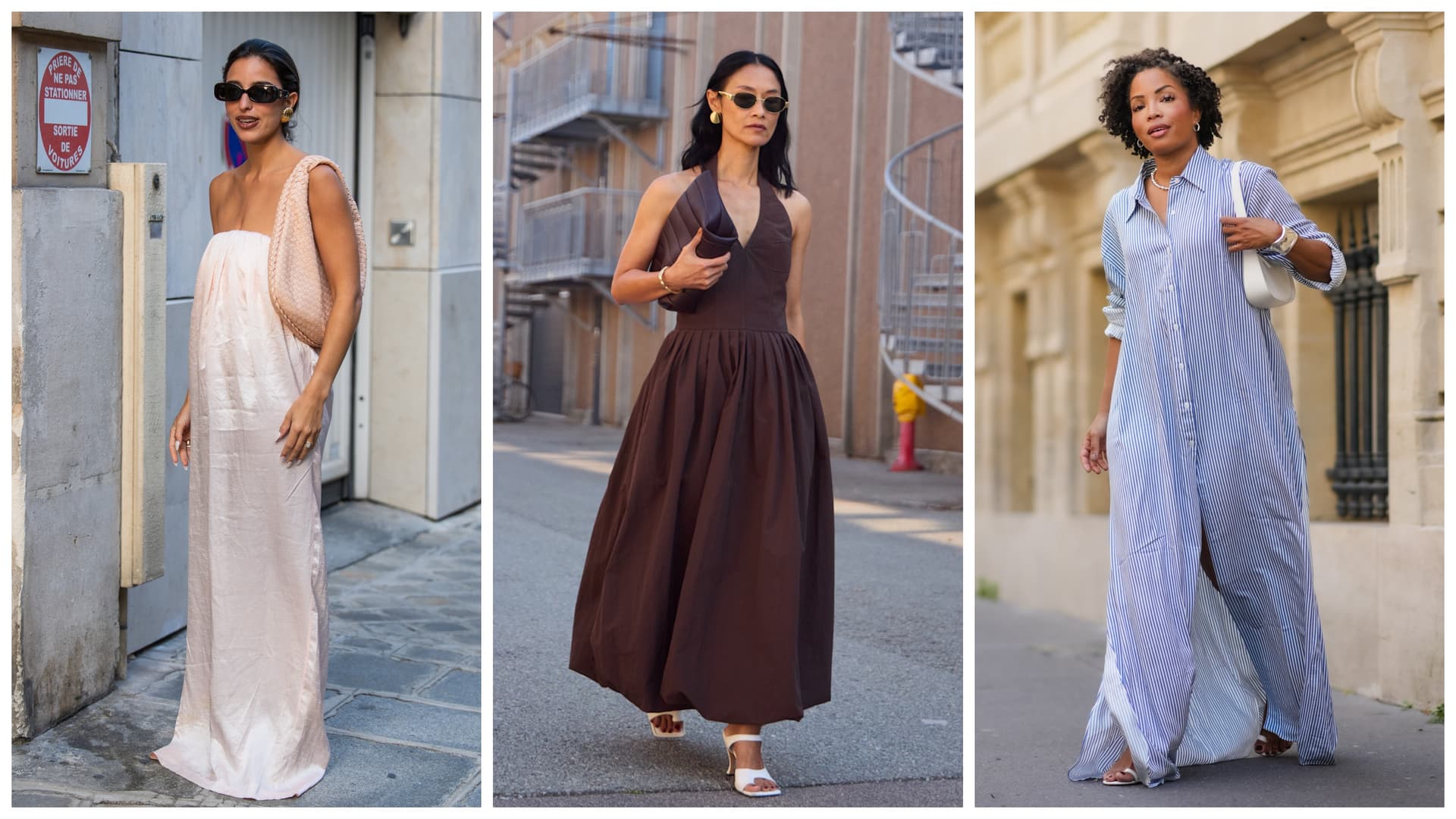
Marie Claire’s case for linen is refreshingly blunt: the best dresses deliver instant relief from scorching heat and earn their place in a minimalist capsule wardrobe because they do not need much help to look finished. That is exactly why linen belongs in the old-money summer conversation. It reads as composed without trying too hard, which is the whole point of the aesthetic when it is done well.
What makes this fabric feel especially current is that it solves for both polish and practicality. Linen can go from city pavement to coast road to dinner terrace with very little costume change, and that adaptability is what separates it from beachwear. The right linen dress looks inherited, not assembled.
How the old-money lens sharpens the shopping brief
The old-money version of linen is not about anything slouchy, overwashed, or vaguely resort-like. It is about choosing pieces with enough structure to hold a line: a weight that skims rather than collapses, a cut that suggests restraint, and a neckline that feels intentional rather than exposed. That is why the most useful shopping lens starts with fabric weight, then moves to silhouette, neckline, length, and color.
Look for linen that has enough substance to fall cleanly over the body. A dress with a V-neck can feel effortless in the daytime, while a modest scoop or higher neckline brings a more polished, country-house register; hem length matters too, because midi and ankle-skimming shapes tend to read more expensive than anything that feels overly flirty. In color, the old-money palette favors ecru, sand, navy, ivory, and soft olive, shades that let texture do the talking.
Marie Claire’s own lineup reflects that logic. Aritzia’s Countess dress is the kind of office-appropriate option that proves linen does not have to belong to weekends, J.Crew’s V-neck Popover frock pushes easily from beach to dinner, and Veronica Beard’s embroidered Shanice dress gives the fabric enough ornament to move into more elevated territory. That range is the real story: linen works hardest when it is not treated as a one-note summer staple.
Why the fabric itself carries authority
Linen’s appeal is not some newly minted fashion theory. Flax is one of the oldest textile fibers used by humans, with evidence traced to prehistoric Swiss lake dwellings and ancient Egyptian tombs, which gives the fabric a kind of historical legitimacy most summer materials cannot fake. It has survived because it performs: linen is stronger than cotton, dries more quickly, and feels cool because it absorbs and releases moisture efficiently while conducting heat well.
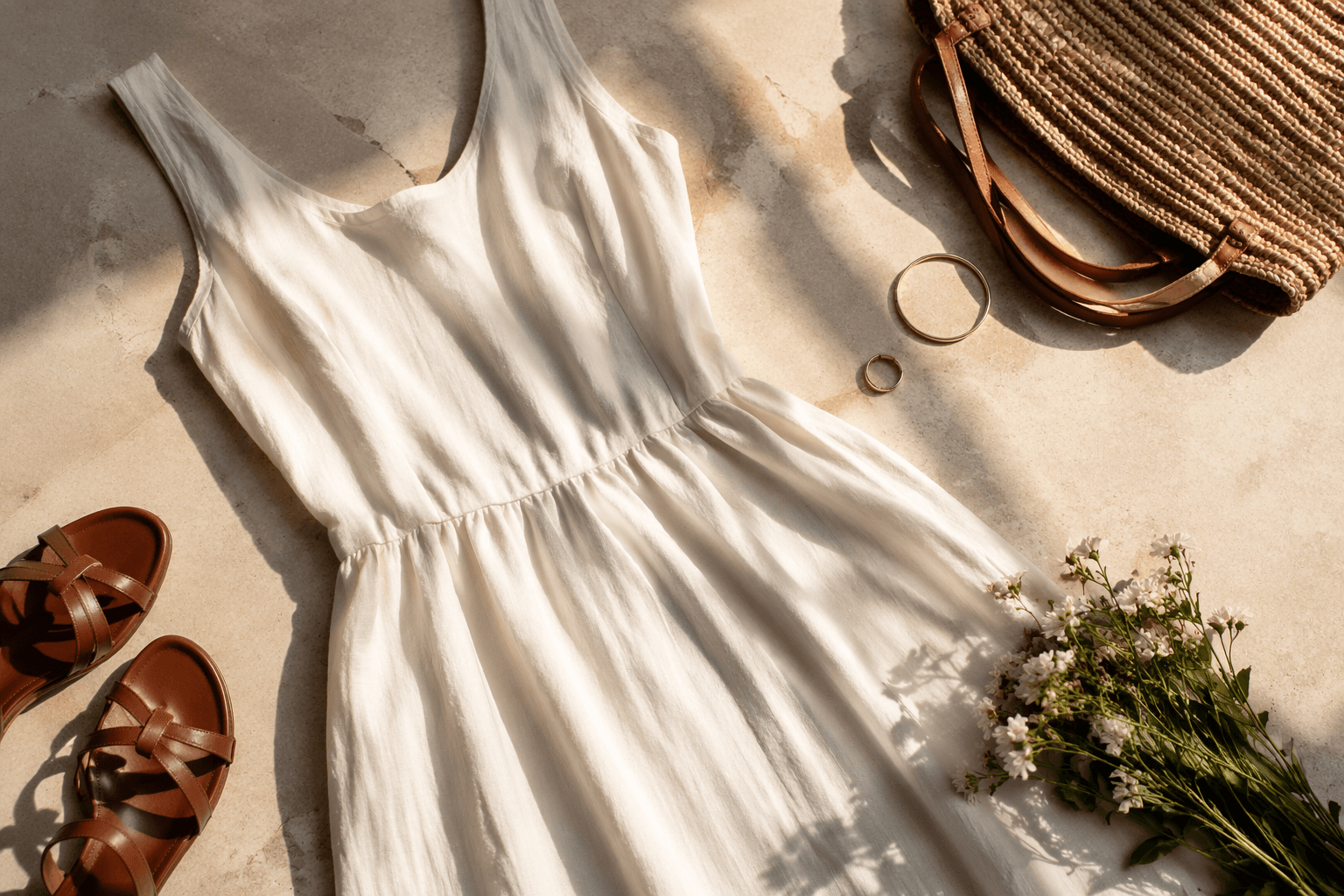
That technical reality explains why the wrinkles are part of the charm rather than a defect. Linen creases in a way that signals movement, travel, and real life, not synthetic perfection. The trick is to wear it in a silhouette that looks considered enough to make those creases feel sensual and lived-in, not careless.
This is also where old-money style gets its emotional charge. Ralph Lauren built his brand around an elite American lifestyle image, translating English-aristocratic cues through sporty East Coast ease; his first womenswear line launched in 1971, and by 1983 he had expanded into home accessories, reinforcing the idea that style is a world, not just a wardrobe. Linen dresses fit that lineage neatly because they imply a life with porches, boats, hotel terraces, and generous closets full of items that know their place.
The styling formula that keeps linen out of beachwear territory
The simplest way to make linen feel inherited rather than improvised is to treat it like a tailored summer dress, not a cover-up. Pair it with summer shoes that have some refinement, a woven bag with real shape, and whimsical jewelry that adds charm without tipping into costume. The accessories should look chosen, not piled on.
A few practical rules keep the look sharp:
- Choose a dress with structure at the shoulders or bodice if the fabric is especially airy.
- Balance a softer neckline with a more disciplined hemline, or a fuller skirt with a cleaner top.
- Stick to one accent per outfit, whether that is a pair of polished sandals, a woven tote, or a single playful earring.
- If the linen is pale, keep the rest of the look crisp so the dress feels intentional rather than washed out.
The best linen dressing has a travel-ready polish because it can collapse into a suitcase and still emerge looking expensive. That is the trick old-money style keeps returning to: not perfection, but ease with standards.
The coastal fantasy behind the aesthetic
Marie Claire’s old-money shopping list gives the look a very specific summer mood, one that borrows from Jackie O’s coastal polish and the languid Americana of Lana Del Rey’s “National Anthem” music video. That pairing is telling. One half is controlled, aristocratic, and polished; the other is romantic, slightly nostalgic, and soft around the edges.

Linen sits right in the middle of those impulses. It can look crisp enough for a summer office, then relax into a dinner silhouette by evening, which is why it continues to anchor the old-money wardrobe even as the aesthetic shifts from strictly East Coast to something more coastal and sun-warmed. Airy linen dresses, luxe accessories, and preppy prints all speak the same language when the execution is disciplined.
The supply chain story under the surface
There is also a real material culture behind linen’s appeal, and that matters in a season when natural fibers carry extra weight. Textile Exchange describes flax cultivation in Normandy as an age-old craft, with the crop rotated every five to seven years, a rhythm that speaks to patient agriculture rather than industrial haste. The cooperative Terre de Lin supports flax farmers through cultivation, pulling, drying, and fiber extraction, which underscores how specialized linen production really is.
That production story gives the fabric another kind of prestige. It is not just a visual shorthand for ease; it is tied to land, labor, and inherited knowledge that has been passed down through generations. In a fashion cycle crowded with synthetics and speed, that kind of depth reads as luxury.
The broader market is also leaning harder into this conversation. Textile Exchange’s Materials Benchmark grew from 57 reporting brands and retailers in 2015 to 423 in 2025, and the share of raw materials certified under sustainability programs rose from 58 percent in 2023 to 67 percent in 2024. Linen sits comfortably inside that shift because it already carries the right mix of natural texture, longevity, and seasonal relevance.
Why linen dresses are sticking around
The strongest argument for linen is that it offers fashion credibility without theatrical effort. It is cool, durable, steeped in history, and adaptable enough to move from office to coast to evening with only a change of shoe and bag. In old-money dressing, where the goal is to look quietly certain of yourself, that is not a small thing.
Linen dresses endure because they still put their money where their manners are. They have the ease of summer and the discipline of real wardrobe thinking, which is exactly why they remain the smartest buy in the old-money closet.
This article was produced by Prism’s automated news system from verified source data, official records, and press releases, then run through automated quality and moderation checks before publishing. The system is built and supervised by the people who set the standards it runs under. Read our full AI policy.
Did this article answer your question?