MCM marks 50 years with archival bags and Munich roots
MCM is trying to turn anniversary nostalgia into legacy status, using archival bags, Munich roots and a cross-generational family story to soften its image.

MCM is using its 50th anniversary to ask a sharper question than most luxury houses bother with: can a brand known for logos and travel credentials become a true inheritance story? The answer sits in its Winter 2026 campaign, where archival bags, family dynamics and a deliberately warmer tone replace the harder, more futuristic gloss the house has leaned on in the past.
A milestone built to feel inherited
MCM says 2026 marks its 50th anniversary, and it has framed the year as a long celebration of craft and heritage rather than a single celebratory splash. That matters in old-money fashion, where the strongest brands rarely sell novelty first. They sell continuity, the sense that a bag, a logo or even a silhouette has already lived several lives before it reaches your wardrobe.
The house is also making a point of origin part of the message. MCM says the anniversary program will culminate in Munich, the city it says started the brand, which gives the story a rooted, almost familial shape. In an era when so many accessories labels chase global scale and digital volume, MCM is trying to make place feel like pedigree.
From futuristic polish to archival credibility
MCM’s official identity still rests on luxury travel, but the language around it is telling. The brand says that since 1976 it has blended “craftsmanship and innovation,” and that it is “redefining the concept of traditional luxury.” That is not the vocabulary of a house content to be merely recognizable. It is the language of a brand trying to be taken seriously across generations.
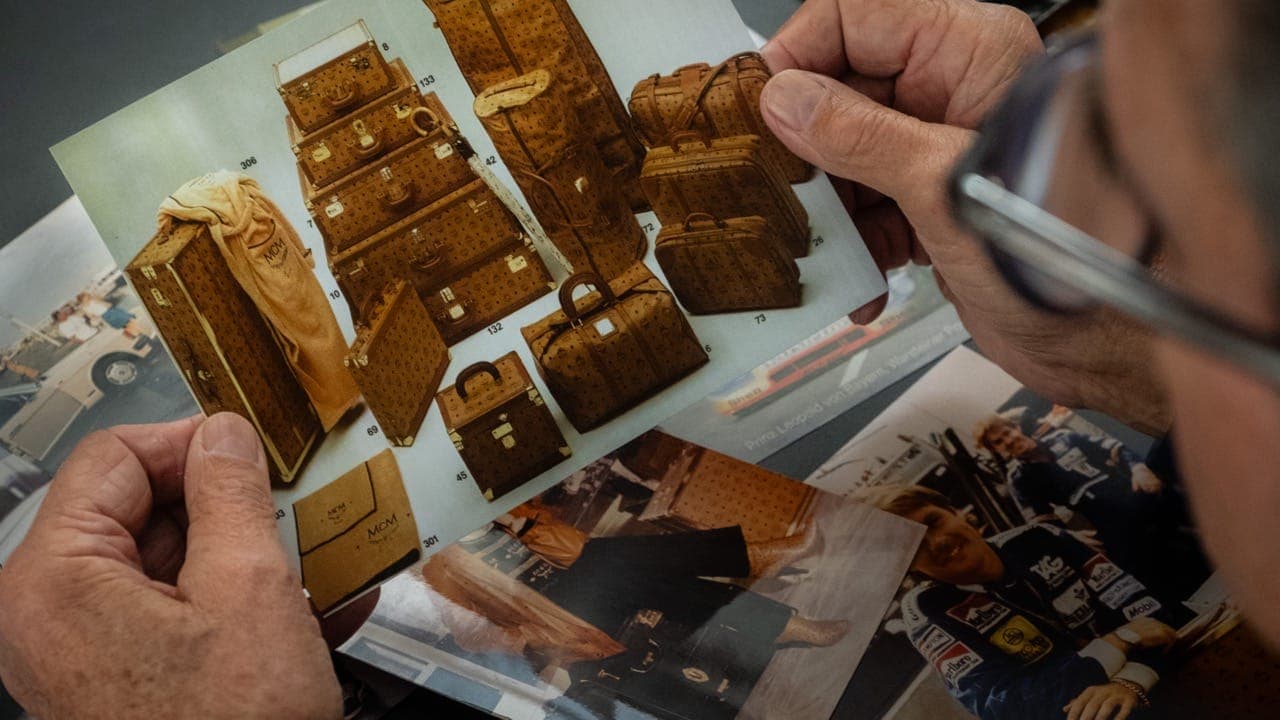
What makes the current push interesting is the shift in emphasis. The Winter 2026 campaign, as WWD describes it, reads as a cross-generational family story and brings select archival styles back into focus. That is a smarter old-money play than simply polishing the monogram until it gleams. Archive bags carry a different charge. They suggest provenance, not just branding. They feel collected, passed along, remembered.
Icons Reinvented and the new luxury of recognition
The broader anniversary platform is called “Icons Reinvented,” and the name tells you exactly what MCM wants from this moment. It is not trying to abandon its signatures. It is trying to reload them for a new audience with enough context to make them feel desirable again. The platform includes reimagined versions of the Stark Backpack, Liz Shopper, Ella Boston and Ottomar Weekender, four of the house’s most recognizable styles.
That strategy fits the broader shift in luxury accessories right now: the most effective brands are not erasing their icons, they are editing them. A Stark Backpack or an Ottomar Weekender already carries built-in familiarity, which makes it easier to reposition as something collectible rather than merely commercial. In old-money terms, the trick is to make the bag feel less like a logo purchase and more like a family object with a history of its own.
Humor as a softer kind of status
The Winter 2026 film also leans into humor, history and humanity, and that tonal choice may be the most revealing part of the entire anniversary effort. Luxury brands often use heritage to signal seriousness, but too much seriousness can make a house feel stiff or self-protective. By adding a little wit and a more human family narrative, MCM is trying to loosen the image without cheapening the product.
That balance is where the campaign becomes more than nostalgia. A cross-generational story can make a brand feel inherited, but humor keeps it from feeling frozen. For MCM, the question is whether that softness makes the house look more old-money adjacent or simply more accessible. The distinction matters. Old-money cues rely on restraint, ease and an almost casual confidence. Accessibility, by contrast, broadens the audience but can flatten the mystique.
Herbert Lieb and the value of continuity
The opening anniversary campaign centers on a hero film featuring Herbert Lieb, a long-time MCM figure who has worked at the company for more than 40 years. That detail is not decorative. In a market obsessed with reinvention, longevity inside the company itself becomes part of the brand mythology. Lieb functions as a living bridge between the house’s past and its next chapter.
That kind of casting is especially effective for heritage accessories, because it turns internal continuity into external credibility. A brand can talk about archives all day, but a face that has stayed with the house for four decades makes the story feel lived rather than staged. For a label trying to move from futuristic branding toward legacy-driven handbags, that is exactly the kind of proof point that matters.
Why the Munich finish matters
MCM’s decision to culminate the anniversary year in Munich gives the campaign a clean finish line and a stronger sense of inheritance. The city anchor keeps the story from drifting into generic global luxury, where everything begins to feel interchangeable. It also gives the house a geographic identity that old-money fashion understands instinctively: origin is part of value.
That is the real test for MCM’s 50th-anniversary push. If the brand can make its archival bags, family storytelling and Munich roots feel cohesive, it can claim something more durable than logo nostalgia. It can position itself as a house with memory, not just recognition. And in luxury right now, memory is one of the most persuasive status symbols of all.
This article was produced by Prism’s automated news system from verified source data, official records, and press releases, then run through automated quality and moderation checks before publishing. The system is built and supervised by the people who set the standards it runs under. Read our full AI policy.
Did this article answer your question?