Monocle spotlights the Ivy League look as old money returns
The Ivy uniform is back, but the real story is the code beneath it. Rugby shirts, loafers, ties and sport layers work when they read like lineage, not costume.
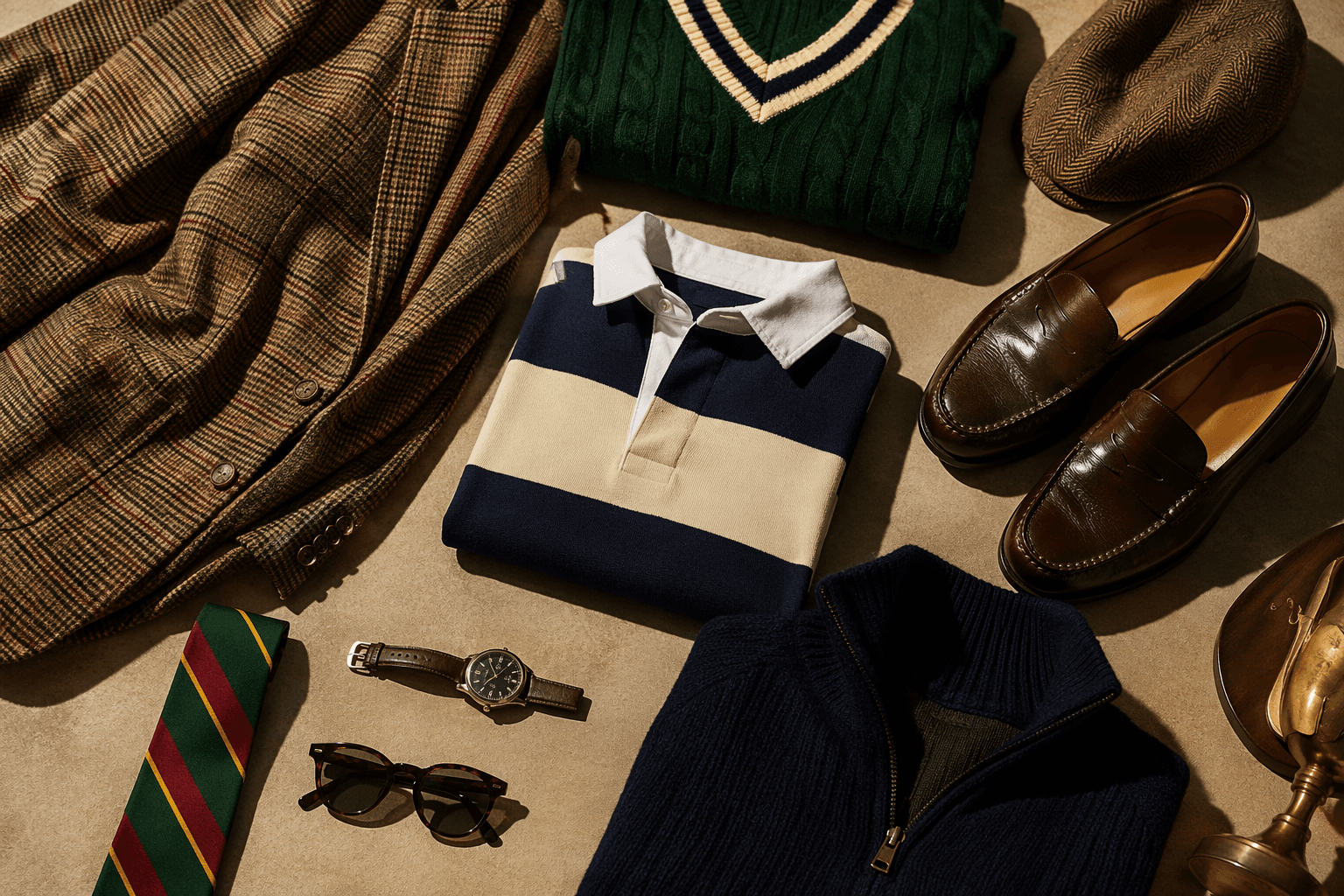
Monocle’s June 2026 issue makes the case bluntly: the old-money Ivy League look is once again the smart set’s uniform. Rugby shirts, ties, caps, loafers and easy sport layers are back in rotation, but the real story is not nostalgia. It is the way this uniform keeps resurfacing whenever fashion wants polish with a little backbone.
Why the Ivy look keeps winning
The appeal of Ivy is that it never fully becomes theatre. A proper rugby shirt has weight, a collar that holds shape, and enough discipline to look sharp even when the rest of the outfit feels relaxed. Loafers, ties and caps do similar work: each one carries a social signal without screaming for attention, which is exactly why the look keeps finding new life when louder luxury starts to feel tired.
Monocle’s June 2026 fashion package is smart because it does not treat preppy as a costume closet. It places collegiate staples in the context of a longer tradition, then lets that tradition do the heavy lifting. That matters in 2026 because the Ivy uniform is not just returning as a mood board reference, it is returning as a readable dress code with actual rules.
The difference between authentic prep and trend cosplay
The real Ivy signal starts with texture and proportion. Rugby shirts should feel substantial, not flimsy; ties should look intentional, not like a last-minute accessory; loafers should have presence, not the dainty shine of something worn for a photo and then forgotten. Sport layers are the secret weapon here, because they stop the look from turning too neat too quickly.
If the outfit is only navy, cream and a few polished basics, it can slide straight into costume territory. What keeps it alive is the push and pull between structure and ease: a collar under a knit, a tie with a slightly rumpled shirt, a cap worn with enough confidence that it looks absorbed rather than styled. The point is not to look like a fraternity composite; it is to look like someone who understands the grammar of the uniform.
Monocle’s edit of Dior, J. Press, Drake’s, Celine and others reinforces that this is less about one brand than about a shared visual language. Those labels do not all speak prep the same way, but they all understand the same code: clean lines, classic references and enough sharpness to keep the look from drifting into heritage cosplay.
J. Press is the proof this is not a passing obsession
J. Press gives the whole conversation its backbone. The brand says it was founded at Yale in 1902 and is widely credited with creating the Ivy League look, which is exactly the kind of origin story that gives a trend its authority. This is not some recent algorithmic discovery of boat shoes and blazers; it is a style with institutional memory.
The brand’s own history also explains why Ivy keeps recurring with such force in Japan. J. Press became especially coveted among Tokyo’s cognoscenti during the 1960s Ivy boom, and its clothes appeared in the 1965 Japanese picture book Take Ivy. That matters because Monocle’s June 2026 history piece also points to Japanese style enthusiasts as key preservers of Ivy League dressing, which helps explain why the look never really disappeared, it just kept getting archived, refined and reintroduced.
This is the part people forget when they call Ivy “classic” and move on. Classic is not the same as static. The look survived because it traveled, and every place that treated it seriously added another layer of legitimacy.
Why Dior changes the conversation
The prep revival would be easy to dismiss as a campus loop if luxury houses were not actively pulling from the same well. Dior’s Spring-Summer 2026 pages say Jonathan Anderson reinterprets the house’s archive and codes for now, which puts heritage dressing in a different register. Instead of treating the past like a museum label, Dior treats it like a toolkit.
That shift was on display during Paris Fashion Week in September 2025, when WWD reported that Anderson’s Dior Spring 2026 ready-to-wear show drew a standing ovation. The reaction matters because it shows how appetite for heritage is changing: people do not only want quiet luxury in the old sense, they want recognizable codes that can be bent, updated and worn with a little intelligence. Ivy is fitting into that same appetite because it already operates like a code system.
How to wear Ivy now without looking trapped in it
The safest way in is to build around one or two authentic markers instead of trying to wear every sign at once. A rugby shirt with proper weight can anchor denim or tailored trousers. A tie works best when it looks like part of the outfit’s logic, not the punchline, and loafers should ground the whole thing with some visual heft.
- Start with one strong Ivy piece, then let the rest of the outfit breathe.
- Mix one polished element with one relaxed one, like a tie with sport layers or loafers with a slightly broken-in knit.
- Keep fabrics honest. Cotton, wool and brushed textures always read better here than slick finish-overload.
- Resist over-accessorizing. The cap, tie and loafer already do a lot of talking.
The cleanest Ivy looks in 2026 will not be the ones that look expensive at first glance. They will be the ones that understand why this uniform keeps coming back: it still carries status, but more importantly, it carries memory, and memory is what keeps old money style from going stale.
This article was produced by Prism’s automated news system from verified source data, official records, and press releases, then run through automated quality and moderation checks before publishing. The system is built and supervised by the people who set the standards it runs under. Read our full AI policy.
Did this article answer your question?