New York Minimalism Challenges the French-Girl Fashion Stereotype
French-girl style still has charm, but New York minimalism is the sharper old-money code in 2026: cleaner, quieter, and easier to wear every day.
Why New York minimalism is winning the old-money wardrobe test
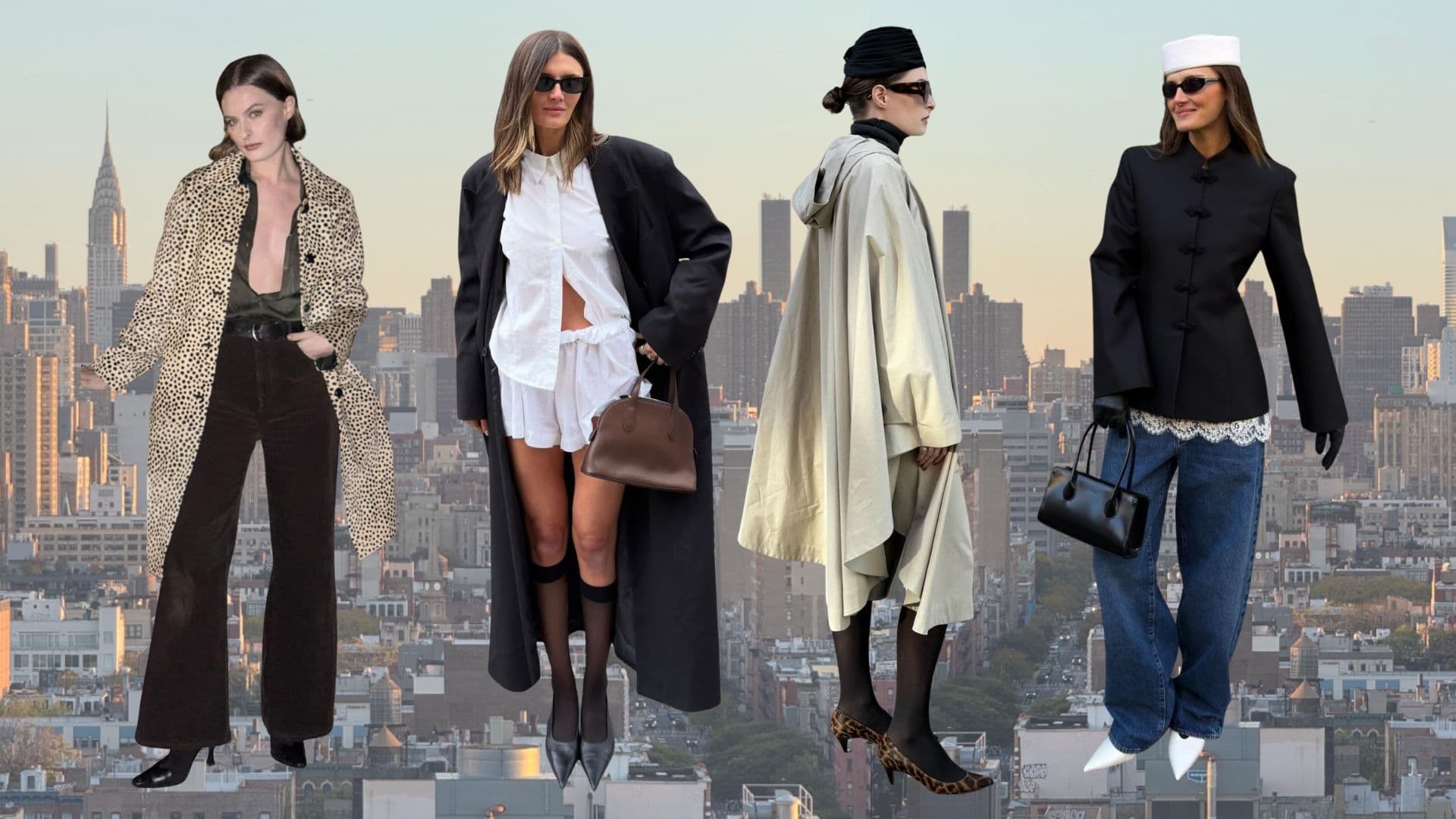
The quickest route to looking expensive has little to do with showing more. It starts with restraint: a white shirt with a clean collar, dark denim that falls straight, tailoring with a sharp line, and footwear that looks polished before it looks precious. That is why New York minimalism is suddenly the more useful old-money formula. It feels disciplined, not decorative, and it works on a real city sidewalk, not just in a mood board.
The French-girl myth has finally been overworked
French-girl style has lived online for more than 20 years, back when the first influencers were still called bloggers and the internet treated a Breton top like a personality. The problem is that the familiar image, blue tapered jeans, a basket bag, a striped shirt, has hardened into a stereotype. It is elegant shorthand, but it is still shorthand, and the best style rarely survives when it becomes a costume.
That is why the French-girl template now feels overexposed in a way old-money dressing should never feel. The easiest version is charming on a postcard and thin in real life. It can lean too nostalgic, too themed, too dependent on the idea of Paris rather than the practical reality of getting dressed. New York minimalism offers something more useful: fewer flourishes, stronger lines, and clothes that do not need a backstory to work.
New York has the better fashion pedigree for restraint
New York minimalism is not a new invention. Calvin Klein built an entire American language around it when he founded Calvin Klein in New York in 1968 with $10,000. The first collection was all youthful, understated coats and dresses, which is still the point: clothes that looked modern because they were pared back, not because they were loud. That kind of understatement reads as wealth when it is done well, because it suggests confidence without over-explaining itself.
The same logic shows up in the current cult around The Frankie Shop, which was launched in 2014 on New York’s Lower East Side by French founder Gaëlle Drevet. Its calling card is minimalist, utilitarian, oversized clothing, the sort that looks intentional instead of fussy. Even when the silhouette is relaxed, the message is strict: clean shoulders, controlled volume, and no wasted detail. That is very different from casual dressing, and much closer to the new old-money mood.
The actual wardrobe formula is simple
If you want the look to register as refined rather than trendy, build it from a short list of pieces that do the heavy lifting. The surprise is how few you need. A good white shirt, dark denim, precise tailoring, quality loafers or flats, and one or two well-chosen designer accessories will do more for your wardrobe than a closet full of themed neutrals.
Start with the shirt. It should be crisp enough to frame the face and soft enough to move, whether it is tucked into straight-leg jeans or worn under a blazer. Skip anything overly romantic or sheer if the goal is modern minimalism. The power of the white shirt in this context is that it behaves like architecture, not decoration.
Then comes denim. Dark washes read sharper than faded blue, and a straight or slightly relaxed leg feels more New York than anything skinny or distressed. The point is not to look casual in a sentimental way. The point is to look like you made one clean choice and left it there.
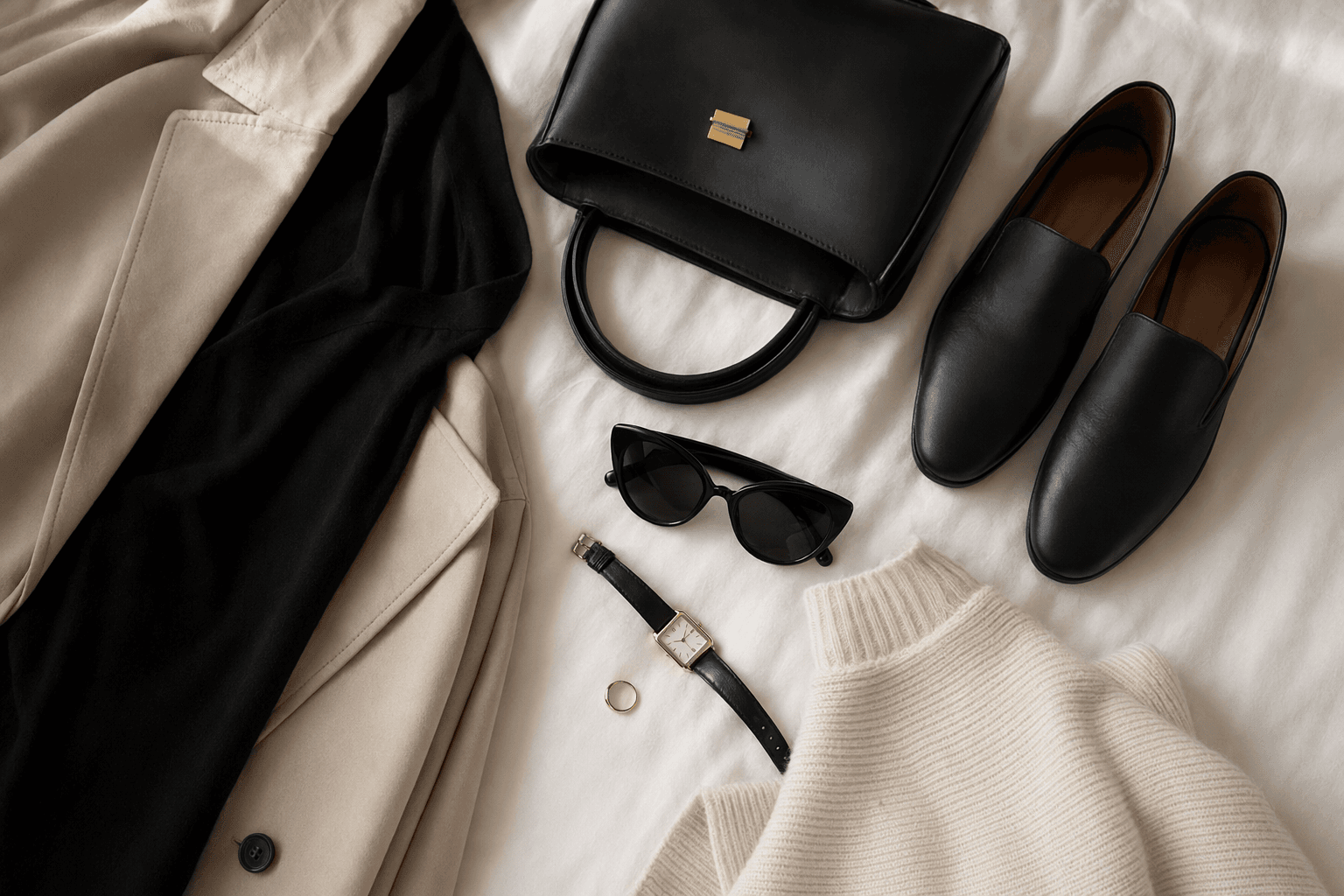
Tailoring is where the old-money feeling takes hold. A jacket with a defined shoulder, trousers that skim rather than cling, and hems that hit at the right point can make even the simplest outfit feel expensive. This is the place to invest in cut, because cut is what separates minimal from merely plain. In the right proportion, a blazer over jeans looks polished; in the wrong one, it looks borrowed.
Footwear matters just as much. Loafers and flats are the quiet finish that keeps the outfit grounded. They work because they do not compete with the clothes. A sleek leather loafer, a clean flat, or a restrained slingback gives the whole look a city rhythm that a more decorative shoe would interrupt.
What to skip when you want the look to feel current
The French-girl references that once looked effortless can now tip into cliché if you wear them too literally. A Breton stripe, a basket bag, and blue jeans worn together can still be pretty, but they no longer carry the same freshness. The more convincing version of old-money style in 2026 skips the costume and keeps the discipline.
That means avoiding pieces that are trying too hard to signal a nationality or a fantasy. Instead of a full-on Parisian shorthand, choose one polished detail at a time: a structured bag, a sleek belt, a gold earring with a clean shape, a coat with a strong lapel. When the accessories are thoughtful rather than obvious, the outfit feels richer.
Why this works better for real city dressing
New York minimalism has an edge that makes sense in motion. It works for commuting, stepping into a meeting, grabbing dinner, and moving through a day without changing identities. That matters, because the strongest style today is not the one that photographs best in isolation. It is the one that survives rain, heat, transit, office air-conditioning, and the simple fact of walking fast.
BoF has pointed out that fashion’s quiet-luxury moment has shifted attention away from logos and toward what those logos mean. That is exactly why this look lands. A logo is only useful if the rest of the outfit gives it restraint, otherwise it becomes noise. In New York minimalism, the symbol is the discipline itself.
That same practical direction is visible on the runway as well. Veronica Leoni’s Calvin Klein Collection remains rooted in tailored minimalism, which tells you where fashion’s center of gravity still lives. When a house built on understatement continues to feel relevant, it is because the clothes are speaking a language people still want to wear.
The French-girl stereotype is not disappearing, but it is losing authority as the default answer. New York minimalism offers a better old-money script for the moment we are in now: less costume, more cut; less nostalgia, more clarity; less polish for its own sake, more polish that actually gets you through the day.
This article was produced by Prism’s automated news system from verified source data, official records, and press releases, then run through automated quality and moderation checks before publishing. The system is built and supervised by the people who set the standards it runs under. Read our full AI policy.
Did this article answer your question?