Old Money Jewelry Guide Spotlights Heirloom Classics from Cartier, Tiffany, Boucheron
Old-money jewelry is leaning into heirloom restraint, with tennis necklaces, sculptural gold and house classics that work hard far beyond spring.
The new old-money rule: buy the piece that can outlast the outfit
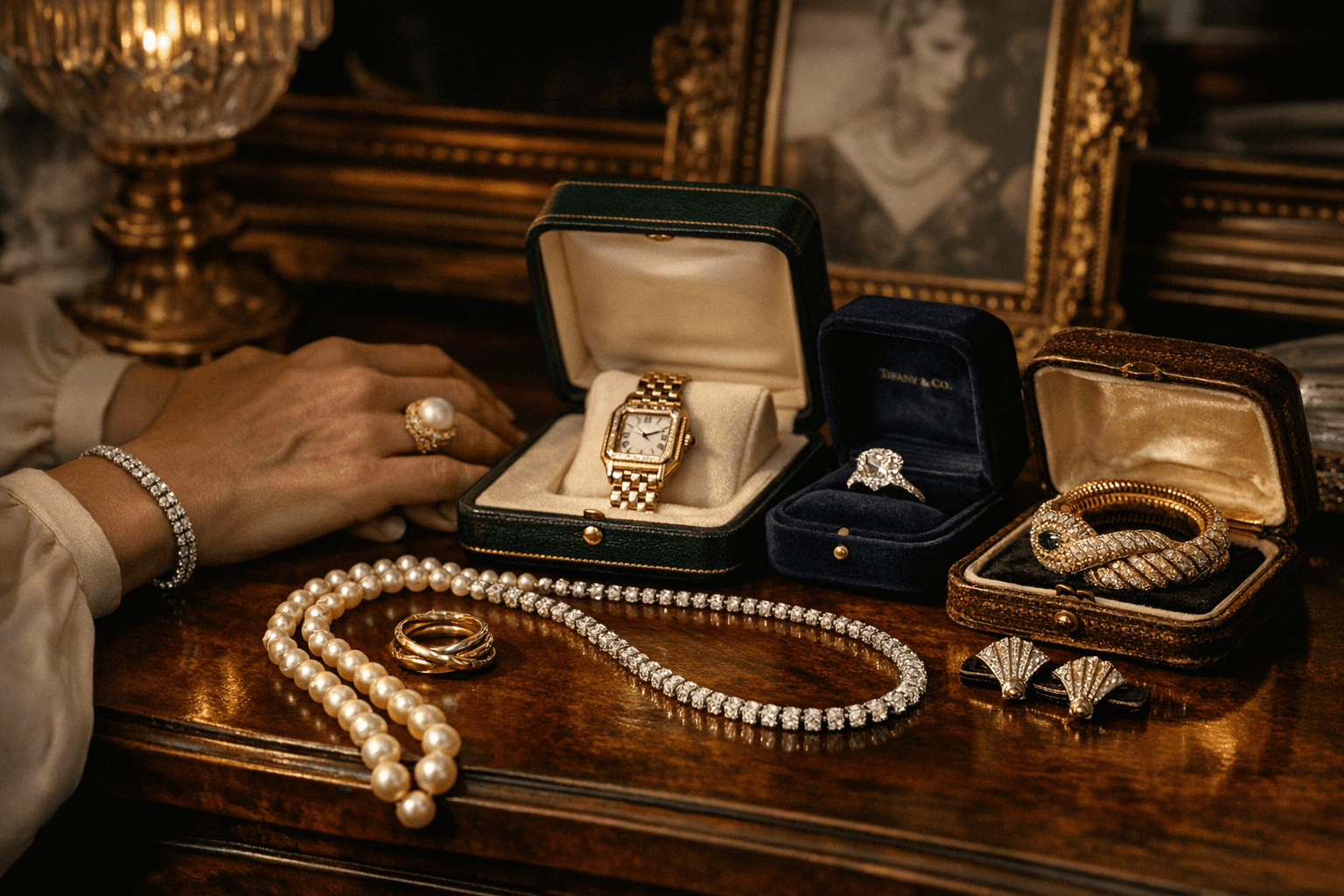
The smartest jewelry right now does not shout, it settles into a wardrobe and stays there. Spring 2026’s strongest ideas lean toward form, color, and materiality, but the old-money reading of the trend is simpler: choose pieces that look as if they have been worn for years, not weeks. That is why tennis necklaces, sculptural gold, signet rings, bangles, and a carefully chosen house classic from Cartier, Tiffany, or Boucheron feel especially relevant. They polish cashmere, sharpen shirting, and give evening basics the calm confidence of something already proven.
The appeal is practical as much as aesthetic. A tennis necklace sits close to the collarbone and disappears beautifully under a navy crewneck or an open Oxford shirt, which makes it far more useful than a dramatic statement strand. Sculptural gold works the same way, because a clean, solid shape reads intentional with a wool blazer at lunch and equally right with a black dress at night. Even the more decorative pieces in the mix, especially colored stones and tassel necklaces, feel more edited when they are paired with neutral clothing and restrained tailoring.
Tennis jewelry is the anchor piece
If you are building the most durable version of this trend, start with tennis jewelry. Tiffany calls its tennis bracelets timeless, expertly crafted essentials, and says the Tiffany Victoria collection uses graduated diamonds designed to catch light from every angle. That matters because the best tennis pieces do not rely on novelty. They rely on precision, symmetry, and enough sparkle to register in daylight without tipping into excess.
Wear a tennis necklace over fine cashmere when you want the neckline to stay clean. Let it sit against a camel sweater or a crisp white shirt, where the line of diamonds reads less like decoration and more like a finishing touch. A tennis bracelet does the same work at the wrist, especially when stacked with a watch or worn alone with a rolled shirt cuff. This is the kind of jewelry that earns wardrobe longevity because it works with basics instead of competing with them.
Sculptural gold is the easiest entry into quiet authority
Sculptural gold is the season’s most useful second act. It gives you shape without requiring color, and that makes it especially good for old-money wardrobes built around beige, navy, ivory, and black. Think of it as the jewelry version of a well-cut coat: the silhouette does the talking. A chunky cuff, a curved hoop, or a smooth dome ring can feel modern without being dated by the calendar.
This is also where the trend conversation gets more wearable. Industry forecasts for 2026 point toward cleaner stacking and more curated styling, which means one strong gold piece often looks better than five competing ones. Wear a single bold gold bangle with a cashmere turtleneck and tailored trousers. Pair a sculptural earring with a silk shirt and skip the necklace altogether. The result is polished, not precious, and that distinction is exactly what gives old-money style its appeal.
Signet rings and bangles bring the heirloom signal
Signet rings and bangles are the pieces that make an outfit look inherited, even when they are new. They have the visual weight old-money dressing depends on: solid, familiar, and quietly authoritative. A signet ring on the little finger or index finger looks best with a crisp shirting sleeve and a barely unbuttoned cuff, while a simple bangle adds structure to cashmere without making it feel dressed up.
These are also the pieces least likely to feel disposable. A signet ring suggests lineage, personal history, or at least the discipline to choose one emblem and live with it. A bangle does similar work because it reads as an object, not an accessory of the moment. Worn with a blazer, both pieces feel sharp; worn with an evening dress, they keep the look from becoming overly polished.
Colored stones and tassels are the seasonal accents, not the backbone
The spring story does include color, and that is where the fashion energy gets more noticeable. Colored stones can bring life to neutral clothing, especially when the rest of the look stays restrained. A single emerald, sapphire, or other saturated jewel at the throat or wrist can turn a simple shirting-and-trousers formula into something that feels considered. The trick is to let the color do one job only: punctuate, not dominate.
Tassel necklaces belong to the more directional end of the trend. They are flattering with open-neck evening basics and can add movement to a minimal dress, but they do not have the same longevity as a tennis line or a strong gold bangle. If you wear one, keep the rest of the look quiet. The necklace should bring texture and swing, not a full costume effect. That is the difference between a wardrobe piece and a trend spike.
The house classics that matter most
The old-money reading of spring 2026 also points back to houses with deep archive power. Cartier’s Tank line has been around for more than 100 years, and its clean rectangular form has long been associated with royal and celebrity style. Its design was influenced by the Renault FT-17 tank, which gives the silhouette a surprisingly modern, industrial logic beneath all that polish. That history is precisely why it still looks right with a blazer or a cashmere sweater today.
Boucheron offers a different kind of inheritance. Its 2026 Histoire de Style high-jewelry collection revisits founder Frédéric Boucheron and the maison’s couture heritage, and the brand describes the program as a way to reinterpret archives through themed high-jewelry collections. That kind of archive thinking is catnip for anyone who prefers jewelry with narrative weight. It is not about being flashy. It is about owning something that feels like it came with its own point of view.
Tiffany, Cartier, and Boucheron all understand the same old-money lesson: the strongest pieces are the ones that carry recognizable design codes without needing a logo parade. Tiffany’s diamond tennis pieces, Cartier’s disciplined Tank geometry, and Boucheron’s archive-driven high jewelry each offer a different path into the same goal, which is longevity with polish.
Why this season feels collectible rather than disposable
Who What Wear and Marie Claire both place spring 2026 jewelry inside a broader runway-led conversation, while JCK describes the season as one of “new maximalism.” That sounds like a contradiction until you look at how people are actually wearing jewelry now. The collecting impulse is there, but it is being filtered through restraint. Pieces are being stacked more carefully, mixed more deliberately, and chosen for how they will live with the rest of the wardrobe.
That is why old-money style fits this moment so well. It is not allergic to trend, it just insists on usefulness. The best spring 2026 jewelry can be worn with a cashmere sweater on Tuesday, a pressed shirting collar on Friday, and an evening dress on Saturday without feeling overworked. In a season full of sparkle, the real luxury is restraint that still knows how to shine.
This article was produced by Prism’s automated news system from verified source data, official records, and press releases, then run through automated quality and moderation checks before publishing. The system is built and supervised by the people who set the standards it runs under. Read our full AI policy.
Did this article answer your question?