Olivia Wilde makes old-money tailoring feel relaxed with Sambas
Olivia Wilde's suit-and-Sambas look shows how old-money tailoring stays sharp: muted tones, clean trouser lines and no athleisure tricks.
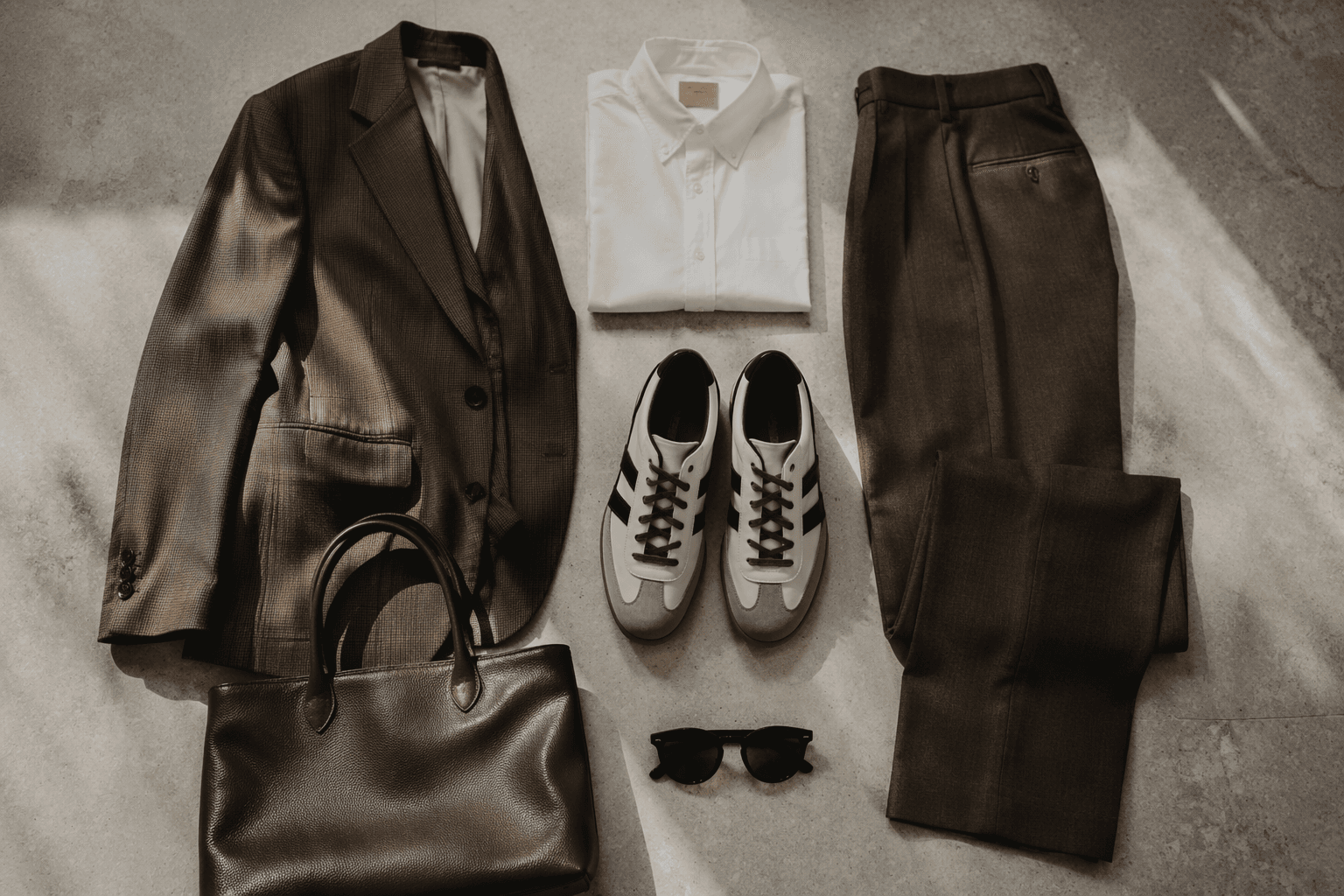
Olivia Wilde's suit-and-Sambas pairing makes a simple, very current argument: tailoring does not need heels to feel finished. The real question is whether this old-money shorthand still reads as polished, or whether the formula has started to feel overworked. The answer sits in the details, from a muted palette to a trouser line that stays clean and a complete absence of athleisure styling.
Why Olivia Wilde's look lands now
Wilde's outfit works because it treats the sneaker as punctuation, not a plot twist. The suit still does the heavy lifting, but the Sambas soften the temperature, giving the whole look the kind of ease that feels intentional rather than careless. It is the sort of styling that can move from a lunch reservation to a late dinner without demanding a costume change, which is exactly why it has real-life appeal.
Marie Claire framed the pairing as an it-girl style swap, and that is the right lens. Old-money dressing has always been about codes, not just clothes, and this one updates the code without throwing it out. The signal is still polish, but polish with a little daylight in it.
Why the Samba keeps resurfacing
The Samba has far more authority than the average fashion sneaker, and that history is part of why it keeps coming back. Adidas says Adi Dassler designed it in 1949, and the shoe debuted in the 1950s as an indoor soccer style built for icy, snowy pitches. WWD adds that the first Samba was worn in Germany during a 1950 soccer match, which gives the shoe a origin story rooted in function before fashion took over.
That background matters because Sambas never read like an accidental trend. They already carry the vocabulary of sport, street, and nostalgia, so they can sit under tailoring without looking like an afterthought. Marie Claire has continued to treat the shoe as a celebrity staple through 2025 and 2026, with Kendall Jenner, Kaia Gerber, Katie Holmes, Olivia Rodrigo, and Sofia Richie Grainge all helping keep it visible in the style cycle.
What makes the pairing feel old-money instead of try-hard
The difference between polished and overdone is not the sneaker itself. It is everything around it. Marie Claire's old-money shopping guide defines the aesthetic through tailored basics, striped sweaters, and quiet-luxury names like Hermès and The Row, and that tells you exactly why Sambas can work here: they sit inside a wardrobe that already values restraint.
To keep the look in the right register, the outfit needs a few nonnegotiables:
- muted color, so the eye lands on line and proportion rather than contrast
- clean trouser lines, with hems that skim rather than swamp the shoe
- zero-athleisure styling, meaning no sweatpants, no gym socks as a statement, no performance layers trying to turn the outfit into a hybrid
- tailoring that still looks tailored, whether that means a sharp blazer, a pressed trouser, or a suit that holds its shape from shoulder to ankle
When the sneaker is paired with a proper suit, it reads as a deliberate update. When it is paired with joggers, oversized technical layers, or anything that suggests a workout detour, the old-money reference collapses into costume.
The old-money code is changing, not disappearing
This is the part that matters most. Old money used to signal distance, polish, and a near-total commitment to formality. Now it signals discernment, the ability to know when to loosen the uniform without losing the inheritance of good taste. Olivia Wilde's look works because it understands that luxury today often looks less like rigidity and more like ease.
That is why the Samba is such a useful shoe in this conversation. It does not introduce noise; it lowers the volume. The flat profile keeps the silhouette grounded, while the history of the shoe gives it credibility that a random fashion sneaker would not have.
How to wear tailoring with Sambas without losing the plot
The safest and most stylish way to make this formula work is to keep every other choice disciplined. The sneaker should feel like a subtle change in register, not a rebellion.
A strong version of the look usually follows this logic:
1. Start with tailoring that already looks expensive, preferably in a muted or neutral tone.
2. Keep the trouser leg straight, clean, and deliberate, so the shoe sits neatly underneath.
3. Use one softening element only, and let that be the Samba.
4. Avoid sporty add-ons that pull the outfit toward athleisure.
5. If you want to nod more directly to the old-money wardrobe, anchor the look with a striped sweater or another tailored basic rather than anything trend-chasing.
The appeal is in the balance. The outfit still gives you the quiet authority of classic tailoring, but the sneaker makes it feel lived in, not staged.
Why this version of old-money style still feels fresh
The reason this pairing continues to resonate is that it answers a very modern styling problem: how to look composed without looking stiff. The Samba gives tailoring a softer landing, and Olivia Wilde proves that the result can still feel luxurious if the rest of the outfit stays disciplined. In a fashion moment crowded with loud sneakers and exaggerated styling tricks, the quietest move is often the smartest one.
This article was produced by Prism’s automated news system from verified source data, official records, and press releases, then run through automated quality and moderation checks before publishing. The system is built and supervised by the people who set the standards it runs under. Read our full AI policy.
Did this article answer your question?