Paris museum traces Thai royal dress, Queen Sirikit’s enduring style influence
A Paris exhibition turns Thai court dress into a lesson in quiet power, tracing how Queen Sirikit helped translate royal style into a modern language of luxury.
Queen Sirikit and the making of royal restraint
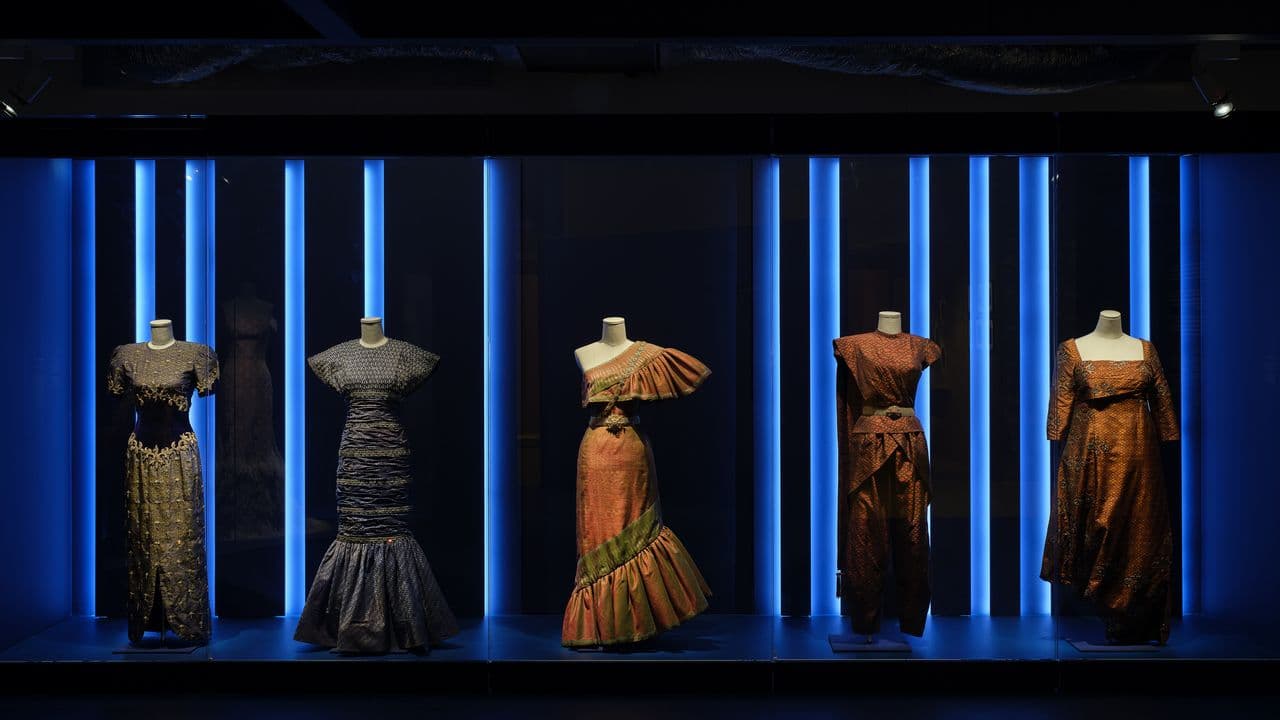
The most compelling thing about Thai royal dress is not its ornament but its authority. At the Musée des Arts Décoratifs in Paris, a new exhibition turns that authority into a visual argument, showing how Queen Sirikit helped transform court clothing into a national style language defined by craftsmanship, lineage, and disciplined elegance.
A court wardrobe with diplomatic reach
La Mode en Majesté: Royal Thai Dress - From Tradition to Modernity runs from May 13 to November 1, 2026, and is organized with the Queen Sirikit Museum of Textiles, SACIT, and the Royal Thai Embassy in Paris. It is framed as part of two anniversaries at once: the 340th anniversary of the first diplomatic mission and the 170th anniversary of formal Franco-Thai diplomatic relations, spanning 1856 to 2026. That context matters, because the exhibition is not simply about clothing in a museum case. It is about how dress carried Thai identity into international view and gave it a polished, unmistakable form.
Princess Sirivannavari Nariratana Rajakanya serves as patron of the exhibition and was photographed in Paris reviewing final preparations with the organizing team. That gesture signals continuity rather than nostalgia. The royal wardrobe here is treated as living cultural capital, not frozen costume, and the museum’s framing makes clear that the pieces on view come from the royal collection and trace the evolution of clothing at the Thai court.
Why Queen Sirikit still reads as a style force
Queen Sirikit’s influence reaches far beyond the usual language of royal glamour. In 1960, King Bhumibol Adulyadej and Queen Sirikit undertook a state visit to 15 Western nations that lasted roughly six to seven months, a tour that placed Thai court dress before an international audience at exactly the moment global fashion was becoming more visible, more photographed, and more systematized. Her wardrobe, created with Paris couturier Pierre Balmain, was not decorative diplomacy alone. It helped launch Thai silk and Thai court style onto the world stage.
That is what makes her legacy resonate now in the old-money register: the clothes did not shout. They established presence through cut, fabric, and coherence. Balmain’s tailoring and Queen Sirikit’s eye for presentation turned Thai dress into something that could move from palace protocol to the modern luxury marketplace without losing its sense of authority. The effect was soft power in the truest sense, a studied elegance that made heritage legible to the West while keeping its own codes intact.
How national dress was translated into modern luxury
The Queen Sirikit Museum of Textiles has previously described her 1960s project as the creation of a new national dress for Thai women, built from historic court textiles, archival photographs, film, and more than thirty examples from her own wardrobe. That is the crucial distinction. This was not a costume redesign for spectacle. It was a systems-level act of fashion authorship, one that took inherited materials and translated them into forms that could be worn by modern women and read as distinctly Thai.
Related accounts trace styles such as Thai Chakri, Thai Siwalai, and Thai Boromphiman to this period of royal patronage and historical research into Thai women’s dress. Each name carries the sense of a code rather than a trend. Thai Chakri, Thai Siwalai, and Thai Boromphiman now function like a lexicon of formality, where silhouette, drape, and ceremonial meaning matter as much as surface beauty. In the language of luxury, this is the difference between decoration and discipline.
What to look for inside the exhibition
The Musée des Arts Décoratifs says the show presents a unique exhibition on the clothing evolution at the Thai court. That phrasing is revealing, because it shifts attention from a single wardrobe to a broader lineage. Expect the display to read as a progression, with royal pieces showing how tradition was preserved while modernity was negotiated through dress. The most compelling museum narratives are the ones that let textiles do historical work, and here the fabrics themselves are the record.
Look for the way materials, structure, and ceremonial intent operate together. Court dress at this level is never just about prettiness. It is about whether a sleeve falls with enough gravity, whether a textile catches light without seeming loud, whether the overall effect suggests inheritance rather than impulse. That is the old-money code at its highest level: investment-minded restraint, rewearable authority, and pieces that communicate value without needing to announce it.
A legacy that traveled from court to the world stage
Queen Sirikit’s fashion influence was later recognized by the International Best Dressed List Hall of Fame in New York, a fitting acknowledgment for a woman whose style helped shape both national identity and global perception. The honor underscores what the Paris exhibition makes plain: her wardrobe was not an accessory to statecraft, but an instrument of it. She understood that dress could preserve heritage while also making a country visible in modern fashion systems.
That is why this exhibition matters beyond the museum setting. It shows how aristocratic codes become durable when they are grounded in textile knowledge, tailoring, and ceremony. In a fashion moment that often confuses excess with richness, Queen Sirikit’s legacy offers a more persuasive model: the quiet confidence of clothes that are historically informed, impeccably made, and socially fluent. In Paris, that language reads as both royal and unmistakably current.
This article was produced by Prism’s automated news system from verified source data, official records, and press releases, then run through automated quality and moderation checks before publishing. The system is built and supervised by the people who set the standards it runs under. Read our full AI policy.
Did this article answer your question?