Prada and Raf Simons redefine quiet luxury with stripped-back clarity
Prada turns jeans, T-shirts and blazers into status pieces by shrinking the silhouette and stripping out noise. The new luxury is clarity, not flash.
Prada just did the most Prada thing possible: it took jeans, T-shirts, blazers and leather blousons, stripped them to the bone, and made restraint look expensive. The Spring/Summer 2027 menswear show, CLARITY, landed on June 21, 2026 at Fondazione Prada in Milan during Milan Men’s Fashion Week, with Miuccia Prada and Raf Simons treating ordinary clothes like the hardest luxury objects to get right.
Clarity beats noise
Prada Group framed the collection around “the notion of choice” and “conscious decision,” then pushed the idea further by calling the clothes “fundamental, intentional and meaningful.” The house said the point was an “exact and highly-controlled silhouette,” with accessories integrated into the garments instead of bolted on like afterthoughts, and described the refusal of excess as “a positive act” and an “antidote to complication.” That is the real shift here: luxury is no longer being sold as more stuff, but as better editing.
The new uniform is smaller, sharper, and more expensive-looking
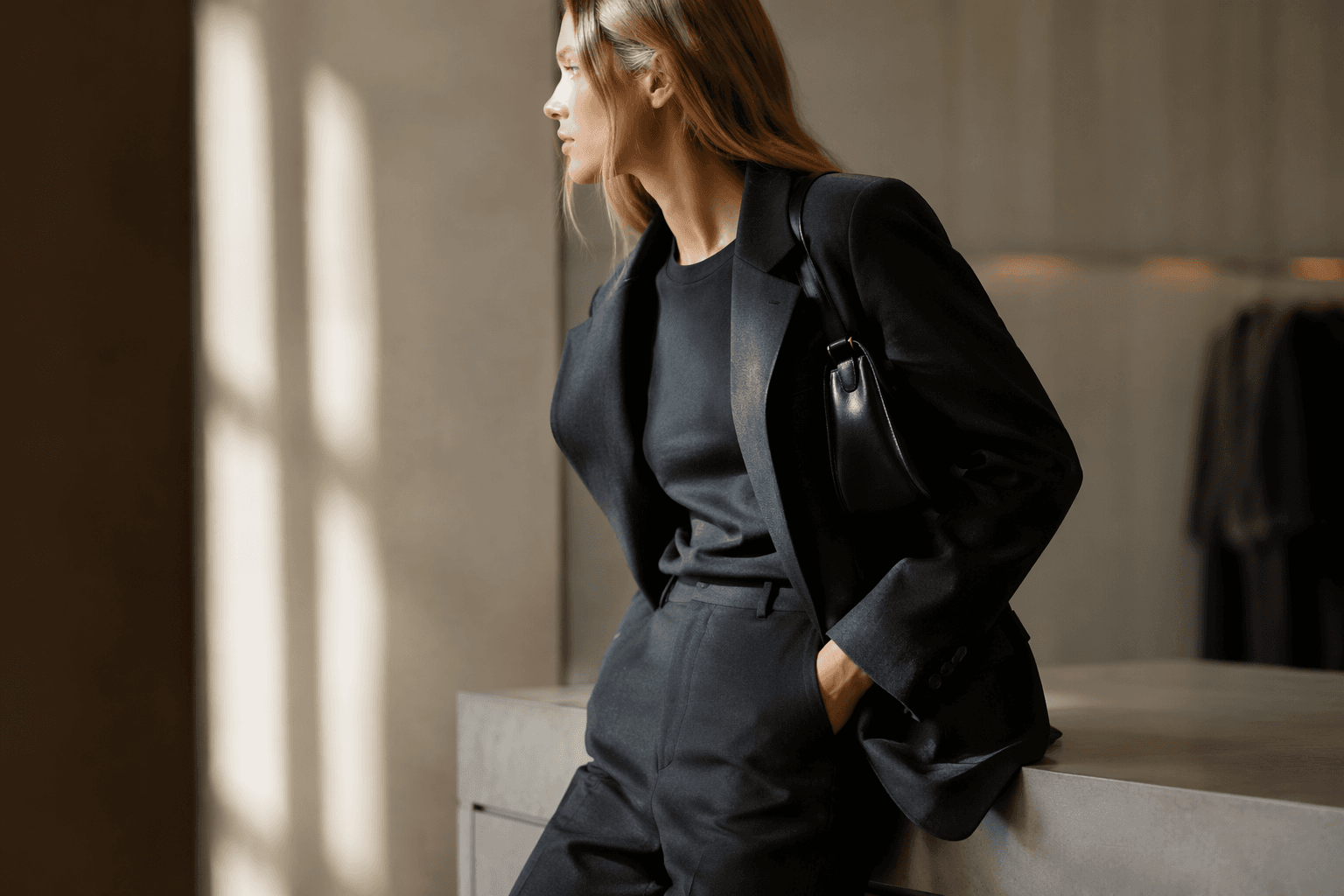
The shape language is the flex. AP described the core look as slim, cropped jackets and five-pocket trousers, often pulled together with timeless blazers or leather blousons, while the palette leaned into buttery leather and monochromes of antique white, gray, burgundy and turquoise. Only a handful of the closing looks used actual denim, which is exactly why the clothes feel rarer than obvious luxury: Prada is not asking denim to be casual, it is recoding it as a status fabric through proportion, discipline and styling control.
Several female models also walked the menswear show, which made the clothes read less like a rigid male uniform and more like a shared language. That genderless cast sharpened the point that the collection is not about macho volume or old-school peacocking, but about a silhouette so controlled it can cross categories without losing authority.
Jeans as a cultural argument
Prada did not treat denim like a trend fabric. The brand called jeans universal and “historical,” linking them to sailors and workers long before fashion turned them into shorthand for casual ease, and Simons compared the logic to “pasta pomodoro,” the kind of thing that works because it is elemental, not embellished. WWD also made the deliciously telling point that Miuccia Prada says she has never worn jeans, while Simons spent about 20 years in wool trousers before coming back to denim, which is why this reads less like nostalgia and more like a very deliberate reset.
There is an Adolf Loos severity to that move too, the kind of anti-ornament instinct that treats structure as the point and decoration as a distraction. Prada is not quoting modernism for decoration’s sake; it is using that logic to make basics feel intellectually charged, which is exactly how a T-shirt graduates from background item to status object.
Why this matters in old-money fashion
This is where Prada gets sharpest. Old-money style has always rewarded clothes that whisper competence instead of begging for attention, and CLARITY pushes that code into a cleaner, more disciplined lane where the appeal comes from cut, proportion and the discipline of styling, not from visible wealth-signaling. AP noted that Prada wanted menswear “for people on the street, not just fashion insiders,” while Simons said the show was about “breaking the perception of what is perceived as typical luxury in high fashion.” That is the whole game: the next prestige uniform may be a pair of jeans, a T-shirt and a blazer, but only if the fit is so exact it looks almost private.
The collection also fit a longer Prada pattern. Raf Simons joined the brand as co-creative director in 2020 with equal responsibility for creative input and decision-making, and BoF identifies Miuccia Prada as executive director of the Prada Group, co-creative director of Prada and creative director of Miu Miu. That structure explains why the house can keep testing the edge of luxury without losing its nerve: it knows how to turn reduction into authority, not austerity.
Prada’s biggest message this season is brutally simple. Ordinary clothes are not the opposite of luxury anymore, they are the place where luxury now has to prove itself, and Prada is making that proof look almost impossible.
This article was produced by Prism’s automated news system from verified source data, official records, and press releases, then run through automated quality and moderation checks before publishing. The system is built and supervised by the people who set the standards it runs under. Read our full AI policy.
Did this article answer your question?