Preppy Style Returns as 2026's Dominant Look, Driven by Gen Z Demand
Search interest in preppy style surged 200% since early 2025. Here's the modern Ivy dressing guide that makes the look feel inherited, not costumey.

Pinterest search data doesn't lie, and right now it's screaming Ivy League. Search interest in preppy style has surged over 200% since early 2025, and the numbers on the sales floor are just as loud: Brooks Brothers posted double-digit growth in tailored apparel after launching its "Make It Yours" campaign, opening its 195 Broadway flagship, and dropping a University Shop collection aimed squarely at Gen Z. WWD projects the trend has at least two more years of runway left. This is not a micro-moment or a TikTok blip. Preppy is 2026's dominant aesthetic, and the customers making it happen are younger, more gender-diverse, and more deliberate than any generation that wore a blazer before them.
The challenge isn't whether to buy in. It's how to wear it without looking like you raided a Halloween costume bin. The line between "Ivy League" and "Ivy League costume" is narrower than you think, and it lives entirely in the details: the roll of a collar, where your trousers break, the weight of your knit, and exactly when you reach for a crest.
The Cultural Shift Behind the Comeback
The aesthetic making waves at Prada, Miu Miu, Chanel, Dior, and Lacoste didn't appear from nowhere. It's tracking a real behavioral shift happening among founders and startup professionals who've quietly retired the tech-bro hoodie. The new status signal in those circles reads "I built this" rather than "I disrupted this": quarter-zips, polo knits, rugby shirts, and unstructured blazers that project competence without flash. There's something sharp happening when Silicon Valley's uniform migrates from a Patagonia vest to a merino cable knit: it signals that polish, not just product, matters again.
Gen Z is driving the same shift on campuses and in editorial, but with a gender-fluid lens that heritage brands are only beginning to catch up to. Brooks Brothers' "Make It Yours" campaign features a cast of talent that spans generations and disciplines, including actor Leslie Bibb, fashion entrepreneur Nick Wooster, and model and advocate Bethann Hardison. The campaign articulates a "lifestyle-meets-heritage" mindset, offering a modern take on traditional fashion that crosses genders and generations, suits styled as his and hers, classics reframed as personal rather than institutional. It's working. The brand's University Shop collection opened the door to a customer who'd never previously considered walking into a Brooks Brothers store.
The "Inherited, Not Bought" Principle
The single most important concept in modern Ivy dressing is this: everything should look like it belongs to you, not like you recently discovered the category. Clothes that look inherited carry a specific ease. They're slightly softer, slightly more considered, slightly less uniform. Clothes that look costumey are crisp to the point of stiffness, matchy in ways real wardrobes rarely are, and drenched in branding.
The distinction sounds vague until you look at the specifics:
- Collar roll: On an Oxford cloth button-down (OCBD), the collar should roll softly between the buttons, not lay flat and pressed. A stiff, ironed-down collar reads like a uniform. A natural roll reads like a shirt that's been worn and loved.
- Trouser break: Go minimal to no break on straight chinos. A clean, slightly cropped hem sitting just above the ankle creates the kind of effortless proportion that looks considered rather than inherited from your father's closet. Avoid a heavy stack of fabric pooling over the shoe.
- Knit weight: Chunky cable knits signal comfort and heritage; fine-gauge merinos read as office-appropriate and refined. The mistake most people make is defaulting to a mid-weight option that does neither job well. Pick a lane based on the occasion and commit.
- Crest usage: One crest, maximum, and it should be earned or incidental, not the centerpiece of the outfit. A blazer with a school or club crest works. A blazer with a crest over a polo with a crest over a crest belt is a costume.
The 5-Piece Capsule That Does Everything
The whole Ivy wardrobe can be built around five foundation pieces: an Oxford cloth button-down shirt, an unstructured navy blazer, flat-front chinos, leather penny loafers, and a cable knit sweater. The strength of this capsule is that each item multitasks across formality levels, seasons, and the two outfits detailed below.
- Oxford cloth button-down shirt: The foundation of everything. The classic Oxford shirt as we know it today is said to have been created by Brooks Brothers. Buy it in white or light blue, in a relaxed but not oversized cut. The collar should be button-down, never spread. It goes under blazers, under cable knits, and alone.
- Navy blazer: Unstructured is the 2026 directive. A soft-shouldered, unlined or half-lined blazer in a solid navy reads as contemporary; structured, padded, double-breasted versions push toward costume territory. Two-button or three-roll-to-two only. Skip the brass nautical buttons; plain horn or covered buttons keep it versatile.
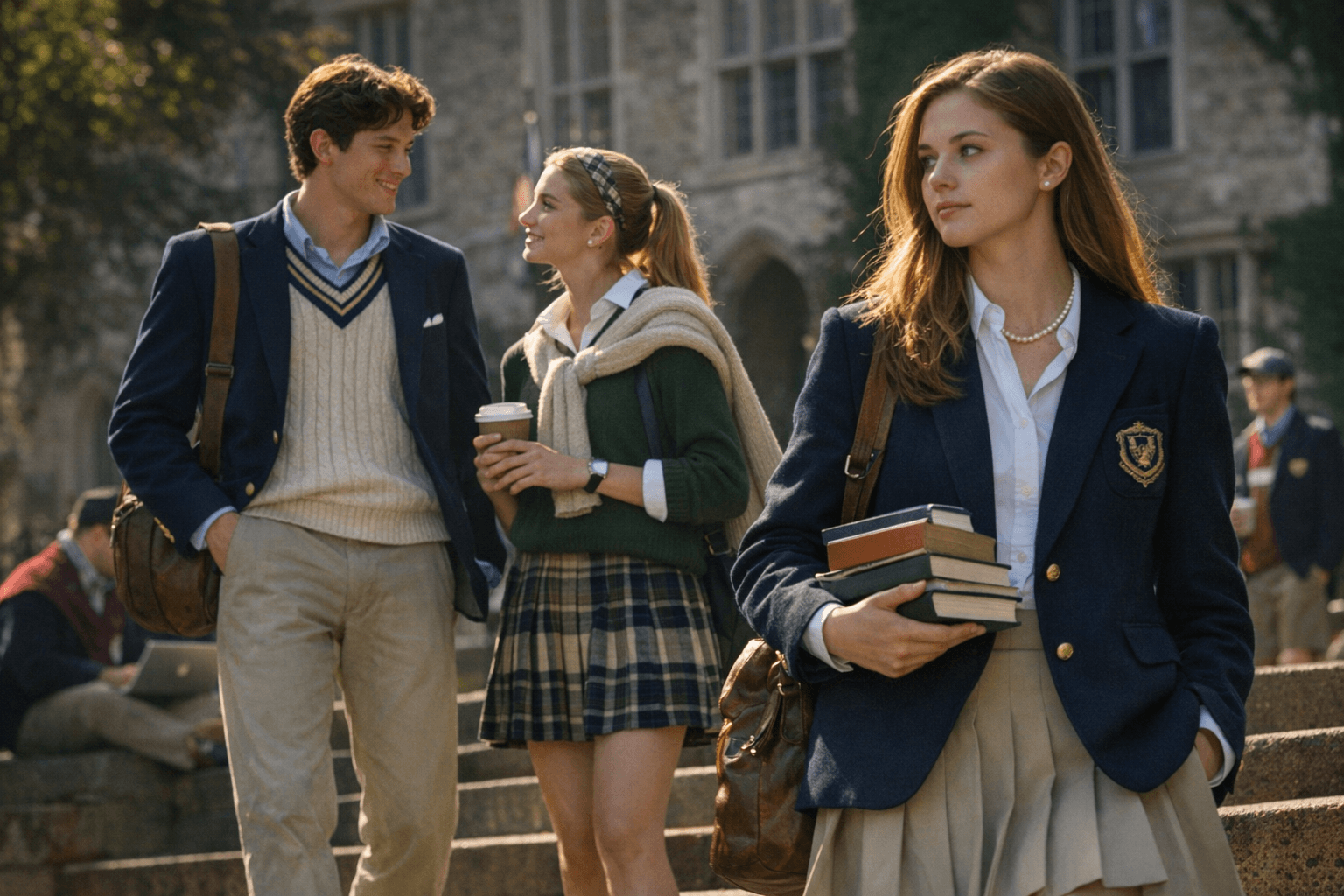
- Straight chino: Flat-front, straight-leg, in khaki, stone, or olive. In 2026, relaxed cuts feel more authentic than skinny fits; the proportions are closer to the original Ivy silhouette. Wear them with a clean hem, no cuffing unless the trouser is cut specifically for it.
- Leather loafer: Penny or bit loafer in tan or burgundy calfskin. The shoe should show some life. A pristine, box-fresh loafer undercuts the whole "inherited" premise. Wear with no-show or low crew socks. White athletic socks are everywhere in editorial right now, but they work only if the rest of the outfit earns the contrast.
- Cable knit sweater: Cream, navy, or camel. Worn over the OCBD with just the collar visible, or layered under the blazer for texture. The cabling should be traditional: thick, defined columns, not exaggerated or chunky to the point of overshadowing the rest of the outfit. Natural wool or a wool-cotton blend wears better than acrylic, which flattens and pills fast.
Outfit 1: The Office
Build the office look from the blazer up. Start with the white OCBD, collar rolled naturally and not pressed, tucked into the straight khaki chino with a clean minimal break. Layer the navy blazer over the top, unstructured enough that it doesn't read as a suit orphan. Keep the knit out of this equation; the blazer is doing the layering work. Finish with the burgundy penny loafer and thin crew socks in navy or charcoal.
The key move here is restraint: no tie, no pocket square, no crest. Let the silhouette carry the weight. This is the outfit that founders are wearing into board rooms as a direct counter to the hoodie-and-sneaker mode of the previous decade. It reads polished without reading corporate, and that balance is exactly what makes it land.
Outfit 2: Travel
For travel, swap the blazer for the cable knit. The cream or camel cable knit goes over the OCBD, collar visible above the neck, paired with the stone or olive chino and the tan penny loafer. The cable knit does double duty as warmth in transit and as the visual anchor of the look in whatever destination context you land in.
This outfit works precisely because it doesn't try to be airport-casual. The volume of the cable knit adds enough visual interest that the overall effect feels intentional rather than thrown-together, and the neutral palette keeps it from looking overdressed in most environments. It packs flat, arrives without wrinkles, and requires nothing from a hotel iron. That's Ivy pragmatism in practice.
Why the Price Spread Matters
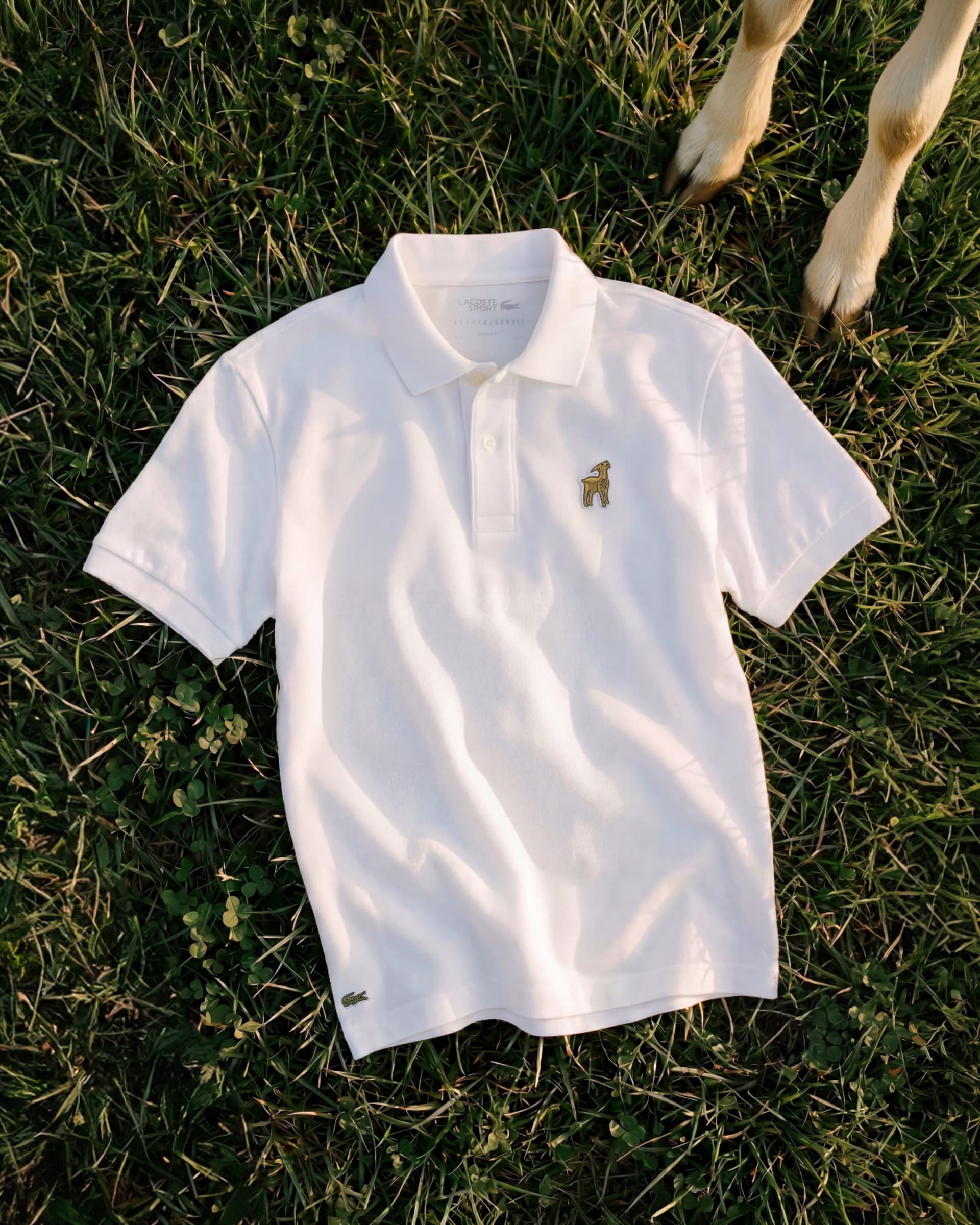
One of the more interesting commercial dynamics of this trend is the $40-to-$4,000 price range that brands are actively spanning. A rugby shirt from Lacoste and a cashmere cable knit from a heritage knitwear house can coexist in the same wardrobe, and in 2026, that layering of accessible and considered pieces is actually the more credible approach. Head-to-toe luxury prep looks purchased rather than accumulated. The goal is a wardrobe that tells a story of taste over time, which means mixing price points isn't a compromise. It's the point.
That democratization of the look is also what's sustaining it past the typical trend cycle. When a Prada runway and a Brooks Brothers University Shop are pulling in the same direction across a $3,960 price gap, the aesthetic has enough structural support to last beyond a single season. WWD's two-year projection isn't optimistic. It's conservative.
This article was produced by Prism’s automated news system from verified source data, official records, and press releases, then run through automated quality and moderation checks before publishing. The system is built and supervised by the people who set the standards it runs under. Read our full AI policy.
Did this article answer your question?