Quiet luxury returns as confidence becomes fashion's real status symbol
Quiet luxury is back, but the real flex is composure: fit, restraint and repetition now read as status more loudly than logos or waitlists.
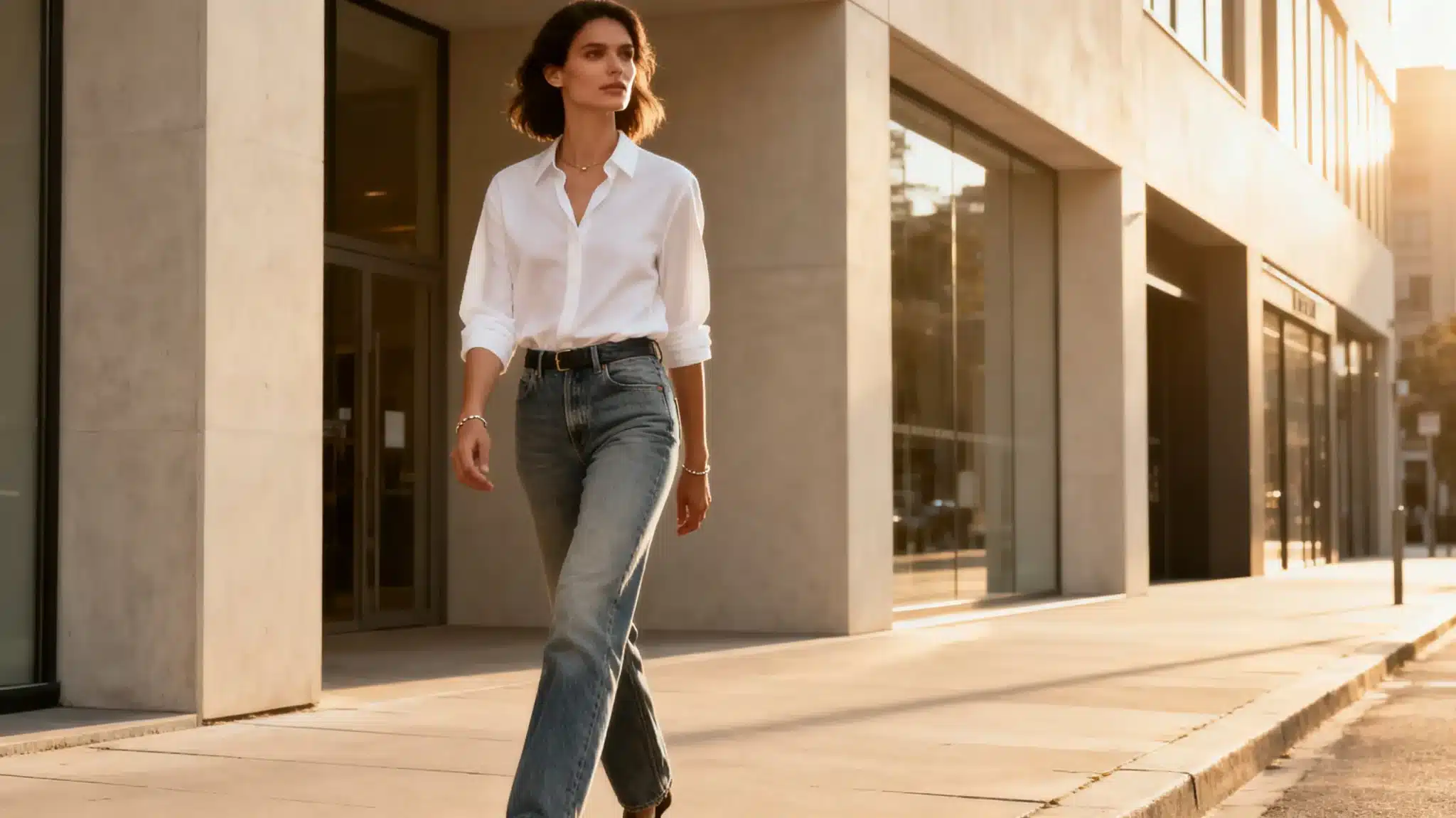
The sharpest status symbol in fashion is no longer a monogram. It is the woman who looks completely at ease in a white shirt, a clean shoulder line, and trousers that fall exactly where they should, as if luxury were something she has already internalized. That is the real pivot behind quiet luxury: not the disappearance of status, but its relocation from purchase to performance.
The new status code
Copenhagen Fashion Summit’s argument is the clearest articulation of the shift. Fashion status is moving away from logos and waitlists and toward ease, composure, and confidence, which means the clothes matter most when they look almost effortless. A simple shirt can now carry more social authority than an obvious emblem if it is cut well, pressed sharply, and worn with the kind of posture that suggests nothing needs to be proved.
That is why old-money dressing still has such force. It flatters inherited-style wardrobes, where repetition is not a flaw but a signal, and where restraint reads as discernment rather than lack. The person who returns to the same cream knit, the same navy blazer, the same leather loafer, is performing a different kind of wealth, one that is legible through discipline, not display.
Why quiet luxury still feels new
Quiet luxury is not a new invention. It has long been described as the old-money aesthetic or stealth wealth, and Forbes traces the psychology of status signaling in clothing back to sumptuary laws in the Middle Ages. That history matters because it reminds us that fashion has always been about who gets to wear what, and who gets to look as though they never had to ask permission.
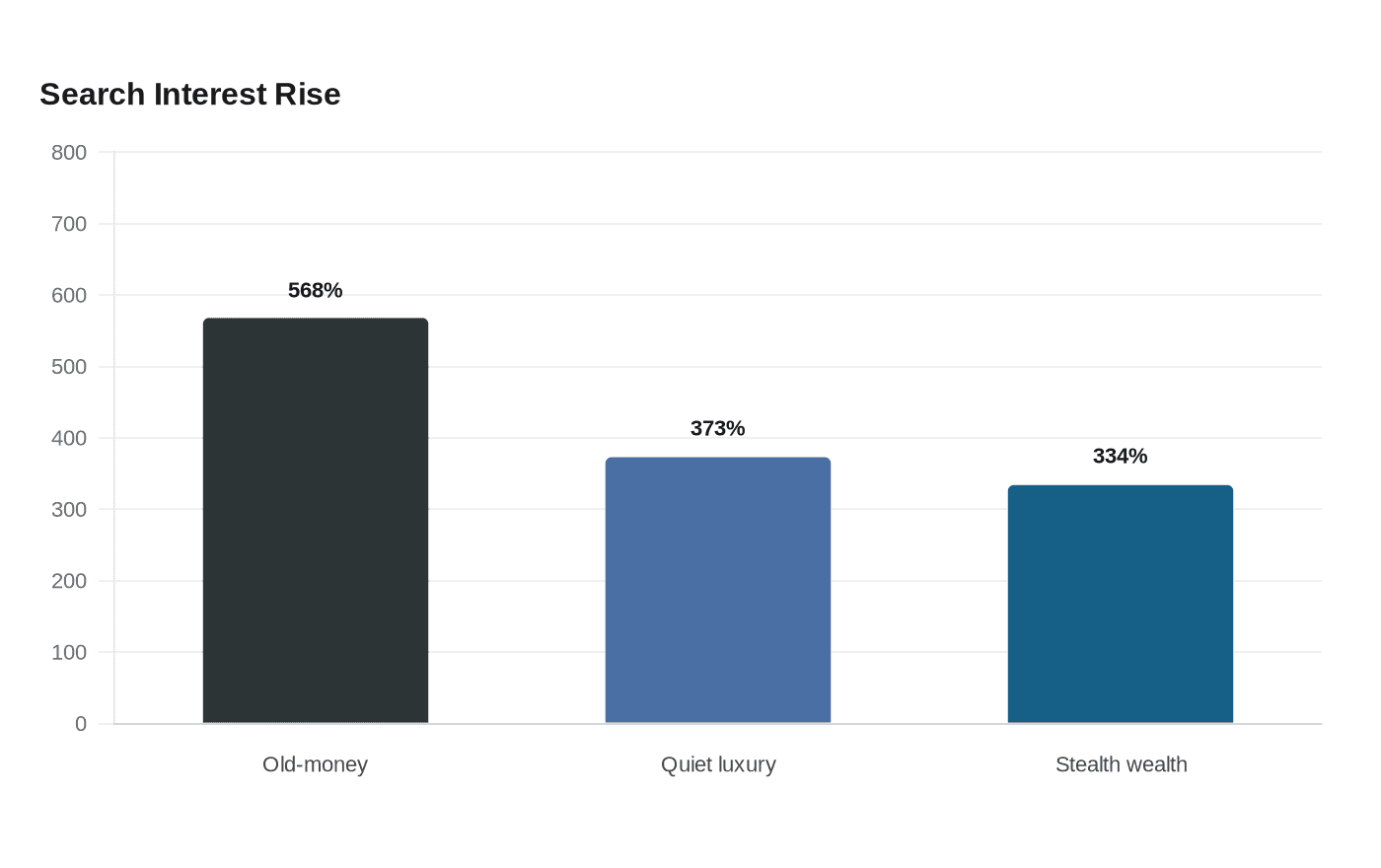
What changed in 2023 was the temperature of the conversation. Google Trends and fashion-search data showed sharp interest in “quiet luxury,” “stealth wealth,” and “old money style,” while one 2023 account reported searches for “old-money style” rising 568 percent, “quiet luxury” 373 percent, and “stealth wealth” 334 percent. Lyst’s year-end coverage tied that demand to a broader cultural fatigue with overt branding, and to moments that turned restraint into a shared visual language, from Succession to Gwyneth Paltrow’s ski trial.
That is the difference between minimalism and status dressing. Minimalism can look austere; quiet luxury looks assured. The clothes are not stripped down to erase identity. They are pared back so the wearer, not the label, carries the authority.
The market made understatement feel credible
The luxury market helped make the shift stick. The Business of Fashion and McKinsey described 2023 as a period of global slowdown and consumer caution, and later Financial Times coverage said the sector lost around 20 million consumers as shoppers cut back, traded down, or moved spending toward experiences and pre-owned luxury. When even affluent buyers become more selective, the old display model starts to look noisy.
That is where quiet luxury gained practical power. It did not ask consumers to abandon status; it offered a less brittle way to express it. In a market that felt less exuberant, understatement became believable, and credibility is often what transforms a trend into a dress code.
The Row’s Margaux bag is the perfect case study. Lyst reported that searches for the bag rose 63 percent in the fourth quarter of 2023, making it the breakout object in a luxury landscape increasingly suspicious of obvious branding. It was expensive, desirable, and unmistakably polished, yet its appeal came from shape, leather, and proportion rather than flash. That is old-money logic translated for the algorithm age.
How confidence gets read in real life
Quiet luxury is only convincing when the body agrees with the clothing. Confidence shows up in posture first, then tailoring, then restraint. A jacket that sits cleanly at the shoulder, a sleeve that lands at the wrist, a hem that does not fight the shoe, these details communicate more social fluency than a stack of logos ever could.
The other signal is repetition. People who know how to dress with inherited ease tend to return to the same silhouettes and the same simple pieces, not because they are boring, but because they understand proportion and consistency. A crisp white shirt, a fine-gauge sweater, straight-leg trousers, a cashmere coat, these pieces work hardest when they are worn often enough to look lived in, not staged.
- Fit should look natural, never squeezed.
- Fabric should drape cleanly, especially in wool, cashmere, silk, and poplin.
- Color should stay disciplined, with ivory, navy, camel, charcoal, and black doing most of the work.
- Accessories should sharpen the look, not compete with it.
- Repetition, done with intention, reads as confidence.
This is why the old-money wardrobe flatters the current moment better than conspicuous luxury does. It depends on composure, and composure is harder to fake than a logo. A person can borrow a bag; they cannot easily borrow the calm that makes a coat look expensive.
Why the quiet-luxury mood keeps winning
What makes this moment distinct is that the clothes are no longer asking to be admired from across the room. They are asking to be understood up close, where the quality of the cloth, the precision of the fit, and the refusal of excess become the real evidence of taste. That is a smarter, more resilient form of luxury, especially in a market that has become more cautious, more selective, and more fluent in resale.
Quiet luxury endures because it updates the old-money code without emptying it of meaning. It says that status is not just what you buy, but how you inhabit what you wear, and that is why ease now carries more social power than a logo ever could.
This article was produced by Prism’s automated news system from verified source data, official records, and press releases, then run through automated quality and moderation checks before publishing. The system is built and supervised by the people who set the standards it runs under. Read our full AI policy.
Did this article answer your question?