Ralph Lauren Unveils Timeless by Design 2030, Its Refreshed Sustainability Roadmap
Ralph Lauren's new Timeless by Design 2030 commits to a 30% cut in absolute emissions from a 2020 baseline and life-skills programs for 250,000 supply-chain workers.
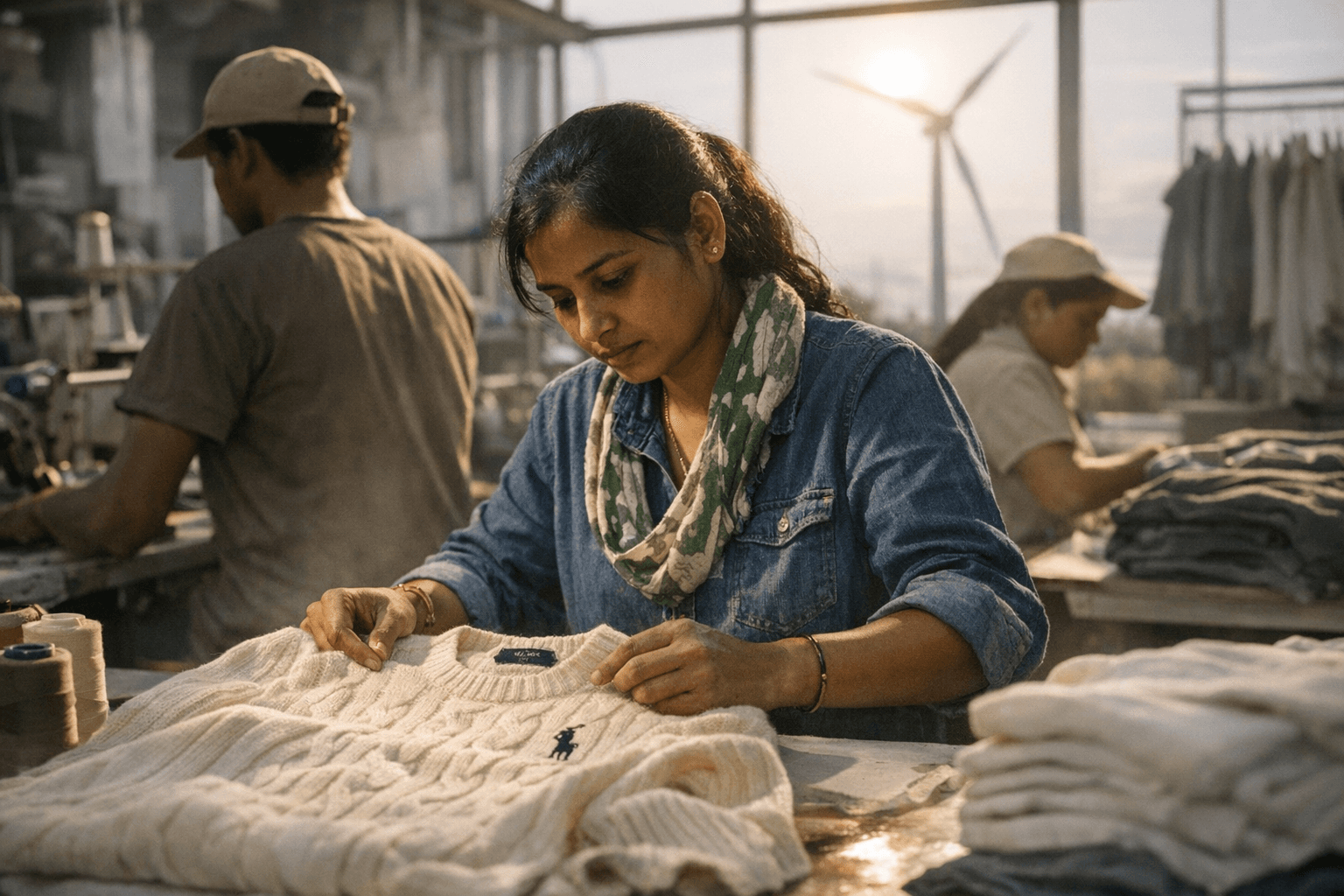
Ralph Lauren Corporation announced the next phase of its Global Citizenship & Sustainability strategy, Timeless by Design 2030, a five-year roadmap that trades sweeping aspiration for specific, measurable commitments across emissions, materials, worker wellbeing, and supply-chain accountability.
Guided by the company's purpose "to inspire the dream of a better life through authenticity and timeless style," Timeless by Design 2030 is a focused, intentional approach to driving positive impact across Ralph Lauren's value chain. The strategy is built around four pillars, each with clear, measurable goals, and each anchored by a flagship program reflecting where Ralph Lauren can make a unique and positive impact. Those pillars are Partner for Impact, Protect Natural Resources, Engage and Enable Teams, and Care for Communities.
The emissions target is the headline number. Ralph Lauren will retire its 2040 net-zero goal in favor of setting rolling five-year GHG reduction milestones, with a near-term focus on its current SBTi-validated 2030 goal to reduce emissions by 30% from its FY20 baseline. That commitment covers absolute Scope 1, 2 and 3 emissions, meaning the reduction must come from the full breadth of the company's operations and supply chain, not from offsets alone.
The worker wellbeing targets are equally concrete. Katie Ioanilli, chief global impact and communications officer at Ralph Lauren Corp., said: "By investing in the resilience of the people who shape our business, the communities we serve and the resources that make our products possible, we are reinforcing the long-term strength and durability of Ralph Lauren." To back that up operationally, the company has set a goal to make empowerment and life skills programs available to 250,000 workers across its supply chain by the end of FY31, alongside a parallel commitment to ensure all strategic and key suppliers have the capabilities and systems in place to deliver fair and timely compensation by the same deadline.
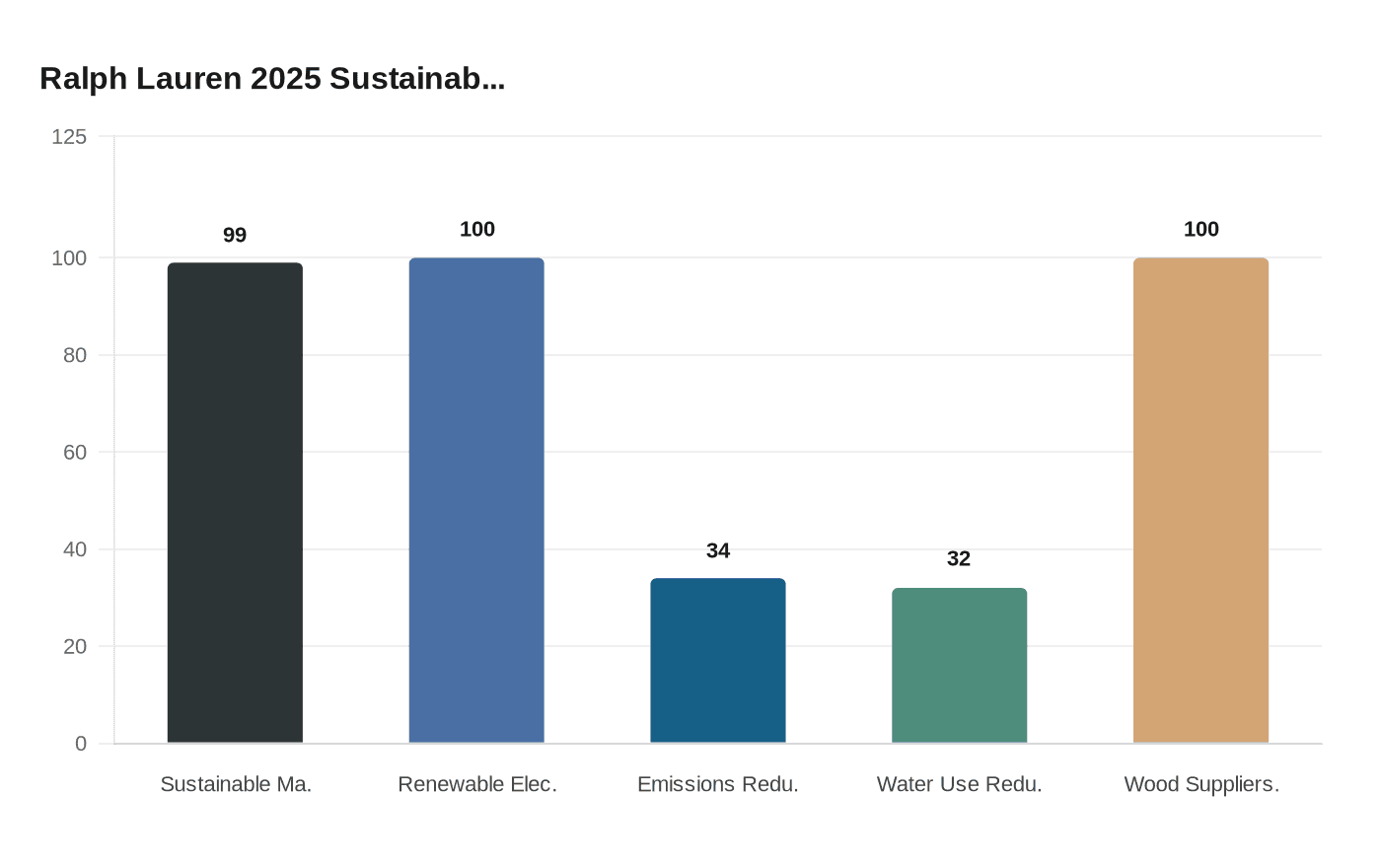
On materials and operations, the targets are framed as standards to maintain rather than new ground to break, which reflects just how far Ralph Lauren has already moved. Some targets reached under its prior strategy by the end of 2025 include ensuring 99 percent of production met at least one sustainable material criterion, achieving 100 percent of main wood suppliers using sustainably sourced substrates for new store interiors, and surpassing climate targets with a 34 percent reduction in emissions from a 2020 baseline, 100 percent renewable electricity across owned facilities, and a 32 percent reduction in water use. The new roadmap codifies those gains: 100 percent preferred material attributes for key materials, 100 percent recyclable, reusable, or preferred-attribute packaging, no on-site coal consumption at Tier 1 and Tier 2 manufacturing facilities, and greater than 90 percent waste diversion at distribution centers.
Under the Partner for Impact pillar, the company is focusing on partnerships that will help Ralph Lauren reduce carbon emissions and water use, expand empowerment and life skills programs for workers throughout its supply chain, and strengthen strategic supplier relationships. Design With Intent, the company's work to integrate culturally sustainable design into its products and storytelling, is the flagship program, with a goal of integrating it within seasonal product launches across brands on a sustained basis by the end of 2031.
Timeless by Design 2030 outlines Ralph Lauren's priorities for the next five years and enables its Next Great Chapter: Drive strategy, with the company measuring and reporting progress annually, aligned to its fiscal year. For a brand that has long sold the idea of permanence, the shift from a single distant net-zero horizon to rolling five-year accountability windows is the most telling structural change of all.
This article was produced by Prism’s automated news system from verified source data, official records, and press releases, then run through automated quality and moderation checks before publishing. The system is built and supervised by the people who set the standards it runs under. Read our full AI policy.
Did this article answer your question?