Royal Ascot 2026 style guide, cream tailoring and strict dress codes
Ascot still rewards polish over flash: cream tailoring, monochrome and restrained prints modernize the ritual, while the Royal Enclosure rules keep costume dressing out.
Royal Ascot remains one of the last public places where dress can still confer social credibility, not just visual impact. The 2026 fashion message is clear: The Art of Dressing Well, fronted by Erin O'Connor MBE and creative director Daniel Fletcher, is less about spectacle than about precision, with Bright Tomato introduced as the first official Colour of the Year to sharpen, not overturn, the code.
The occasion still sets the tone
Royal Ascot 2026 runs from Tuesday 16 June to Saturday 20 June at Ascot Racecourse in Berkshire, and that five-day stretch still carries the weight of old-world ceremony. Ascot says the racecourse was founded in 1711 by Queen Anne, who saw the heath as ideal for horses to gallop at full stretch, and the first Royal Meeting took place in 1768. That history matters because Ascot is not a neutral backdrop; it is an institution where dress is part of the performance.
The scale is part of the signal too. Ascot describes Royal Ascot as Britain’s most popular race meeting, welcoming in excess of 250,000 racegoers across five days, with more than 60,000 attending Gold Cup Day on Thursday. It is also the most valuable meeting in Britain, with £10 million in prize money, 8 Group One races and 19 Group races in total. In other words, this is not simply a society outing with hats; it is a major sporting and social calendar date where clothing carries meaning because the room is paying attention.
What the Royal Enclosure still demands
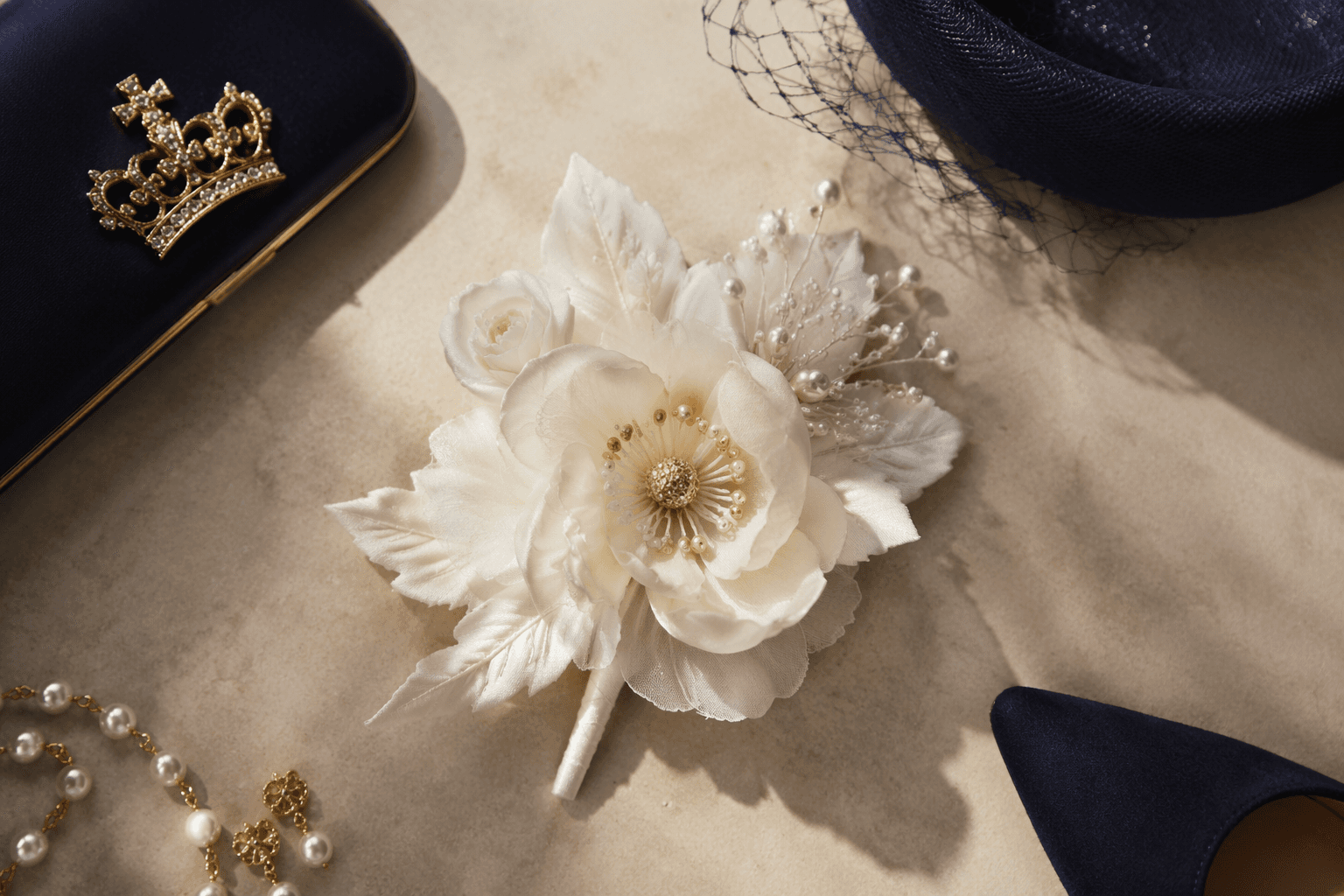
The Royal Enclosure remains the sharpest test of whether you understand the code or are merely borrowing the aesthetic. Women must wear a dress or skirt just above the knee or longer, shoulder straps must be at least 1 inch, or 2.5cm, wide, and hats are required. Fascinators are not permitted in the Royal Enclosure, which is one of those small but telling rules that separates genuine adherence from borrowed glamour.
There is room for modernity, but only inside the rails. Trouser suits and below-the-knee jumpsuits are allowed if they meet the strap and length requirements, which means the silhouette can be updated without loosening the formality. Fancy dress, novelty clothing and branded or promotional pieces are not permitted on site in the Royal Enclosure, and that prohibition is exactly why the smartest guests look restrained rather than theatrical. If you want to read as polished, the dress code asks for composition, not volume.
There is also a practical note built into the etiquette. Guests with medical conditions can contact the access officer to discuss accommodations, a reminder that the code is formal but not thoughtless. Even that detail fits Ascot’s larger logic: the institution is strict, but it knows how to accommodate without collapsing the dress standard that makes the place feel special.
Cream tailoring is the safest modern move
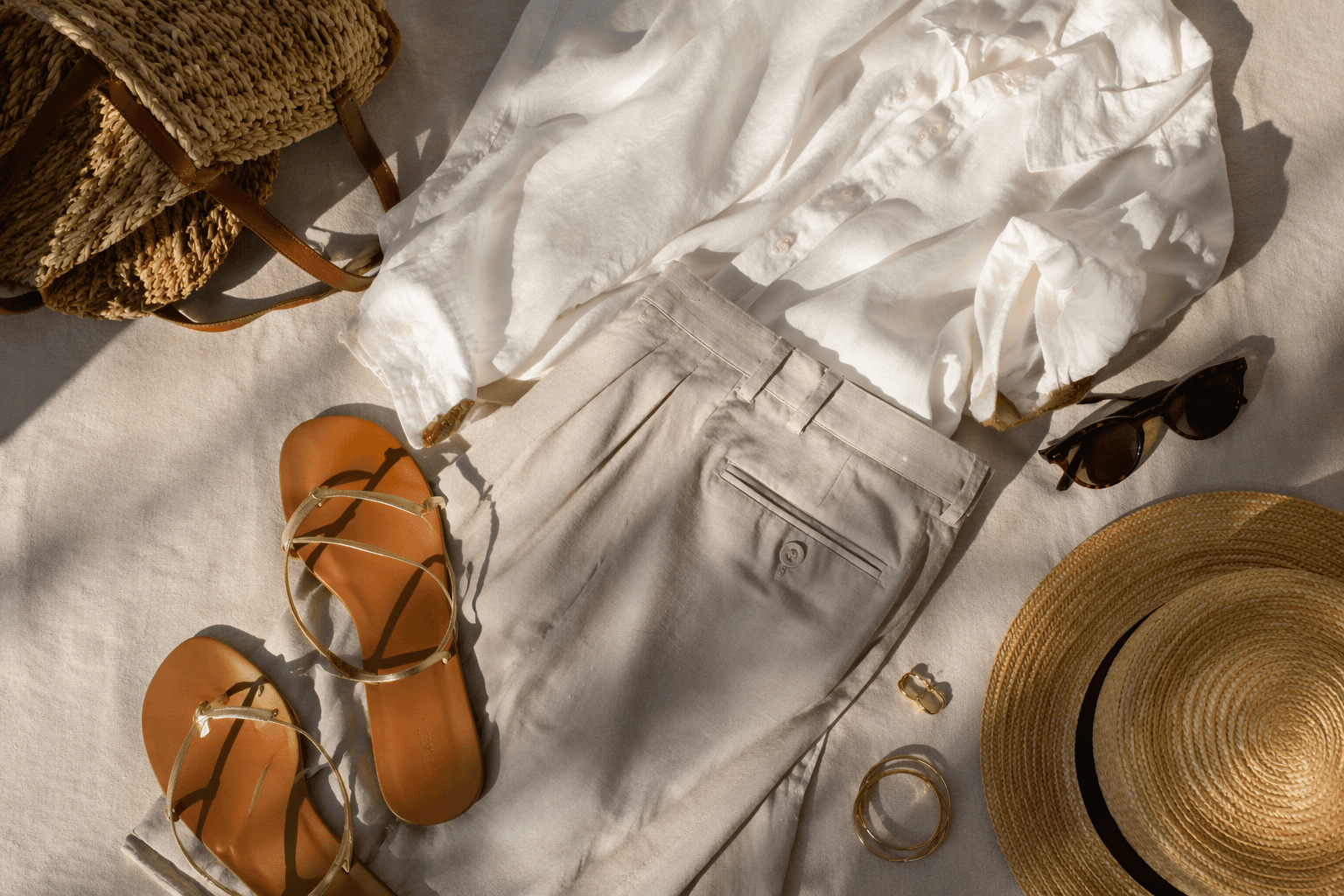
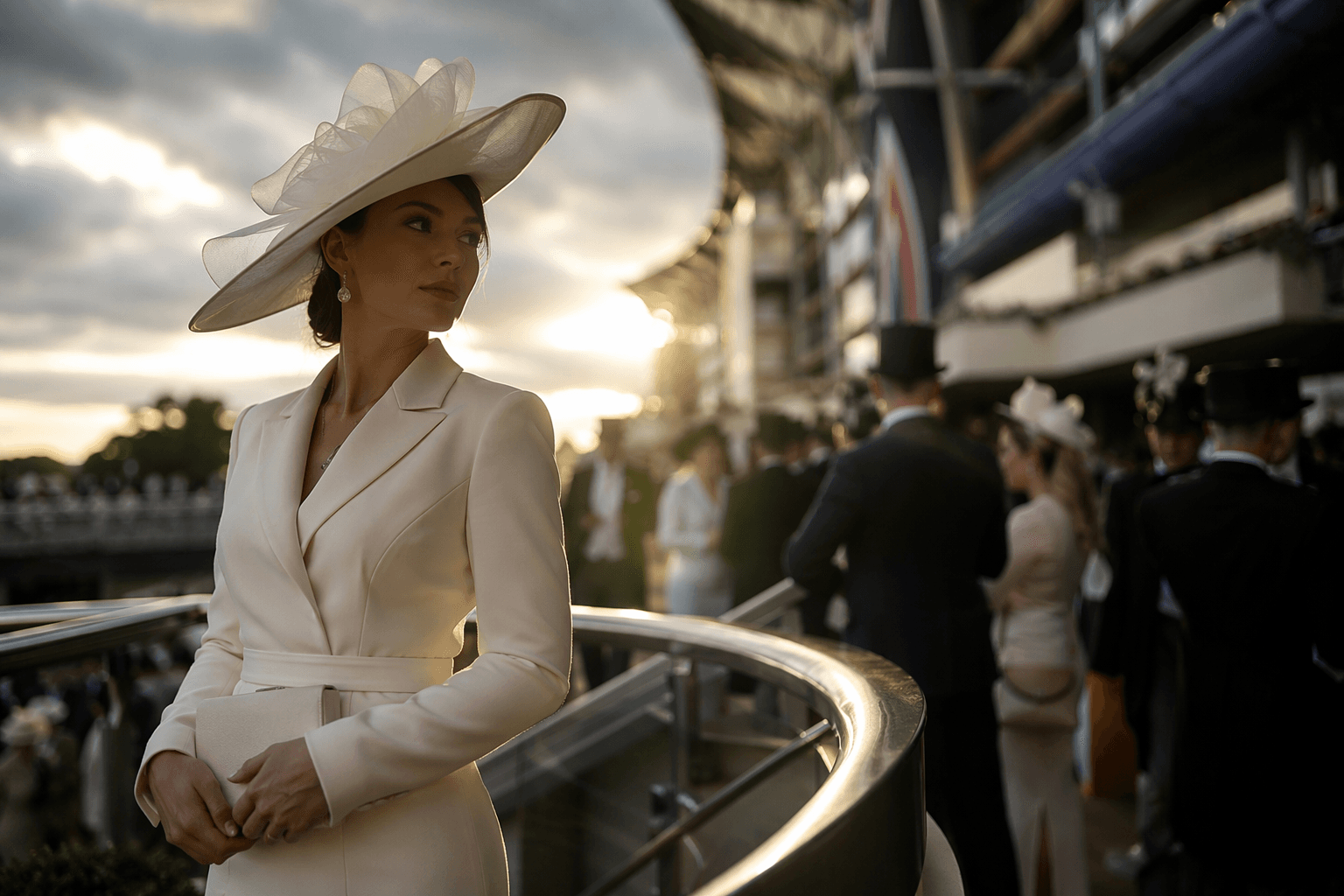
If there is a defining 2026 adjustment, it is cream tailoring. Cream has the advantage of looking composed under pressure: it catches light beautifully, softens the severity of a suit, and keeps the body language of formalwear intact. At Ascot, where novelty is policed and overt branding is unwelcome, a cream jacket with clean lines or a sharply pressed cream skirt suit feels current precisely because it does not try too hard.
Monochrome works for the same reason. A black-and-white palette reads disciplined, and discipline is what the Royal Enclosure rewards when the crowd around you is negotiating a shared visual language of lineage, habit and polish. The trick is proportion: a streamlined trouser suit, a long column dress or a skirt with enough structure to hold its shape will look credible, while anything overly sculptural or aggressively trend-led risks tipping into costume.
Print is back, but only when it behaves
Polka dots are one of the few prints that can survive Ascot without looking like a costume-party callback, provided they stay restrained. Scale is everything. Small or medium dots on a controlled silhouette can feel knowing and urbane; oversized dots, loud color clashes or novelty proportions start to read as novelty, which the Royal Enclosure does not forgive.
The same applies to any print strategy this season. A print should support the cut of the garment, not compete with it, and the cleaner the silhouette, the more room there is for personality. A dress with a neat neckline, a hem that sits within the rules and a print that feels almost inherited rather than freshly manufactured will always look more expensive than something shouting for attention.

Why Bright Tomato matters
Bright Tomato, the first official Colour of the Year for Royal Ascot 2026, gives the season its one conspicuous flourish. It is a bold, confident shade, and that is exactly why it works best when it is edited into a look rather than allowed to dominate it from head to toe. Used with cream tailoring or monochrome, it gives the outfit a pulse; used carelessly, it can flatten into costume.
That is the new Ascot calculation: one vivid note can feel aristocratic if the rest of the look is controlled. The point is not to be invisible, but to look as though color has been chosen, not thrown on. In a setting where hats are mandatory and novelty is barred, a saturated accent becomes a sign of confidence only when the silhouette remains impeccable.
How the cool girls are updating tradition
The most interesting shift at Ascot is not rebellion but calibration. The current crop of cool girls is updating the tradition rather than rejecting it, which is why the strongest looks are likely to be the ones that respect the dress code while quietly loosening its older stiffness. A trouser suit in cream, a monochrome dress with disciplined proportion, or a restrained polka-dot piece all read as modern because they understand the social grammar of the event.
That is what makes Ascot endure as a style stage. It still rewards people who can navigate institutional rules without looking pinned by them, and that is a very specific kind of elegance. The best-dressed guests will not be the loudest in the enclosure; they will be the ones who make the rules look effortless.
This article was produced by Prism’s automated news system from verified source data, official records, and press releases, then run through automated quality and moderation checks before publishing. The system is built and supervised by the people who set the standards it runs under. Read our full AI policy.
Know something we missed? Have a correction or additional information?
Submit a Tip