Saudi Arabia’s fashion boom turns heritage into global luxury codes
Saudi Arabia is recoding old-money style through heritage, craft and ceremony, while a fast-growing luxury market gives those codes real global weight.
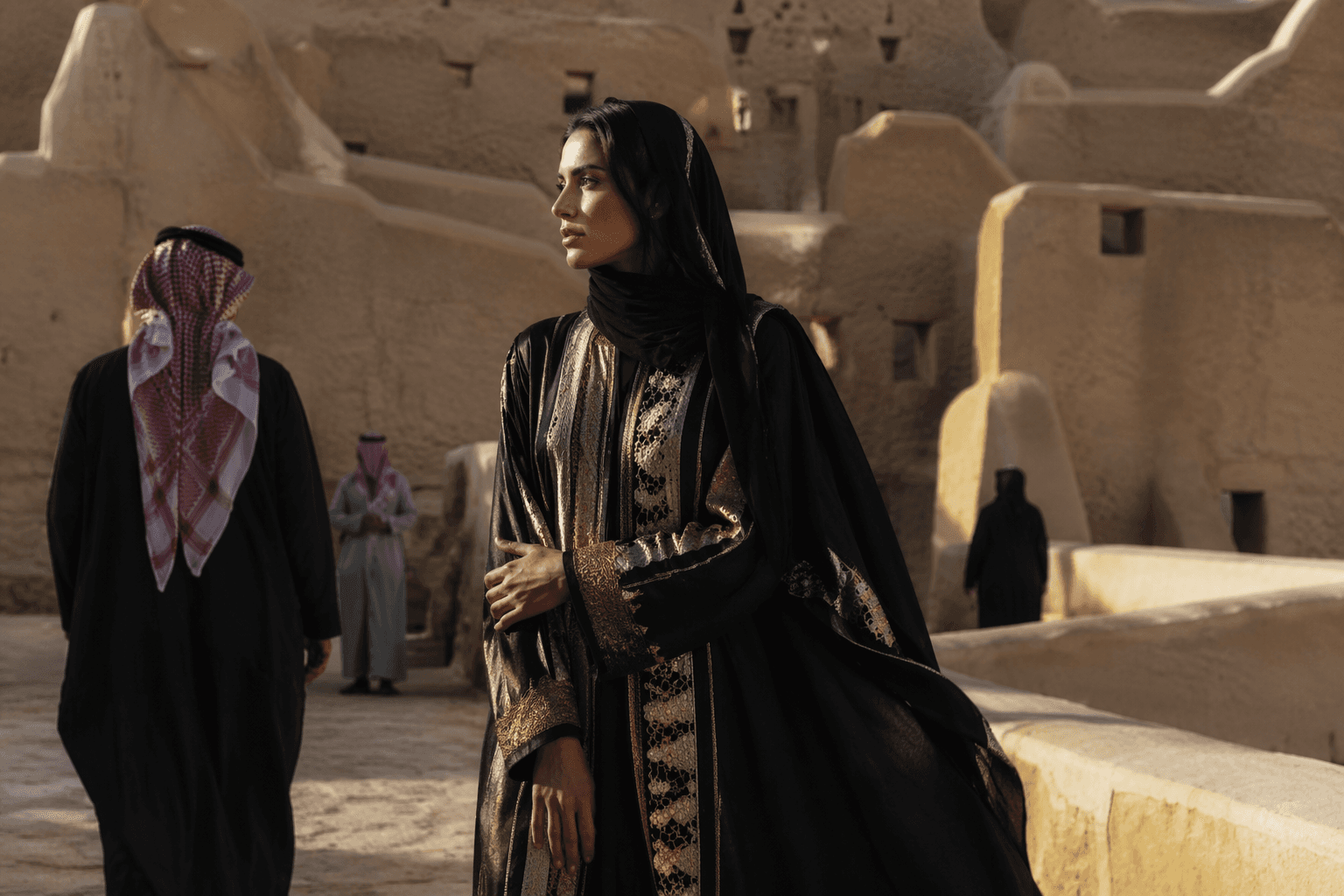
Saudi Arabia is no longer just a luxury customer base. It is becoming a place where old-money codes are being rewritten in local terms, with heritage, discretion and occasion dressing carrying as much weight as any imported logo. The scale alone explains why it matters: Saudi Arabia’s fashion market is projected to reach US$36.8 billion by 2025, and the story now is less about expansion than about who gets to define luxury in the first place.
The new old-money code is being localised in Riyadh
What makes the Saudi market distinctive is not simply spending power. It is the way historical motifs, local storytelling and formal social ritual are being folded into a luxury vocabulary that still reads as polished and elevated. In old-money fashion terms, that means the power of understatement is not disappearing, but it is being recast through regional references, craft, and a stronger sense of occasion.

That shift matters because old-money style has always depended on signals that feel inherited rather than branded. In Saudi Arabia, those signals are increasingly tied to heritage, hospitality and restraint, not to the European shorthand of neutral cashmere and invisible logos. The result is a version of luxury that can accommodate embroidery, texture and subtle embellishment without losing composure.
The numbers show a market built for more than spectacle
Fashion Futures places Saudi fashion at a pivotal economic moment. The sector contributed 1.4% of GDP and employed around 230,000 people, while domestic fashion sales are projected to reach US$32 billion by 2025. The wider Saudi fashion and luxury market is heading toward about US$40 billion by 2029, with growth forecasts ranging from 6.4% compound annual growth through 2029 to a 48% surge in sales between 2021 and 2025.
Those figures tell a useful story for anyone watching old-money fashion evolve. This is not a niche aesthetic conversation taking place in a vacuum. It is a market with scale, policy support and enough consumer density to turn taste into infrastructure. When a style code gets embedded in that kind of ecosystem, it stops behaving like a seasonal mood board and starts acting like a commercial language.
Local preference is changing how luxury has to show up
Saudi consumers are already voting with their wallets. A Fashion Futures consumer survey found 55% prefer local fashion brands, compared with 33% for global brands and 12% with no preference. That is the crucial clue for international labels trying to read the room: Saudi Arabia is not waiting to be dressed by Europe and the U.S. It is developing its own hierarchy of credibility.
E-commerce is accelerating that shift. Saudi Arabia’s fashion e-commerce market is projected to reach US$4.08 billion by 2027, up from US$2.34 billion in 2023. For old-money dressing, that means the visual codes may still be about polish and discretion, but the buying behavior is decisively modern. A brand cannot simply export an inherited aesthetic and expect loyalty. It has to translate fit, service and storytelling into something that feels native to the market.
Craft is becoming the status signal
Saudi Arabia’s fashion identity is being anchored by craft at exactly the moment luxury is searching for freshness. Fashion Futures highlights 2025 as the Year of Handicrafts, and the Saudi Fashion Commission has pointed to camel hair, camel leather and seaweed-based materials as part of the country’s sustainability story. Those materials do more than broaden the fabric conversation. They locate value in the hand-made, the local and the materially specific.
That is where the old-money code changes shape. In Europe, the signal may be inherited tailoring or discreet millinery. In Saudi Arabia, the equivalent can be found in the careful use of regional materials, fine finishing and a strong relationship to occasion wear. The effect is not loud, but it is not bland either. It favors surfaces that reveal work: woven texture, precise construction, and a sense that the garment belongs to a place, not just a season.
Women, Saudization and Vision 2030 are changing who luxury is for
The business of fashion in Saudi Arabia is also being reshaped from within. Fashion Futures says 52% of fashion workers are women and 66% of core jobs are Saudized, which places the industry firmly inside Vision 2030’s wider diversification agenda. That matters because old-money style is never only about clothes. It is about who wears them, who makes them, and which institutions normalize them.
Saudi fashion’s growth is therefore cultural and economic at once. It is opening space for local designers, training pipelines and a more self-sufficient luxury ecosystem. When an industry is being built this deliberately, the aesthetic that emerges tends to carry a stronger sense of identity than a simple import market ever could.
Global runways are proving the code travels
The clearest evidence that Saudi Arabia is now producing luxury, not just consuming it, is the visibility of Saudi designers abroad. Ashi Studio, founded by Mohammed Ashi in 2007, appeared prominently at the 2026 Met Gala, while other regional designers continue to surface at Cannes and on international red carpets. The Saudi Arabia Pavilion at Expo 2025 Osaka extends that same cultural logic onto a different stage, where fashion, national identity and soft power overlap.
Ashi’s rise is especially revealing because it shows how Saudi design can travel without losing its local grammar. The appeal is not rooted in stripping away regional references, but in refining them until they read as globally fluent. That is the real lesson for old-money fashion in 2026: the most persuasive luxury codes are no longer simply exported from the West. They are adapted, localized and made to feel inevitable in the places that once had to borrow them.
Saudi Arabia’s fashion boom is proving that heritage can be more than nostalgia. In the right hands, it becomes a luxury language with commercial force, cultural confidence and enough authority to redefine what old money looks like far beyond the Gulf.
This article was produced by Prism’s automated news system from verified source data, official records, and press releases, then run through automated quality and moderation checks before publishing. The system is built and supervised by the people who set the standards it runs under. Read our full AI policy.
Did this article answer your question?