Shanghai Buyers Favor Soft Tailoring, Quiet Luxury, and Statement Accessories
Shanghai’s buyers are trading logo heat for softer tailoring, stronger accessories, and clothes that look expensive in real life, not just on a screen.
The new luxury brief in Shanghai
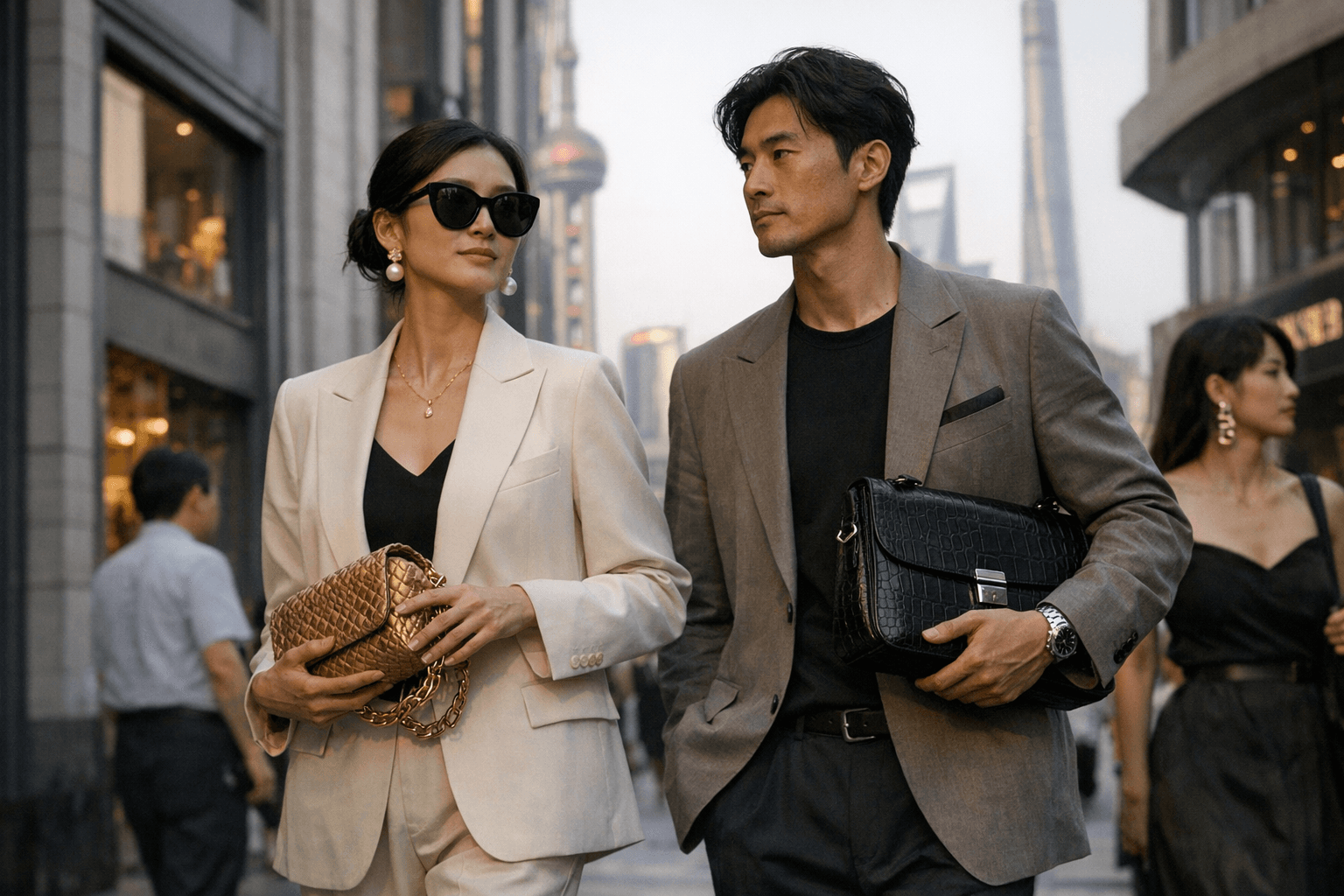
Shanghai Fashion Week’s fall-winter 2026 season made one thing plain: the market is rewarding clothes that feel intelligent, not overworked. The sharpest mood is a softness with discipline, a Phoebe Philo-adjacent femininity that favors fluid tailoring, sculpted shoulders, and a quiet confidence that reads as restraint rather than reticence.
The calendar itself underlines Shanghai’s scale. The official autumn-winter 2026 schedule opened on March 25, 2026, and the runway and showroom cycle ran from March 26 to 29, with more than 200 brands showing across the city. In a market this crowded, the brands that cut through are the ones that feel considered from the first seam to the final accessory.
Soft tailoring is winning because it looks like real life
The strongest message from buyers is a rejection of clothes that exist only for social media. Labelhood buying manager Ding Ni made the point plainly through her buying lens: structural tailoring that cannot translate into everyday wear is out. That does not mean tailoring is disappearing. It means the hard, performative version is giving way to jackets and trousers that move, drape, and live beyond a flash of a camera.
Will Zhang, founder of Chongqing’s SND, framed the new femininity as a wider spectrum, one that balances strength, softness, and restraint. That is exactly where old-money wardrobes are headed too. The modern polished wardrobe is less about stiffness and more about control, with clean lines, a supple shoulder, and enough ease in the silhouette to feel expensive without trying to impress the room.
What translates to an old-money wardrobe
The pieces that matter here are the ones that do not shout. Fluid tailoring, subtle polish, and clothes with enough internal structure to hold their line are the real takeaways, especially when the influence tilts toward menswear without becoming bluntly masculine. Think jackets that skim rather than armor, trousers with a relaxed break, and separates that suggest ease while still looking exacting.
This is the part of the Shanghai story that speaks most clearly to old-money dressing. It is not about novelty for novelty’s sake; it is about garments that look composed, then feel even better when worn often. In that sense, the market is moving toward wardrobe intelligence, where longevity comes from cut, proportion, and finish rather than visible branding.
What stays in fashion-insider territory
Not every element of the Shanghai mood is meant for a classic, inherited-wealth wardrobe. One buyer summed up the season as a blend of Philo’s sculptural shoulders, Saint Laurent’s color sensibility, and Vuitton’s theatrical imagination, and that final note matters. The more dramatic shoulders, sharper color gestures, and theatrical styling cues are brilliant on a buyer’s rack and a fashion-week front row, but they remain signals for those who live in the language of the show.
The same is true of the pressure on local designers to differentiate through one-of-a-kind pieces and less wide distribution. Irene Yu of Joyce said the market is asking for more special pieces and less broad exposure, which is a reminder that scarcity still reads as luxury in Shanghai. For an old-money wardrobe, the lesson is selective rather than maximalist: choose distinctiveness through quality and proportion, not through logos or hyper-exposed pieces that belong to the feed.
Accessories are carrying the conversation
If clothing is getting quieter, accessories are doing the talking. Shoes and bags sit at the center of buying decisions because they are easier to justify in a cautious market and easier to move across wardrobes. Laura Darmon of ENG in Shanghai pointed to the shorter winter sell-through window, and that reality is shaping what buyers are willing to commit to, especially when heavier pieces have less time to prove themselves.
This is where quiet luxury becomes practical rather than theoretical. A beautiful bag or a well-made shoe can sharpen an outfit without hardening it, and it can survive the mood swings of the season better than a statement coat with a limited shelf life. In old-money terms, these are investment pieces with utility, the kind that earn their place by improving every outfit they touch.
Why Shanghai matters now
Shanghai is not just a local buying market; it is a taste engine with serious reach. The spring 2026 Mode Exhibition stretched across 60,000 square meters and hosted nearly 1,000 fashion, fragrance, and lifestyle brands, which is the kind of ecosystem that turns a city into a mood board for the region. On Xiaohongshu, the hashtag ShanghaiFashionWeek drew 269.6 million reads in the spring 2026 reporting period, proof that the conversation around this market travels far beyond the showroom floor.
That scale explains why Shanghai keeps surfacing as a bellwether for where luxury is headed. The city is favoring restraint over noise, craftsmanship over constant novelty, and accessories over excess, which is exactly why the old-money wardrobe has so much to learn here. The future of polish looks less like logo display and more like a disciplined silhouette, a beautiful bag, and a shoe that quietly does the work.
This article was produced by Prism’s automated news system from verified source data, official records, and press releases, then run through automated quality and moderation checks before publishing. The system is built and supervised by the people who set the standards it runs under. Read our full AI policy.
Did this article answer your question?