Spring 2026 Jewelry Turns Bigger, Bolder, with Amulet Pendants
Amulet necklaces are replacing whisper-thin chains with sculptural pendants, turning spring’s jewelry mood from invisible wealth to heirloom symbolism.

The new jewelry statement is not louder for the sake of noise. It is larger because it wants to mean something. Ralph Lauren’s spring 2026 runway framed the season with modern sensuality, escapism and restraint, and that tension makes sense of the shift now gathering speed: necklaces have moved from a whisper of a suggestion to pieces with weight, presence and story. At Tory Burch, shells dangled from models’ necks; at Hermès, gold coins caught the light; at Ralph Lauren, sculptural silver pendants gave the neckline a real focal point. The message is clear: spring 2026 jewelry is leaving behind the barely-there chain and embracing the amulet.
Why the amulet feels so right now
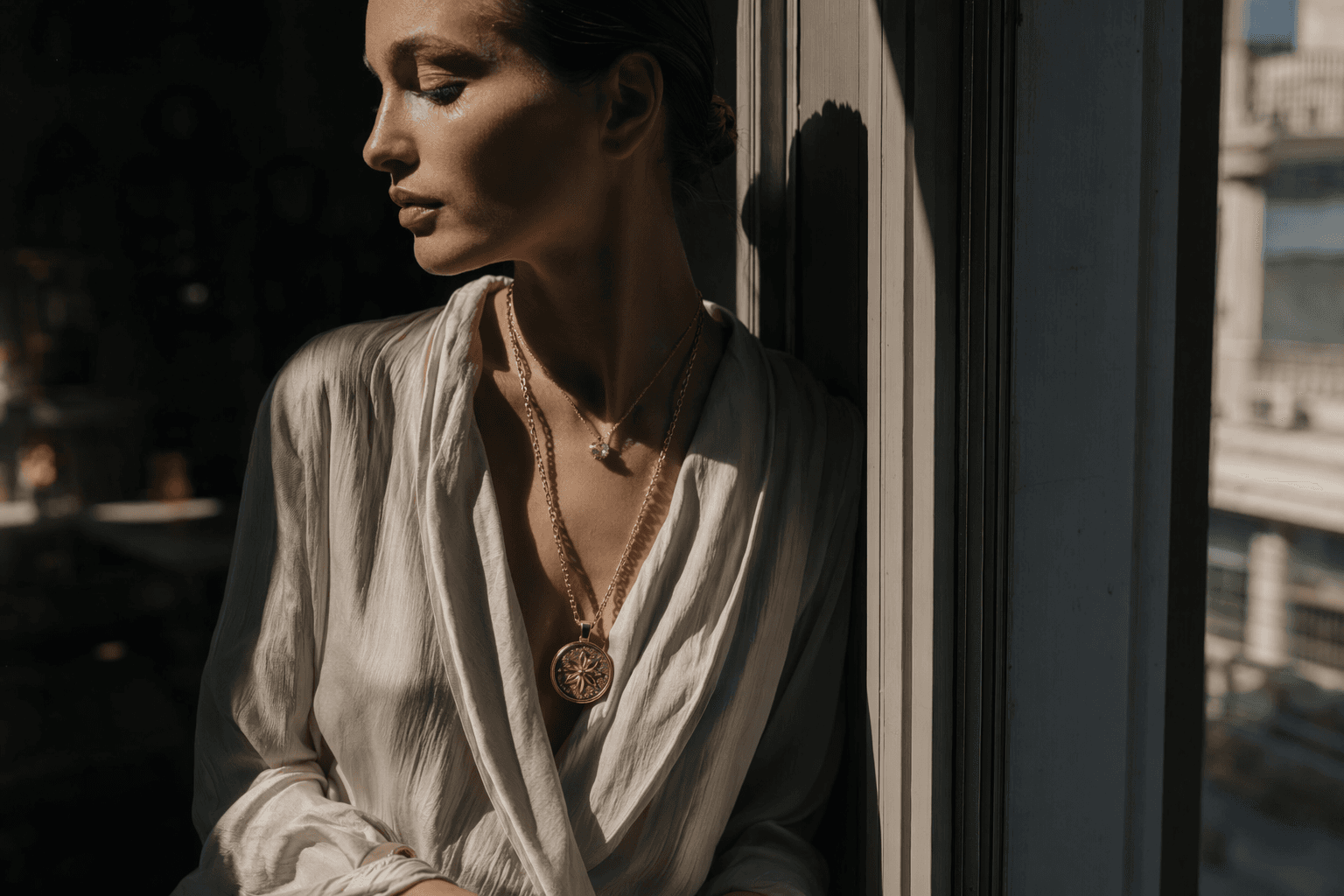
Part of the appeal is that this trend does not read as flashy in the usual sense. It reads as heirloom-coded, as if the necklace had a previous life before it ever reached your collarbone. That is a different kind of luxury from the polished invisibility of delicate chains, which often disappear into skin and sweater knit. A pendant, by contrast, carries symbolism into the room. It sits close to the chest, which is precisely why it feels more personal, more old-world, and far more collectible.
That emotional pull is not accidental. Vogue Singapore described this season’s pendants as having totemic strength, and that is exactly the right frame for the moment. Pendants are sentimental objects first and styling devices second, worn with memories, protections and private meanings attached. In old money dressing, that matters. Wealth is never best expressed as volume alone. It lands harder when it feels inherited instead of overworked.
The runway evidence is unmistakable
The strongest proof came from the spring 2026 runways at Ralph Lauren, Tory Burch and Hermès. WWD singled out sculptural silver pendants at Ralph Lauren, shells at Tory Burch and gold coins at Hermès as the clearest examples of the amulet-necklace shift. Each house handled the idea differently, which is what makes the trend feel durable rather than gimmicky. Ralph Lauren’s version looked polished and quietly cinematic. Tory Burch’s had a more artisanal looseness. Hermès pushed the coin motif toward something almost archival, the kind of detail that suggests lineage rather than novelty.
The broader runway mood supports the same direction. JCK called spring-summer 2026 jewelry a case of new maximalism, and the phrase fits because the season is not about excess for its own sake. It is about giving objects more visual authority. Tory Burch, Coach and Michael Kors pushed the idea further by turning utility pieces such as clips, key chains, cases, wallet necklaces and turn-lock pouches into pendant-style adornments. The result is jewelry that borrows from the language of everyday tools, then elevates it into a necklace that reads more collected than decorative.
What makes a pendant look storied instead of costume-like
The difference lies in restraint, material, and silhouette. The most aristocratic versions are the ones that feel as if they could have been worn for years, not bought for one season. Think substantial metal, a single symbolic form, and a shape that carries visual weight without needing extra embellishment. The best examples from Ralph Lauren, Tory Burch and Hermès all share that calm authority. They do not shout across the room. They settle into the look and make the whole outfit feel finished.
By contrast, pendant jewelry starts to look costume-like when the symbolism is too literal or the styling gets overworked. Too many charms, too much shine, or a pendant that feels tiny and decorative instead of anchored will flatten the effect. The old money version depends on discipline. One meaningful object at the neckline is stronger than a whole cluster of “statement” pieces competing for attention. The look should suggest inheritance, not trend-chasing.
The commercial case for talismanic jewelry
The amulet story also has real staying power because it taps into meanings jewelry has carried for centuries. Milano Fashion&Jewels notes that amulets have long been associated with protective, propitiatory and therapeutic meanings. That history matters in fashion because shoppers are no longer buying only for decoration. They are buying for feeling, for identity and for the private story an object can hold.
That is exactly where brands such as Pyrrha have found traction. In 2026, Pyrrha launched The Space Between, an 80-piece collection that came with symbolic meaning cards and prices ranging from $300 to $5,500. That spread tells you a lot about where this category sits in the market. It can be entry-level luxury at the lower end, or a more serious collectible at the top, but the draw is consistent: each piece arrives with a narrative. In a crowded jewelry landscape, meaning is the differentiator.
How to wear the trend now
The most elegant way to wear an amulet pendant is to let it do the work. Pair it with a clean neckline, a severe blazer, or a simple dress and let the pendant become the only obvious flourish. That approach echoes the refinement seen at Ralph Lauren and the balanced, crafted femininity of Tory Burch’s spring 2026 collection, which played precision against imperfection. The pendant should feel like a considered punctuation mark, not an exclamation point.
- Choose one pendant with symbolic weight, such as a coin, shell or sculptural medallion.
- Favor finishes that look grounded and substantial, especially silver and gold that read as serious rather than sparkly.
- Wear it with tailored clothing, crisp shirting or a simple knit so the piece feels inherited, not staged.
- Avoid over-accessorizing the neckline, which quickly tips the look into costume territory.
- Let the pendant sit against the skin, where its scale and shape can read clearly.
If you want the look to feel truly old money, keep the scale honest and the styling disciplined:
Sophie Buhai and Jennifer Behr are already gaining traction in this space, and that makes sense because both names sit close to the conversation around modern heirloom dressing. Their appeal lies in jewelry that feels tactile, graphic and lived-in rather than fragile. That is the new frontier for spring 2026: not barely-there ornament, but necklaces that carry a sense of lineage. The season’s most convincing pendants do exactly what old money style has always done best, they make intention look inherited.
This article was produced by Prism’s automated news system from verified source data, official records, and press releases, then run through automated quality and moderation checks before publishing. The system is built and supervised by the people who set the standards it runs under. Read our full AI policy.
Did this article answer your question?